
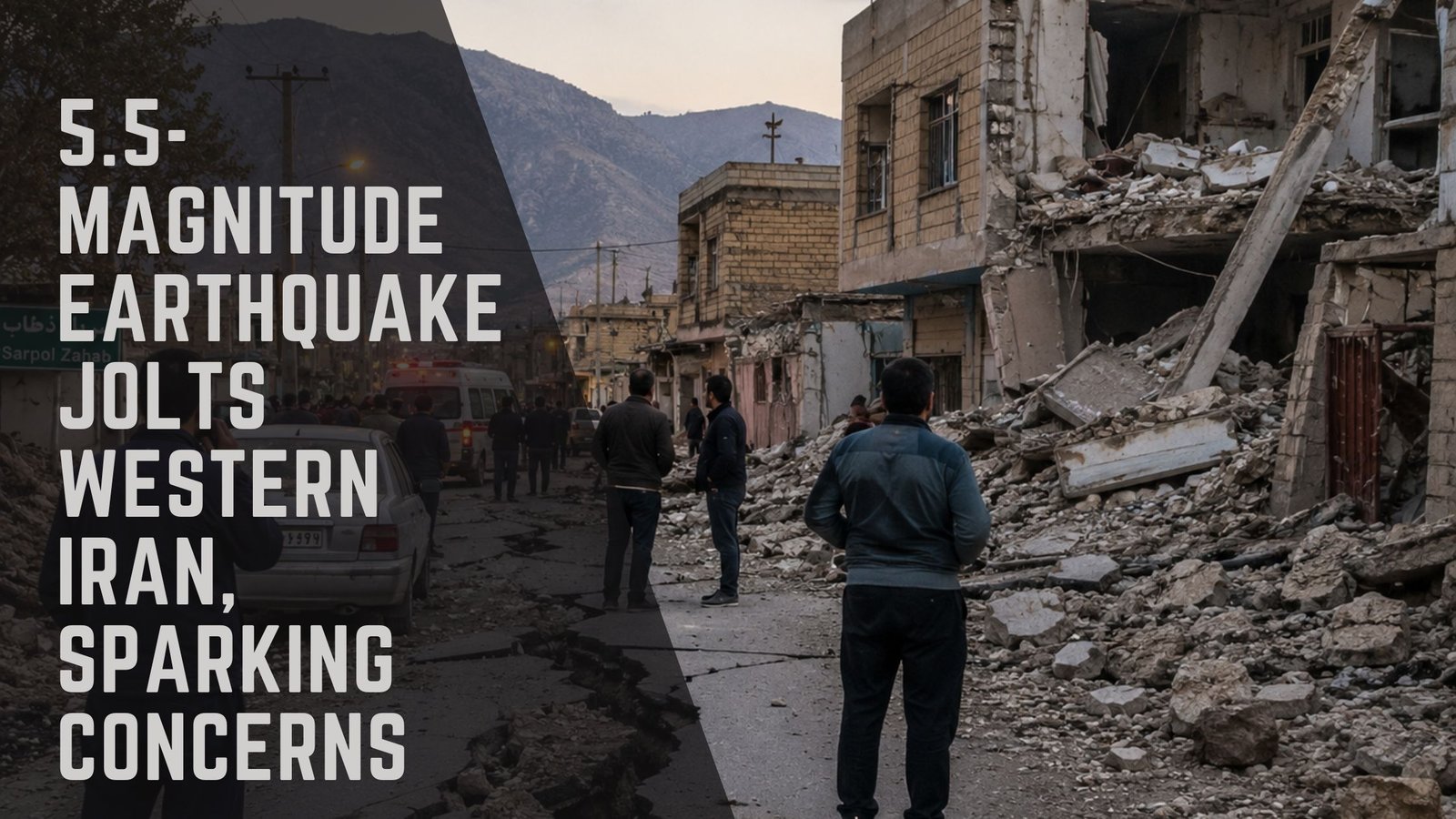

Significant Earthquake Hits Western Iran
In the early hours of Monday, a 5.5-magnitude earthquake struck western Iran, causing immediate concern among residents and authorities. According to the European-Mediterranean Seismological Centre (EMSC), the seismic activity was recorded at 03:48 GMT, with the epicenter positioned at a shallow depth of 10 kilometers beneath the Earth’s surface. The tremor has prompted an assessment of potential damages and the implementation of emergency response measures.
Geographical and Seismological Context
Western Iran is known for its seismic activity due to its location along the Alpide belt, a seismic zone that also includes the Himalayas and the Alps. This region experiences frequent earthquakes as a result of the complex interaction between the Arabian and Eurasian tectonic plates. Historically, Iran has been the site of numerous devastating quakes, making it one of the most earthquake-prone countries in the world.
The shallow depth of the earthquake magnifies its potential impact, as seismic waves from shallow quakes tend to be more destructive. Despite the relatively moderate magnitude of this particular earthquake, the proximity to populated areas can significantly increase the risk of damage and injury.
Immediate Aftermath and Response
Following the earthquake, local authorities have initiated emergency protocols to assess the damage and provide necessary aid to affected areas. Early reports suggest that infrastructure damage, if any, is still being evaluated, and efforts are underway to ensure the safety of residents.
Emergency services have been dispatched to the area to conduct search and rescue operations, and to provide medical assistance to those in need. Residents have been advised to stay vigilant for aftershocks, which are common following significant seismic events and can pose additional risks.
Safety Precautions and Public Awareness
In light of the earthquake, authorities are emphasizing the importance of earthquake preparedness among the public. This includes having emergency kits ready, identifying safe spots within buildings, and knowing evacuation routes. Regular drills and public awareness campaigns are crucial in a country like Iran, where seismic activity is a persistent threat.
The Iranian Red Crescent has also been mobilized to offer support, providing temporary shelters and essential supplies to those displaced by the tremor. Continuous updates from the EMSC and local seismological institutes aim to keep the public informed about any developments.
International Response and Support
International agencies and neighboring countries have expressed their readiness to assist Iran in dealing with the aftermath of the earthquake. The global community often plays a supportive role in such circumstances, offering technical expertise, financial aid, and humanitarian assistance to help affected regions recover swiftly.
Iran’s history of seismic activity has also fostered collaborations with international seismological organizations, which contribute to improved monitoring and predictive capabilities. These partnerships are vital in enhancing the region’s resilience against future earthquakes.
Conclusion and Future Outlook
While the immediate impact of the 5.5-magnitude earthquake is still being assessed, the event serves as a reminder of the ongoing seismic risks faced by Iran. Continuous efforts in building infrastructure resilience, advancing public awareness, and enhancing scientific research are essential in mitigating the effects of future earthquakes. As the situation unfolds, authorities remain committed to safeguarding lives and minimizing disruption in the affected areas.