
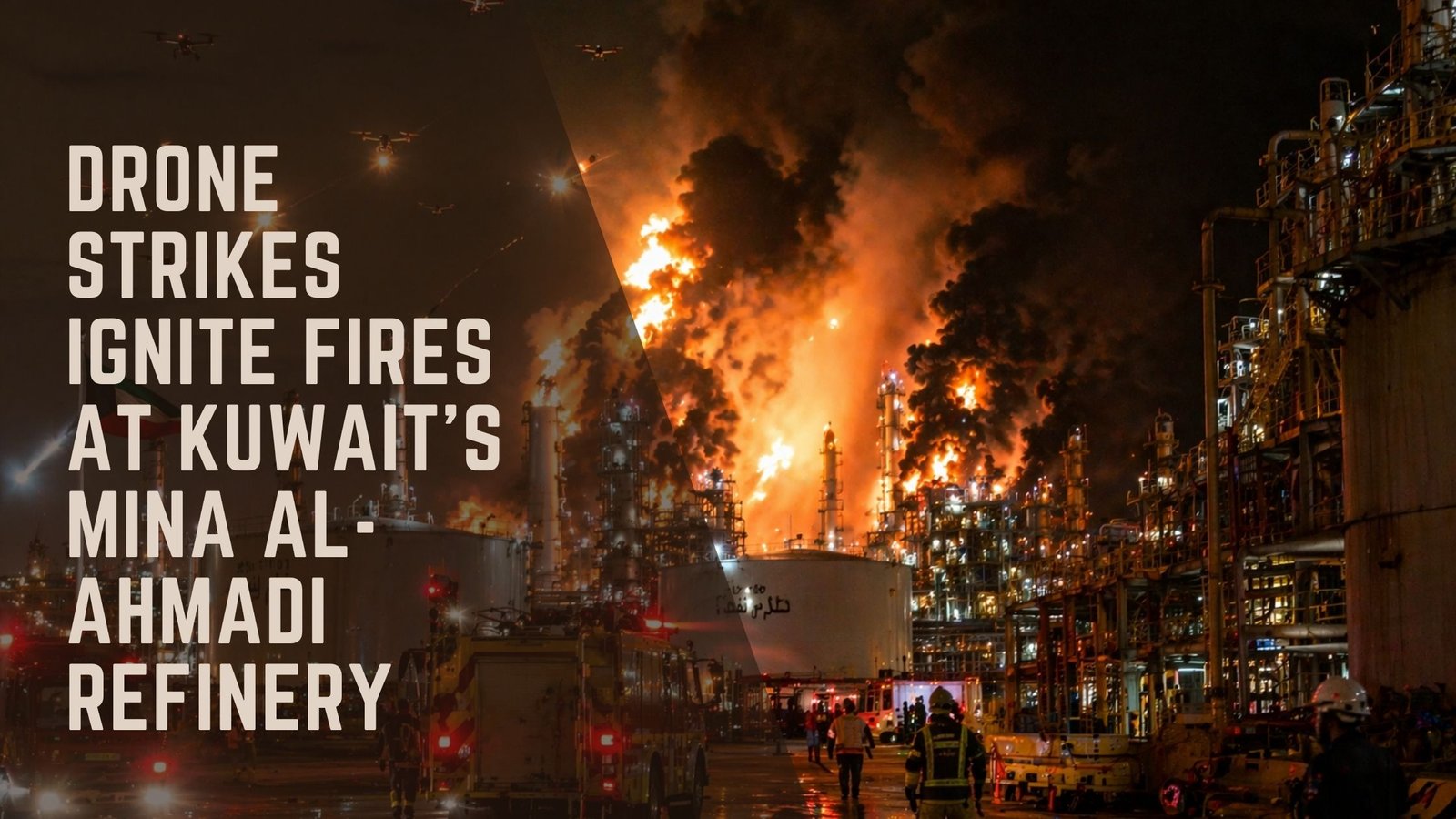

Drone Assault Triggers Fires at Prominent Kuwaiti Refinery
In a significant security incident, Kuwait’s Mina al-Ahmadi refinery was targeted by drones early Friday morning, resulting in fires at several operational units. The Kuwait Petroleum Corporation (KPC) confirmed the attack, highlighting an emerging threat to energy infrastructure in the region.
Emergency Response and Containment Efforts
Immediately following the attack, emergency and firefighting teams were deployed to the site. According to the Kuwait News Agency (KUNA), these teams swiftly initiated response protocols to manage and extinguish the fires, preventing any further escalation. The rapid response was critical in ensuring that the flames did not spread to other areas of the refinery.
The corporation assured that all necessary safety measures were in place to protect the refinery staff and secure the facility from further damage. No injuries have been reported, underscoring the effectiveness of the emergency response strategies.
Strategic Importance of Mina al-Ahmadi
Mina al-Ahmadi is one of Kuwait’s largest refineries and a vital component of the country’s oil production and export infrastructure. Any disruption to its operations can have significant implications not only for Kuwait’s economy but also for global oil markets. The refinery’s strategic location near the Persian Gulf makes it a critical asset for the nation’s energy sector.
This attack raises concerns over the security of energy infrastructure in the Middle East, a region that has seen its share of geopolitical tensions and conflicts. The situation underscores the need for heightened security measures to protect such critical assets.
Implications for Regional Security
The use of drones in the attack signifies a worrying trend in the capabilities of non-state actors in the region. Drones provide a relatively low-cost, high-impact method of disrupting critical infrastructure, and their use in this attack may signal a shift in tactics by those seeking to destabilize the region.
Kuwait, like many of its neighbors, must now consider enhancing its defensive measures against such aerial threats. The incident may prompt a reevaluation of current security protocols and an increase in regional cooperation to address these shared challenges.
Global Oil Market Reactions
While the fires were contained swiftly, the attack’s implications for the global oil market cannot be ignored. Any threat to supply from a major oil-producing nation like Kuwait can lead to fluctuations in oil prices and market stability. Analysts will be closely watching the situation for any signs of prolonged impact on production or export capabilities.
As the investigation into the attack continues, the international community will be keenly interested in understanding the motivations and origins behind the drone strike. Such incidents remind stakeholders of the vulnerabilities inherent in energy supply chains.
Future Preventive Measures
In response to this incident, it is anticipated that Kuwait will enhance its security measures at vital infrastructure points. This may include deploying advanced surveillance technologies, increasing the physical security presence, and enhancing international partnerships for intelligence sharing.
As drone technology continues to evolve, so too must the strategies to counteract their misuse. This incident serves as a prompt for other nations to assess their vulnerabilities and reinforce their protective measures.