
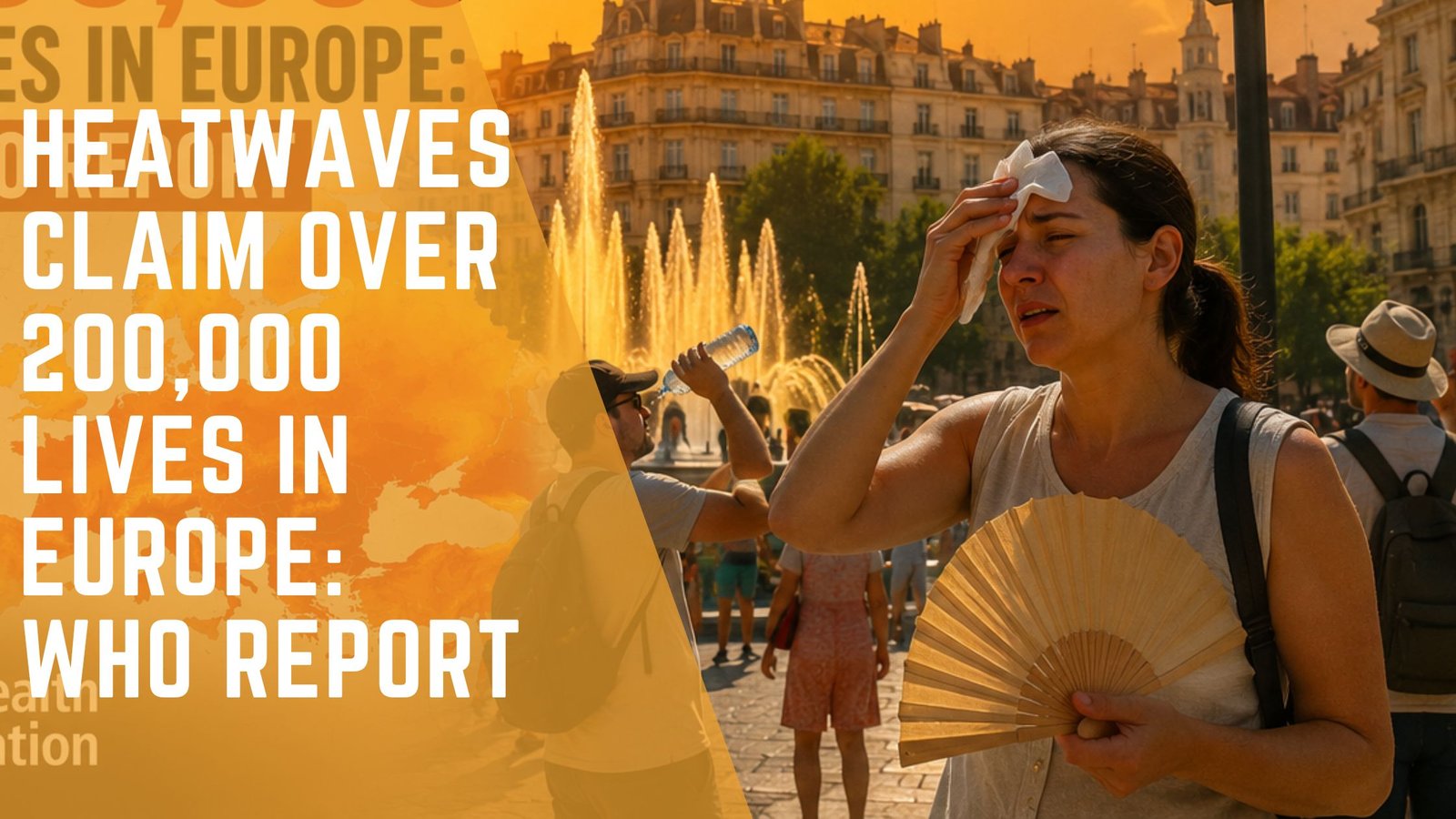

Escalating Heatwaves: A Dire Public Health Crisis
Over the past four years, extreme heat has resulted in the tragic loss of more than 200,000 lives across Europe, as reported by the World Health Organization (WHO). The organization’s findings underscore the increasing frequency and lethality of heatwaves, a phenomenon exacerbated by climate change. The WHO has called for a unified and systemic response to tackle this urgent public health emergency.
WHO’s Call for Action: A Coordinated Response
Dr. Hans Kluge, WHO Regional Director, emphasized the necessity for a comprehensive strategy to combat heat-related health risks during the launch of the revised Heat-Health Action Plans Guidance in Berlin. The new guidance provides governments with evidence-based strategies to mitigate the impact of extreme heat, including the implementation of early warning systems, the establishment of cooling centers, urban greening projects, and focused assistance for vulnerable groups.
While individual measures such as staying hydrated and minimizing exposure to direct sunlight remain valuable, WHO stresses that these alone are insufficient to address the broader systemic challenges posed by increasing temperatures.
Heat-Health Action Plans: A Proactive Approach
Heat-health action plans are designed to enable cities and nations to foresee, prepare for, and effectively respond to periods of extreme heat. These plans aim to increase resilience against heatwaves through coordinated efforts that involve public health officials, government agencies, and community organizations.
The WHO’s initiative encourages the integration of these plans into national and local health strategies, ensuring that infrastructure and policies are in place to protect the most at-risk populations.
Climate Change and Vulnerability: Europe at Risk
Europe is experiencing a faster rate of warming compared to other continents, putting various demographic groups at heightened risk. Older adults, individuals with pre-existing health conditions, and economically disadvantaged communities are particularly vulnerable to the adverse effects of extreme heat.
The WHO report highlights the critical need for targeted interventions to safeguard these populations, advocating for policies that prioritize their protection.
Achieving Zero Heat-Related Deaths: WHO’s Ambitious Goal
The ultimate objective, as stated by Dr. Kluge, is to eliminate heat-related fatalities entirely. This ambitious vision calls for bold actions and commitments from governments, healthcare systems, and civil society to implement and adhere to the recommended strategies.
By fostering collaboration and innovation, Europe can lead the way in developing effective solutions to combat the rising threat of heatwaves and their devastating health impacts.