
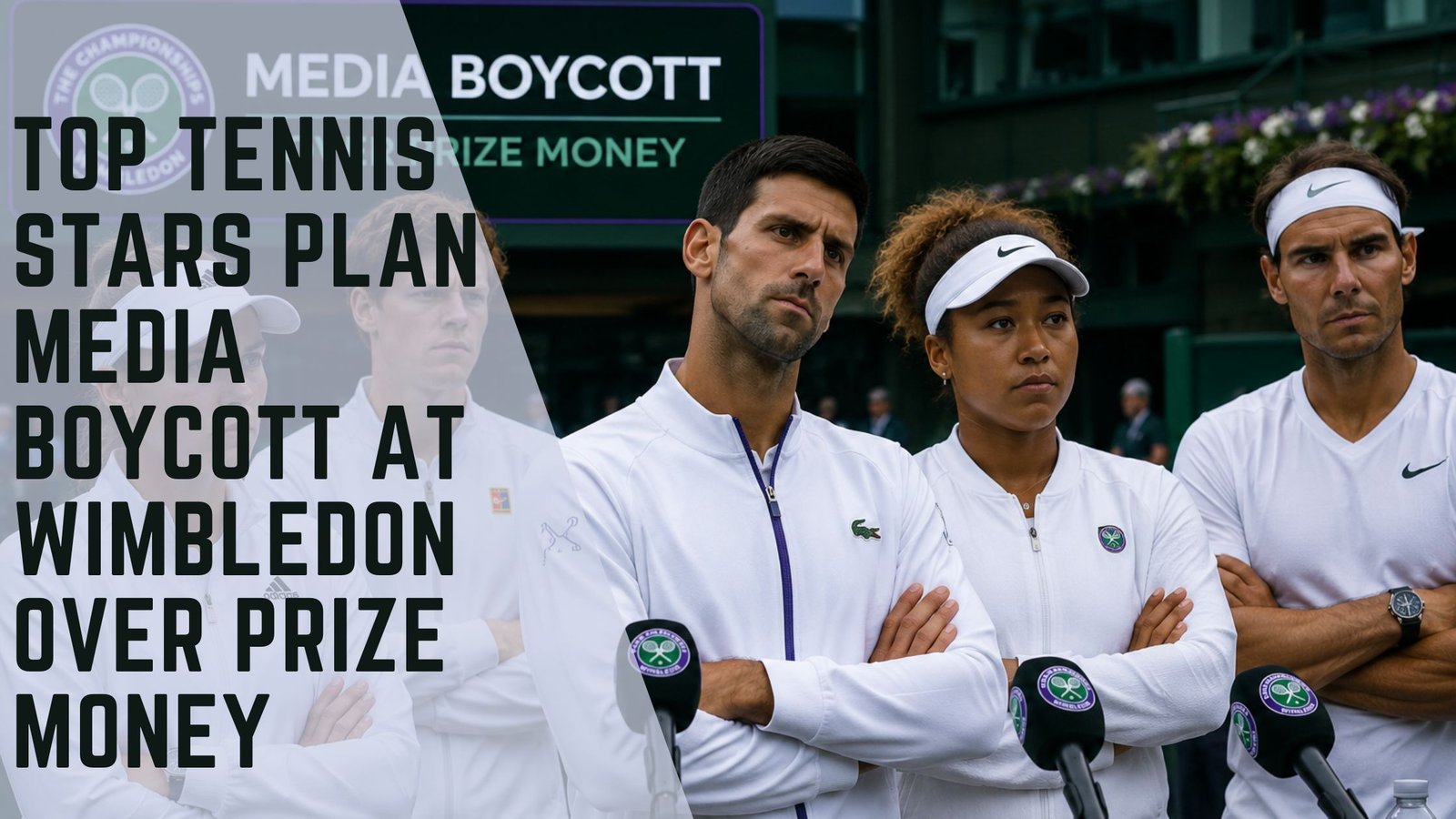

Leading Tennis Players Threaten Media Blackout at Wimbledon
In a bold move to address concerns over revenue distribution, top-ranked tennis players are planning to restrict their media engagements at Wimbledon to just 15 minutes per player during the tournament’s first week. This protest is aimed at highlighting what they perceive as an unfair allocation of prize money, currently set at below 15% of the event’s total revenue.
Background of the Protest
The players’ protest follows a similar action taken at the French Open earlier this year, where many limited their participation in media events. The decision to take further action at Wimbledon, slated to begin on June 29, was detailed in a statement released on Wednesday. According to the statement, the players have formally communicated their decision to Wimbledon’s leadership, emphasizing the need for a fair revenue-sharing model.
Players Seek Structural Reforms
The players’ demands extend beyond prize money adjustments. They are also calling for the establishment of a player welfare fund and the creation of a formal player council. These issues were reportedly raised with Wimbledon officials over a year ago, but progress has been slow. The statement criticized recent public comments from Wimbledon leadership that questioned the revenue-sharing model, which the players argue is crucial for reaching a long-term agreement.
Wimbledon’s Response
The All England Club, which owns and operates the Wimbledon tennis courts in London, expressed disappointment over the players’ proposed actions. A spokesperson highlighted the club’s commitment to supporting players, noting a 20% increase in the total prize money this year, bringing it to £64.2 million ($84.5 million), the largest increase in the tournament’s history. The spokesperson also emphasized significant investments in player facilities aimed at creating a world-class performance environment.
Players United in Their Demands
Prominent players like former Australian Open champion Madison Keys and four-time Grand Slam winner Jannik Sinner have voiced their support for the protest. Keys noted that many players are unified in their demand for better compensation at Grand Slam events and are willing to take drastic actions, such as boycotting tournaments, if their concerns continue to be ignored. Sinner emphasized the need for respect and fair compensation for all players, not just the top-ranked ones.
Broader Implications for Tennis
The proposed media boycott at Wimbledon highlights ongoing tensions between players and tournament organizers over revenue distribution. This action could set a precedent for future negotiations and significantly impact the relationship between players and tournament authorities. As the tennis world watches closely, the outcome of this protest may lead to broader changes across the sport, potentially influencing how revenue is shared and how player welfare is addressed in major tournaments.
Looking Ahead
As Wimbledon approaches, the tennis community remains on edge, awaiting further developments in the ongoing dispute. The players’ resolve to limit media interactions underscores their determination to bring about meaningful change. Whether this protest will lead to a resolution that satisfies both players and tournament organizers remains to be seen. The situation highlights the growing demand for transparency and equity in professional sports, with tennis serving as a key battleground in this broader movement.