

Impact Investment and the Organizational Challenge
As the global landscape of impact investment expands, a critical spotlight is being cast on a challenge that transcends mere financial infusion: the capacity of organizations to effectively utilize capital to achieve tangible social outcomes. In numerous emerging markets, non-profit entities encounter a significant divide between burgeoning funding prospects and their inherent ability to transform these financial inputs into lasting impacts. Key impediments such as governance shortcomings, skill deficiencies, and inadequate operational infrastructures often hinder these organizations from meeting the expectations of both investors and communities.
The Capacity Conundrum
This challenge is increasingly evident within the impact investment ecosystem. Reports from the Global Impact Investing Network (GIIN, 2023) identify the capacity of investees as a major blockade to capital deployment, whereas the OECD (2023) underscores organizational capability gaps as a principal hurdle to scaling social impact. Collectively, these findings underscore a shared reality: capital mobilization alone does not suffice. The necessity of building institutional capacity to effectively deploy that capital is equally paramount.
Structured Volunteering: A Viable Solution
In this context, structured, skills-based volunteering is gaining traction as a pragmatic solution for enhancing organizational preparedness. Unlike traditional notions of volunteering as merely a civic activity, structured volunteering serves to bolster governance, refine program design, fortify operational systems, and broaden strategic alliances. Such capabilities are increasingly deemed essential for organizations aspiring to yield sustainable social returns from available resources.
Dual Benefits of Volunteering
The advantages of structured volunteering extend beyond organizational boundaries. According to the United Nations Volunteers programme (UNV, 2022), it also facilitates human capital development by providing students and early-career professionals with practical experience and workforce-ready skills. This results in a dual benefit: fortifying organizations and cultivating a more capable future workforce.
Saudi Arabia: A Case Study in Volunteerism
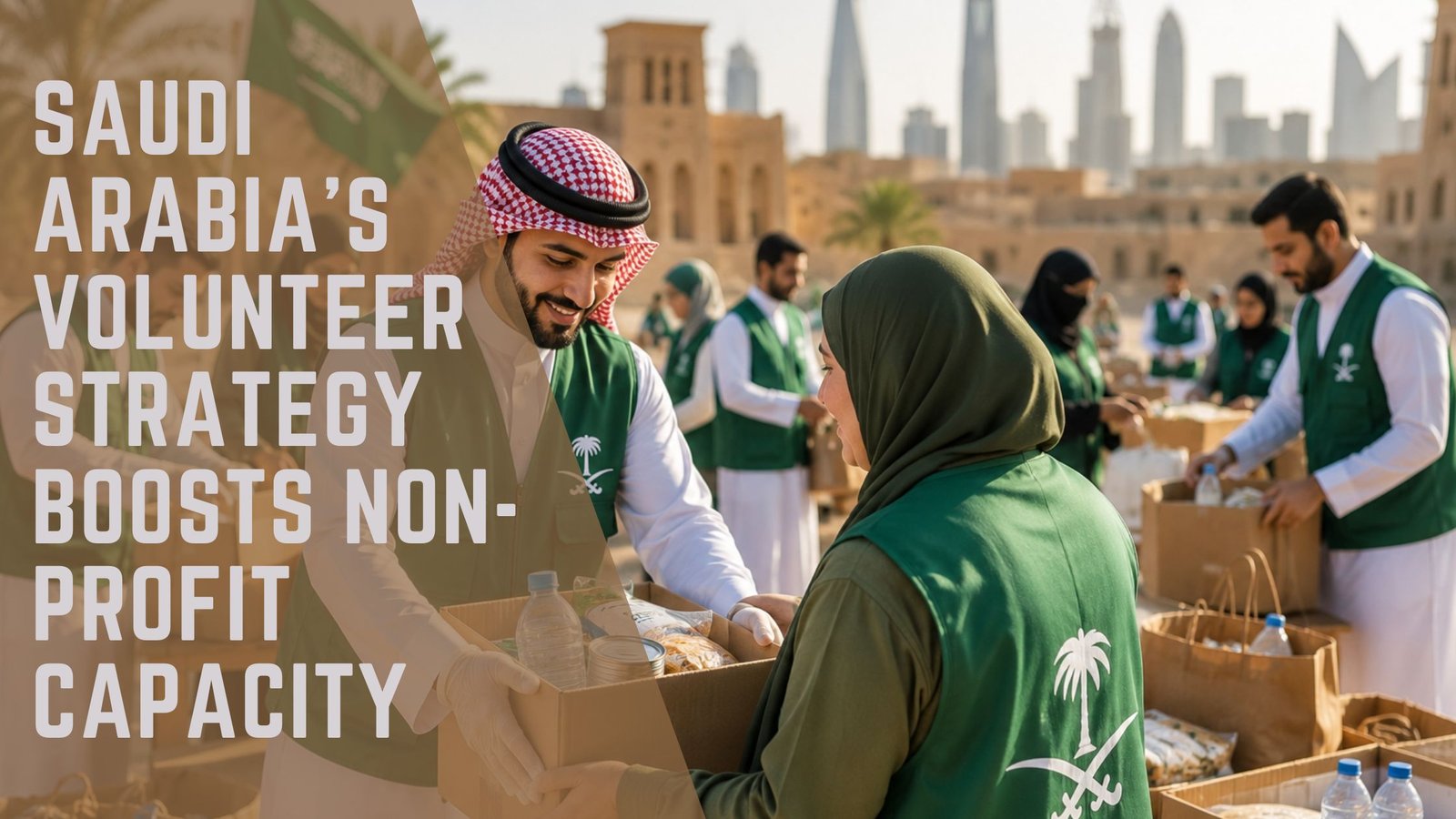
Saudi Arabia exemplifies this strategic approach on a national scale. Aligned with Saudi Vision 2030, the Kingdom’s non-profit sector has burgeoned to encompass over 7,800 registered organizations and 1.7 million active volunteers (NCNP, 2025). Contributing approximately 1.55% to the national GDP, this sector underscores the growing economic significance of institutional capacity within non-profit organizations.
Strategic Integration of Volunteering
Through the National Center for Non-Profit Sector (NCNP) and the National Volunteer Platform, volunteering has been integrated into ecosystem development as a strategic instrument rather than an isolated civic engagement. This approach is increasingly mirrored across non-profit organizations, where volunteer expertise enhances program delivery, operational efficiency, and service systems. These examples illustrate how structured volunteer engagement can fortify institutional effectiveness while advancing broader developmental objectives.
Lessons from Saudi Arabia’s Impact Investment Ecosystem
As the impact investment landscape in Saudi Arabia evolves, organizational readiness is gaining prominence. While capital can facilitate programs and initiatives, capability remains the decisive factor for scaling, sustaining, and expanding impact over time. Majid Abunahyyah of the NCNP underscores this sentiment, stating, “The Saudi experience demonstrates that building organizational capability is just as crucial as mobilizing financial resources. As impact investment grows, institutional readiness is vital for transforming capital into measurable and sustainable social outcomes. Structured volunteering provides a practical mechanism for strengthening governance, operational effectiveness, and human capital, ultimately enhancing the long-term impact of social investment.”
Key Takeaways
The Saudi experience highlights three pivotal lessons: capability should be treated as an investable asset; coordination platforms are essential for scaling skills-based support; and volunteering generates long-term value by fortifying institutions while simultaneously nurturing human capital. As impact investment continues its global ascent, the ability of organizations to convert financial resources into measurable and sustainable outcomes is poised to become an increasingly critical determinant of long-term success. The Saudi model exemplifies how structured volunteering can contribute to building that capability while strengthening the broader non-profit ecosystem.