
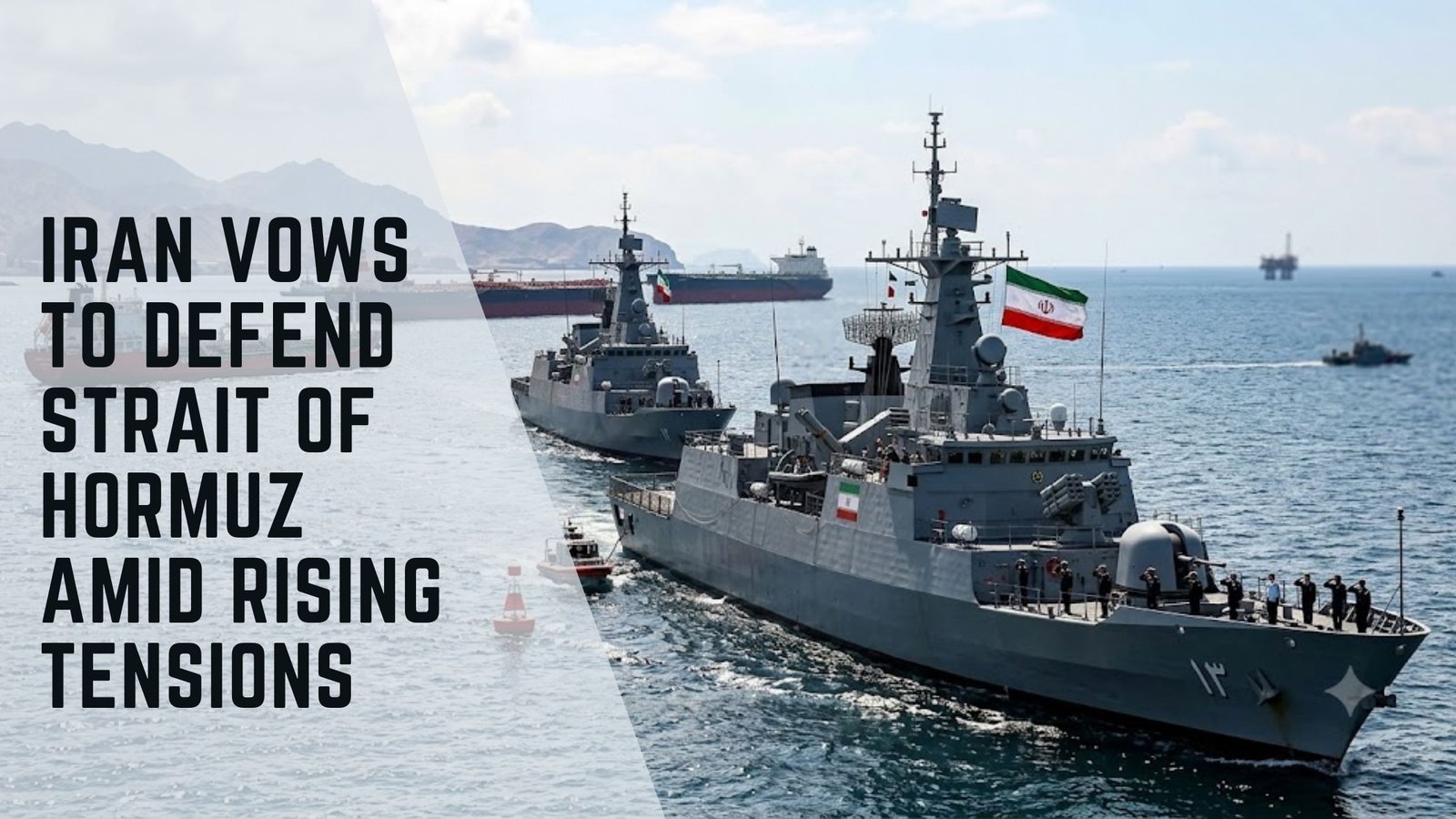

Iran Declares Strait of Hormuz as Non-Negotiable Boundary
In a stern warning on Thursday, Iran emphasized that the Strait of Hormuz is a ‘red line’ for the nation, and any attempt by the United States to compromise its control would be met with significant resistance. This declaration follows a series of US military actions, including a renewed naval blockade aimed at reopening the strategic waterway.
US-Iran Tensions Escalate Over Strategic Waterway
The US has intensified its military operations in the Gulf region, launching a fifth consecutive night of airstrikes and establishing a blockade around Iranian ports. These actions are purportedly intended to break Iran’s closure of the Strait of Hormuz, a crucial conduit for global oil and gas shipments, which has been shut since the breakdown of a fragile ceasefire last Saturday.
Iran’s chief negotiator, Mohammad Baqer Qalibaf, conveyed the gravity of the situation, stating, “We are in an essential and existential war with America.” Brigadier General Mohammad Akraminia, a spokesman for Iran’s military, reiterated the country’s unwavering stance on the strait, asserting that Iran maintains full control over this vital passageway.
Military Maneuvers and Strategic Implications
In response to US military maneuvers, Iran’s military has vowed to resist until the end and neutralize American interventions. According to Iranian officials, the only acceptable path to reopening the Strait of Hormuz involves US adherence to a previously signed 14-point memorandum and compliance with Iranian shipping regulations.
US military sources have indicated that recent strikes are part of a broader strategy to diminish Iran’s military capabilities, thereby facilitating more complex operations aimed at controlling the strait.
Potential for Escalation and Regional Impact
President Donald Trump has threatened to escalate the conflict by targeting Iranian infrastructure unless Tehran resumes diplomatic negotiations. In retaliation, Iran’s armed forces have pledged to launch a comprehensive assault on regional infrastructure, which they claim will be more severe and widespread than previous engagements.
Iran has already targeted US military bases in Kuwait and Jordan, warning neighboring states against facilitating American military actions. Iran’s military reported missile attacks on the Al Azraq Air Base in Jordan and sabotage of installations at the Ali Al Salem Air Base in Kuwait.
Bahrain’s defense systems successfully intercepted Iranian aerial attacks, illustrating the growing reach of hostilities. The situation underscores the potential for a broader regional conflict, threatening vital energy routes and infrastructure.
Global Concerns and Strategic Alliances
The prospect of a renewed full-scale war in the region looms large, with analysts suggesting that Iran may leverage its Houthi allies in Yemen to disrupt the Bab El Mandeb Strait, another key maritime passage. This move could open a new front against the US, placing additional global energy supplies at risk.
The ongoing conflict has already resulted in significant casualties and displacement, particularly in Iran and Lebanon, where tensions have reignited between Israel and the Iran-backed group Hizbollah.