
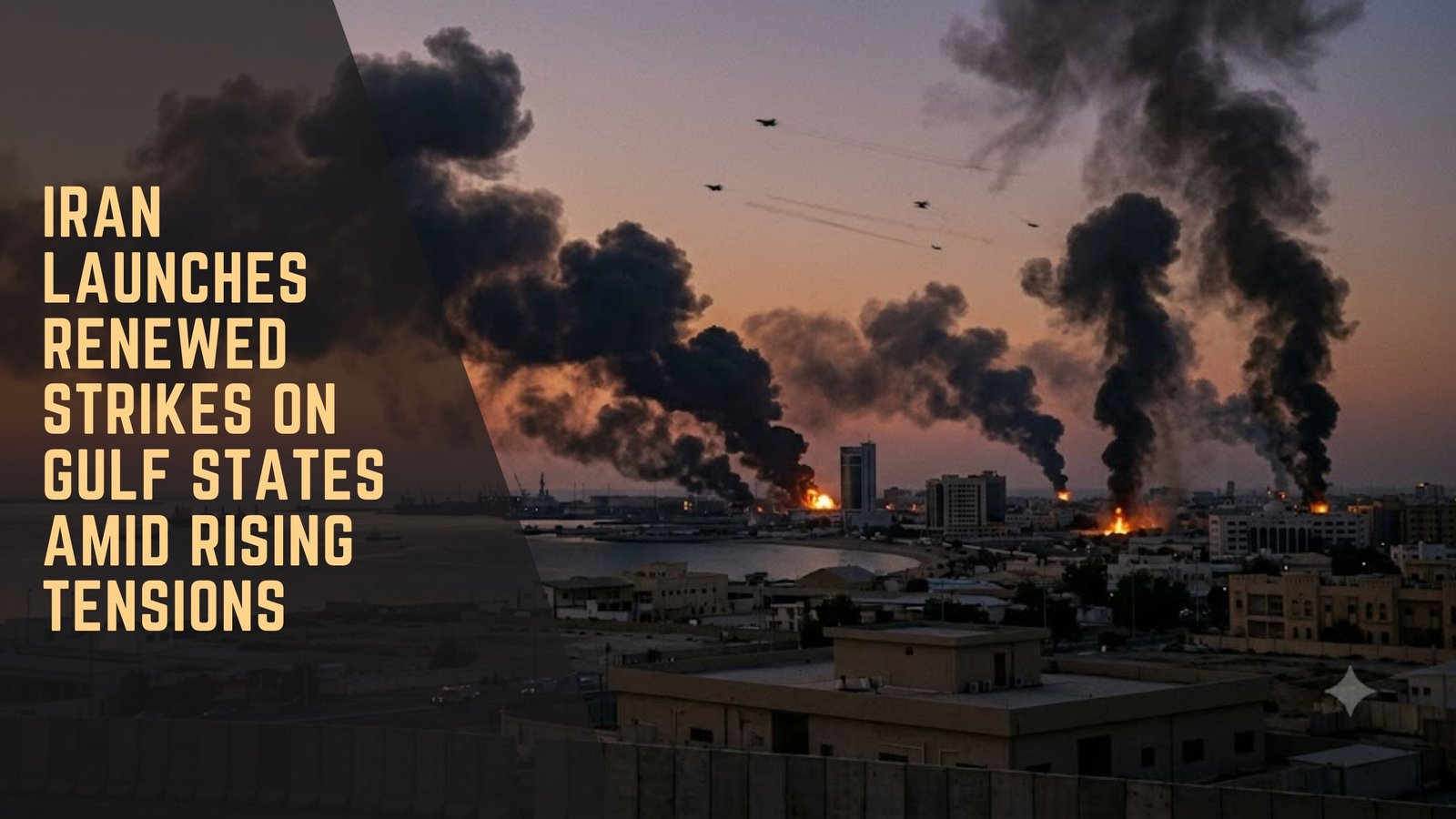

Iran Intensifies Attacks on US Gulf Allies Following Ceasefire Collapse
The geopolitical tension in the Gulf region has escalated significantly as Iran launched fresh attacks on US allies in the area on Saturday. This marks the seventh consecutive night of US military strikes targeting Iranian military infrastructure, following the breakdown of a ceasefire agreement.
Key Targets: Kuwait and Bahrain
Kuwait faced substantial aggression, with a desalination plant being targeted, leading to the suspension of operations at Kuwait International Airport due to heightened missile and drone threats. Iran’s Revolutionary Guards claimed responsibility, asserting they attacked a US military support center at Camp Arifjan and obliterated a radar facility at Ali Al Salem Air Base.
Simultaneously, Iranian state media reported that the Revolutionary Guards also struck in Bahrain, targeting a site at Sheikh Isa Air Base allegedly housing US combat aircraft and an intelligence data center. These actions have not yet been independently verified.
Strategic Maritime and Economic Impacts
Amidst these developments, both Washington and Tehran have targeted maritime activities. The US announced a naval blockade, while Iran claimed it attacked ships violating its navigation rules in the Strait of Hormuz, a crucial channel for global oil supplies. This has led to a 4% increase in oil prices, the highest in over a month, adding political pressure on US President Donald Trump as the November congressional elections approach.
Civilian Infrastructure Under Siege
The conflict has increasingly involved civilian infrastructure, raising concerns about potential war crimes. Iranian media reported missile strikes on power and desalination facilities in Jask, affecting water supply to approximately 10,000 residents across 20 villages. Kuwait also confirmed another attack on its water desalination sites, marking the second such incident in as many days.
International Concerns and Responses
The United Nations Secretary-General, Antonio Guterres, expressed deep concern over the escalation, particularly the attacks on civilian infrastructure in Iran and the wider region. This sentiment reflects the growing international apprehension about the potential for further escalation.
Ongoing Military Operations
The US Central Command announced it concluded its seventh day of operations targeting Iranian surveillance, logistics, and maritime capabilities. Notably, Iranian state media reported further strikes in Hormozgan Province near the Strait of Hormuz, resulting in casualties and damage to infrastructure, including bridges and a road tunnel.
In a related development, Iranian state media reported that US strikes previously hit multiple bridges, a train station, and an airport in southern Iran. The US administration, under President Trump, has not ruled out more extensive air strikes or even a ground assault on Iran’s coastal areas.
Potential Broader Implications
US officials indicated that the strikes are also meant to provide strategic options for President Trump. However, such actions risk provoking Iran into attacking the essential infrastructure of vulnerable Gulf states, or encouraging its allies, possibly in Yemen, to disrupt global energy supplies by targeting shipping routes in the Red Sea.