
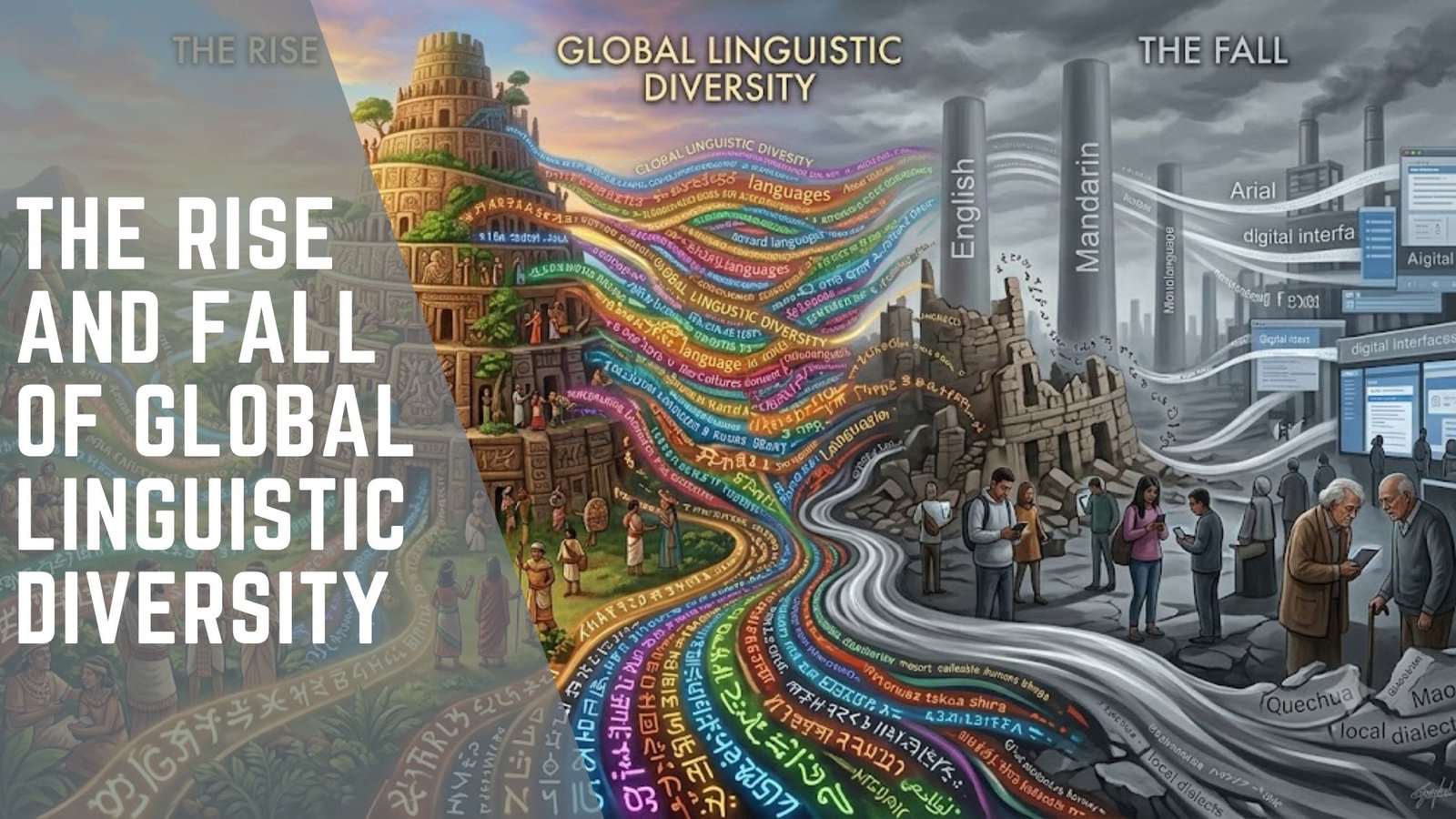

An Era of Linguistic Diversity
Current linguistic landscapes showcase approximately 7,500 active languages worldwide, including prominent ones such as English, Mandarin, Hindi, Spanish, Arabic, and French, counting both native and non-native speakers. While this number may seem extensive, historical research suggests a much more linguistically diverse past.
Historical Linguistic Abundance
Recent studies leveraging mathematical models and insights from anthropology, linguistics, and demography have ventured into estimating the number of languages spoken globally over the past 12,000 years, dating back to the Holocene epoch. This period, which marks the end of the last Ice Age, was identified as a time when the world was a tapestry of linguistic richness.
During the first millennium BC through the first millennium AD, researchers estimate that tens of thousands of distinct languages were spoken. This era, described as a linguistic ‘golden age,’ saw the peak of linguistic diversity, possibly ranging from 30,000 to over 75,000 languages.
Factors Behind Linguistic Decline
Despite this initial diversity, a significant decline in the number of languages has been noted over the centuries. This reduction is attributed to various historical factors. Claire Bowern, a Yale University linguistics and anthropology professor, highlights the role of large empires and colonialism in this decline.
Empires and colonial powers historically pursued linguistic imperialism, often imposing their languages on conquered territories. For instance, England suppressed the Irish language, Spain and Portugal banned indigenous tongues in their colonies, and Japan enforced linguistic shifts in Korea.
The Evolution of Languages
Languages have not only been lost but have also evolved. A prime example is Latin, the language of ancient Rome, which eventually transformed into several Romance languages, including French, Italian, and Spanish, following the fall of the Western Roman Empire.
Some languages, against all odds, managed to endure suppression. The languages of the Inca, Maya, and Aztec civilizations, for instance, survived Spanish colonial efforts to eradicate them.
Present-Day Linguistic Landscape
Today, around half of the world’s languages are considered endangered. This is starkly contrasted by the fact that 90% of the global population communicates in just 10% of these languages. Such figures highlight the vulnerability of many smaller languages, which are often spoken by limited numbers of people.
Efforts to preserve these languages are underway, as each language carries unique cultural knowledge and history, offering invaluable insights into human societies and cognitive processes.
Preserving Linguistic Heritage
The preservation of linguistic diversity is not merely about saving words but sustaining cultural heritage and history. Each language embodies the collective memory of the communities that speak it, providing a window into past societies, their lifestyles, and their interactions with the world.
As modern societies continue to globalize, the challenge remains to protect and revitalize endangered languages, ensuring that linguistic diversity continues to enrich the human experience.