
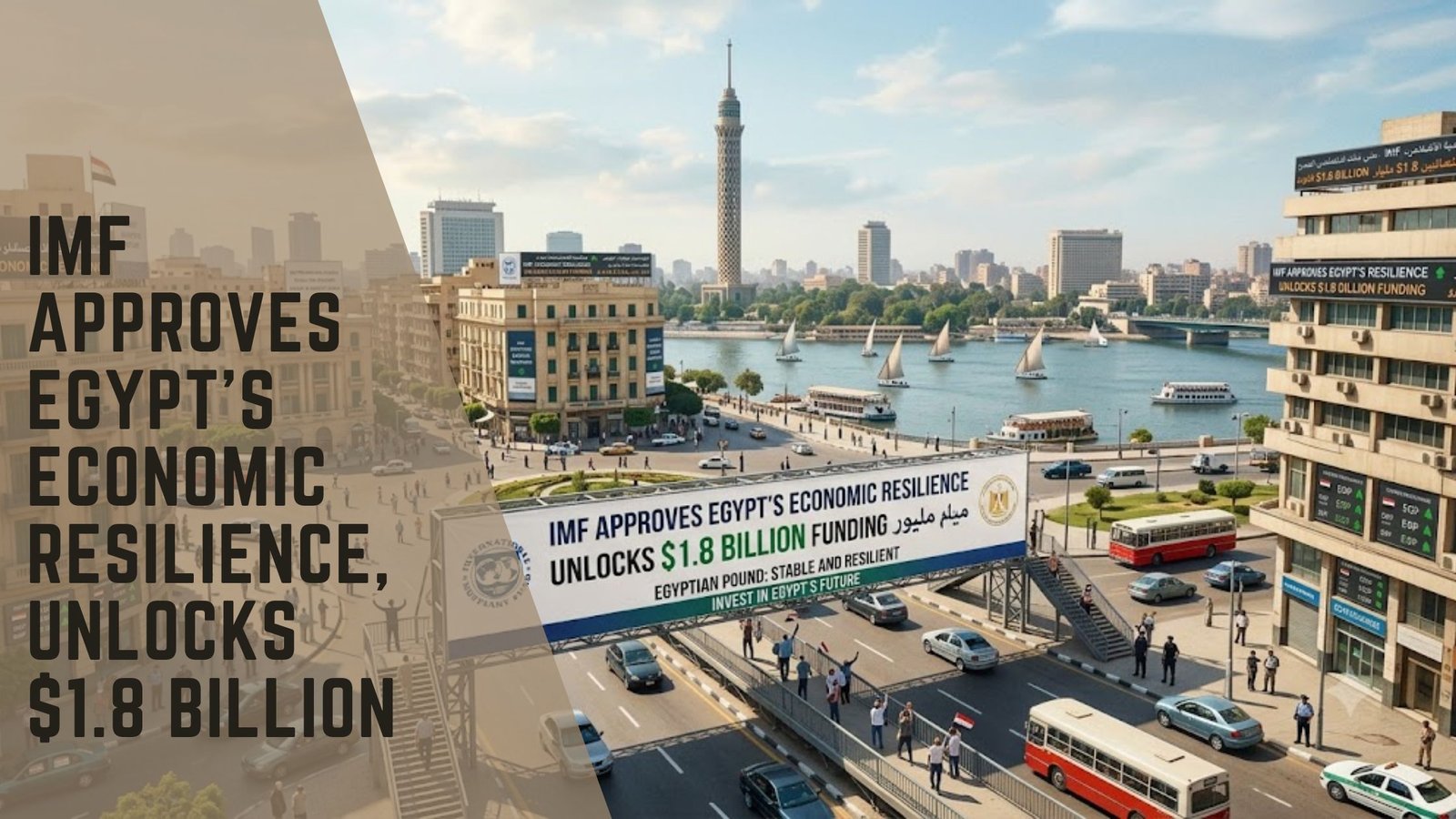

IMF Completes Reviews and Releases Funds for Egypt’s Economy
The International Monetary Fund (IMF) has announced the successful completion of two crucial reviews concerning Egypt’s economic facilities, unlocking approximately $1.8 billion for the nation. This development signifies a pivotal advancement in Egypt’s ongoing economic recovery and resilience against geopolitical impacts.
Funding Details and Economic Context
Under the IMF’s 48-month loan program, Egypt is set to receive $1.5 billion following the seventh review. Additionally, $272 million will be provided through the Resilience and Sustainability Facility. These funds are part of a broader agreement with the IMF that totals $7.3 billion in disbursements. Initially, Egypt entered into this agreement with the IMF in December 2022 for $3 billion, which was later expanded to $8 billion in March 2024 during a period marked by heightened inflation and currency shortages.
Egypt’s Economic Resilience Amid Regional Conflict
The IMF has noted Egypt’s robust economic stance amidst the ongoing Middle Eastern conflicts. The country’s economy has demonstrated considerable resilience, aided by strategic macroeconomic policies, including a flexible exchange rate, adjustments in fuel prices, and stringent state spending controls. As a result, economic growth reached 5% in the third quarter of the 2025/26 fiscal year, with projections suggesting a 4.6% growth for the entire year.
Challenges and Vulnerabilities
Despite these positive indicators, the IMF has identified ongoing vulnerabilities within Egypt’s economy. Key concerns include high public debt levels, significant financing needs, and a substantial state presence in various sectors. The IMF has emphasized the necessity for Egypt to expedite efforts to diminish the state’s economic role and foster an environment conducive to private sector investments, including the divestment of state assets.
Drone Strike Heightens Shipping Risks
Compounding economic challenges is a recent incident involving a drone strike at the Mediterranean port of Damietta. This attack resulted in fires on two gas vessels, posing a new threat to the critical shipping route via the Suez Canal. The canal remains one of the few major export conduits available to Saudi oil amidst the ongoing US-Iran tensions. Although no group has claimed responsibility for the attack, Iranian officials have denied involvement, urging regional vigilance against potential provocations.
Impact on Global Trade and Regional Security
The conflict has significantly disrupted shipping through the Strait of Hormuz, a vital channel in the global energy trade. Prior to the escalation, this waterway facilitated the transport of approximately 20% of the world’s oil and liquefied natural gas supplies. The strait is now a contentious point in peace negotiations and a recurring source of conflict escalation, impacting global supply chains and regional stability.