
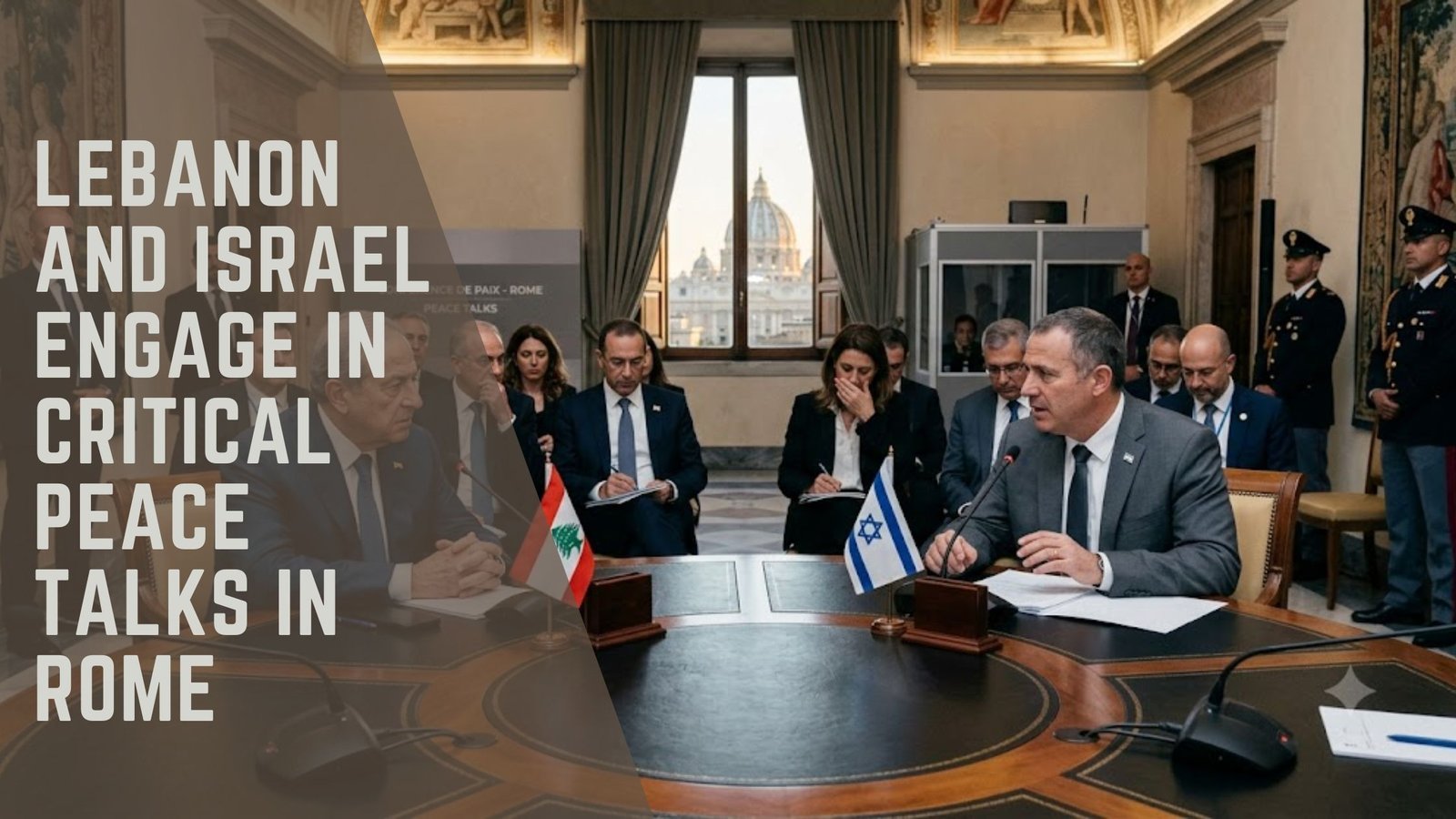

Lebanon and Israel Commence Key Negotiations in Rome
Lebanon and Israel have embarked on a significant new round of direct talks in Rome, supported by the United States, as they work towards resolving longstanding regional tensions. These negotiations, scheduled to continue through Thursday, aim to build on previous discussions and address critical issues affecting both nations.
Background and Framework Agreement
In June, a pivotal framework agreement was reached in Washington between the two nations. This agreement outlines essential steps, including the disarmament of Hizbollah, the phased withdrawal of Israeli military forces from southern Lebanon, and the deployment of the Lebanese army to designated areas, referred to as ‘pilot zones’. The agreement marks a substantial effort to stabilize the volatile region and has been instrumental in shaping the current discussions.
Impact of Recent Conflicts
The latest round of talks follows a series of escalations that began in March when Hizbollah launched rockets into Israel, aligning with Iran’s interests in the region. Israel responded with a robust military campaign, including airstrikes and a ground invasion that Lebanon claims resulted in over 4,300 casualties. This conflict has underscored the urgency for a diplomatic solution to prevent further violence.
Challenges and Criticisms
Despite the diplomatic efforts, challenges remain. Hizbollah’s leader, Naim Qassem, has vocally criticized these negotiations, claiming they bring ‘shame, humiliation, and successive compromises’ to Lebanon. In a televised address, he also targeted Lebanon’s President Joseph Aoun, accusing him of divisiveness and failing to act as a neutral leader, which he argues undermines Lebanon’s national strength.
International Encouragement and Progress
The international community continues to encourage both nations to pursue constructive dialogue. Italian Foreign Minister Antonio Tajani has urged Lebanon and Israel to maintain a cooperative spirit in their discussions, emphasizing the importance of implementing the framework agreement. Progress has been observed, with Israel’s military recently withdrawing from the outskirts of Zawtar al-Gharbiya, one of the initial pilot zones, allowing the Lebanese army to take control and local residents to return to their homes.
Looking Ahead
This week’s negotiations represent the seventh round of US-backed talks, highlighting the persistent efforts to achieve a peaceful resolution. While significant challenges and opposition persist, the commitment to dialogue and the gradual implementation of agreed-upon measures offer a glimmer of hope for future stability in the region. Both nations face a critical juncture, where continued diplomacy could pave the way for lasting peace.