
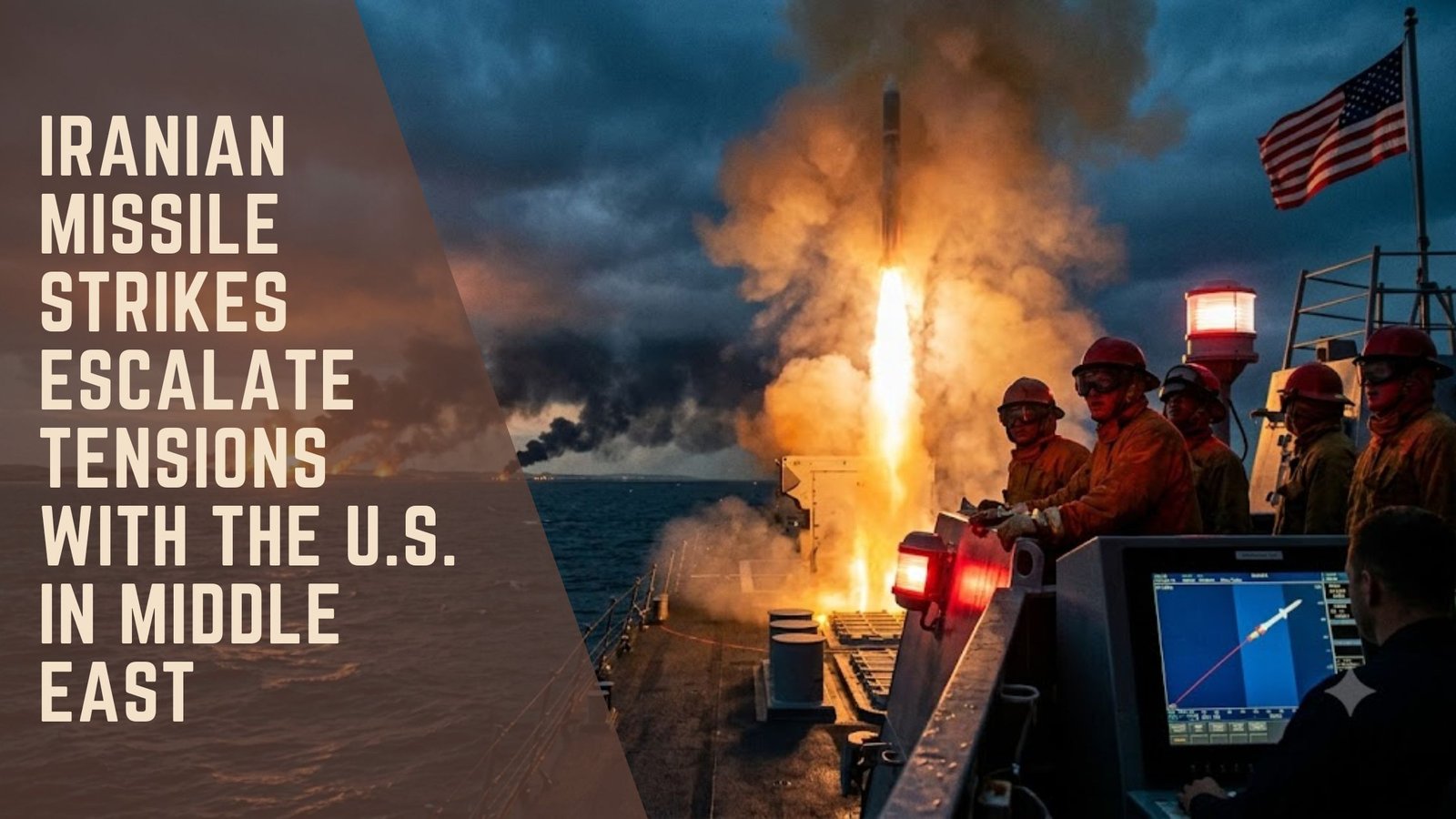

Iran Launches Missile Attack on U.S. Base in Jordan
Tensions between Iran and the United States have reached new heights following Iran’s Revolutionary Guard launching ballistic missiles at a military base in Jordan on Wednesday. This base, utilized by U.S. forces, became the latest focal point in the ongoing hostilities that have plagued the region for the past six months.
Escalation Following U.S. Maritime Actions
The Iranian offensive was reportedly a direct response to recent U.S. military actions, which included the destruction of five Iranian oil tankers. These developments have not only reignited hostilities but have also disrupted the relative calm that had settled over the region in previous weeks. Video footage released by the U.S. Central Command showed the targeted strikes on the tankers, which were described as retaliatory measures against Iran’s earlier attempts to attack a U.S. Navy warship.
U.S. Secretary of State Marco Rubio, while on a diplomatic visit to Colombia, emphasized the American stance, stating that any Iranian attempts to target U.S. naval assets would lead to severe repercussions, including the loss of Iranian vessels.
Jordan’s Defense Systems Respond
In response to the missile strikes near Al Azraq, Jordanian authorities reported their air defense systems successfully intercepted 18 out of the 20 Iranian missiles, with the remaining two landing in uninhabited areas. There were no reported casualties, and U.S. officials confirmed that all American personnel were unharmed, deeming the attack ineffective.
Strait of Hormuz: A New Battleground
In addition to the missile attack on the Jordanian base, Iran’s Revolutionary Guard claimed responsibility for targeting 10 ships in the Strait of Hormuz. Among these were two U.S. vessels and eight oil tankers attempting to navigate through the strategic waterway. Iran has declared parts of the strait as “prohibited and unsafe,” complicating the passage of critical energy supplies and leading to a significant rise in global oil prices.
The Strait of Hormuz remains a pivotal artery for the global oil market, and its security is of paramount importance to international stakeholders. The recent Iranian aggression in this region underscores the potential for further disruption.
Regional Implications and Market Reactions
The escalation has drawn in regional allies and heightened concerns over the stability of energy supplies. Notably, oil prices surged amidst fears of prolonged disruption, with Brent crude nearing the $100 per barrel mark. The situation is further exacerbated by ongoing attacks from Yemen’s Houthi rebels, aligned with Iran, on Saudi Arabia, a leading oil producer.
These developments highlight the broader geopolitical ramifications of the Iran-U.S. conflict, with regional security and global energy markets deeply intertwined.
Historical Context and Future Outlook
Iran’s recent attacks form part of a broader strategy targeting U.S. interests and allies throughout the region. In previous incidents, including one in July, Iran has been implicated in attacks that resulted in the casualties of U.S. military personnel.
The ongoing hostilities underscore the volatility of Middle Eastern geopolitics and the potential for further escalation. As diplomatic efforts continue to mitigate tensions, the international community remains watchful of developments that could lead to broader conflict or impact global energy security.