

Oil Market Reacts to Geopolitical Tensions
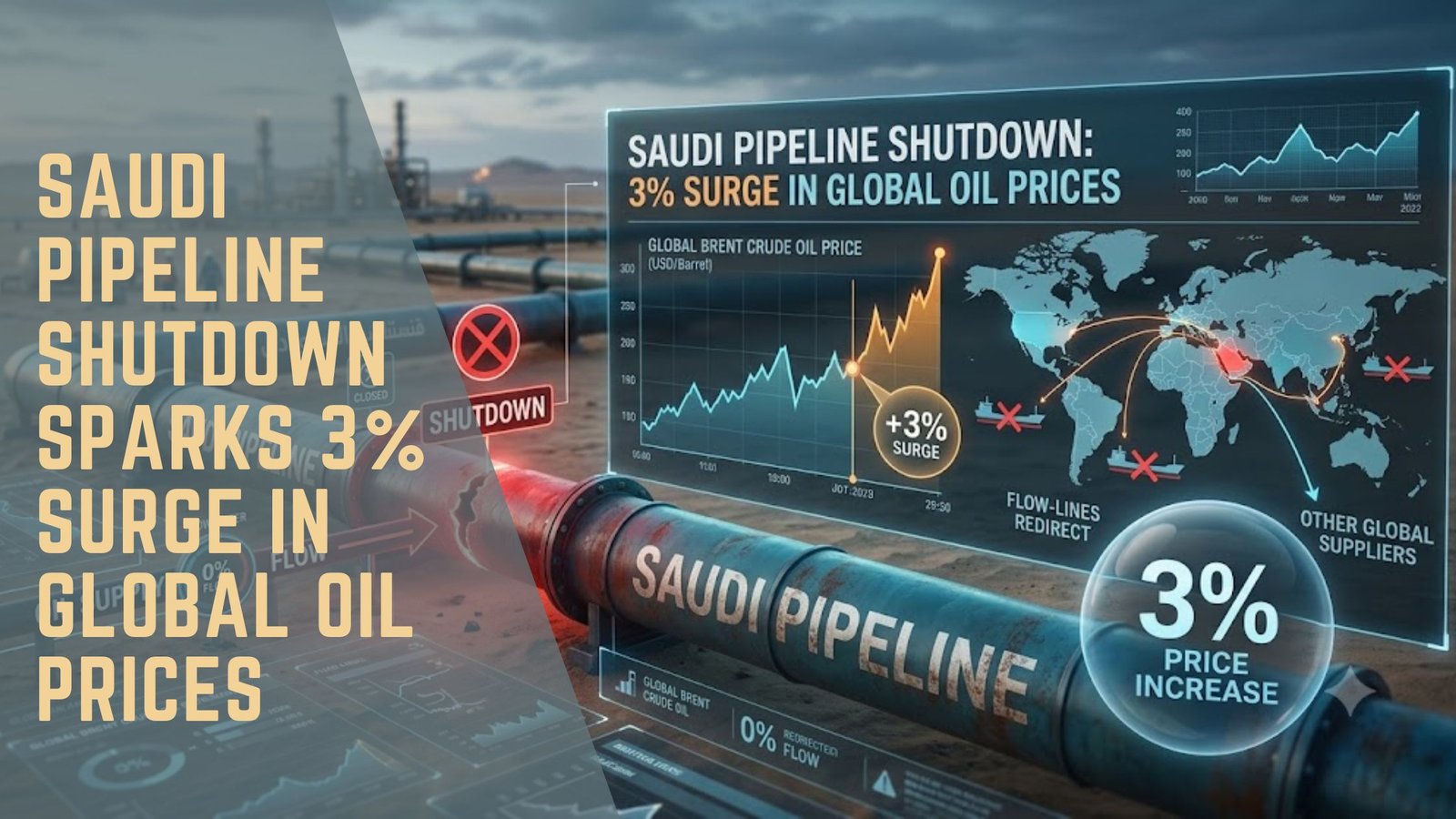
Oil prices experienced a notable increase of nearly 3% on Monday, driven by escalating geopolitical tensions in the Middle East. Recent attacks on Saudi Arabian infrastructure and disruptions in the Strait of Hormuz have intensified concerns over global oil supply, leading to a hike in prices.
Brent and WTI Futures Spike
Brent crude futures saw a rise of $2.93, or 2.8%, reaching $107.54 per barrel by 0700 GMT. Similarly, West Texas Intermediate (WTI) futures increased by $2.88, or 2.9%, hitting $102.93 per barrel. These changes follow a series of aggressive actions that have put crucial oil pathways at risk.
Impact of the Saudi Pipeline Closure
The closure of Saudi Arabia’s East-West pipeline, following a drone attack, has exacerbated supply concerns. This pipeline is essential for redirecting Saudi oil exports away from the volatile Strait of Hormuz. Its shutdown, therefore, poses a threat to approximately 4% of the global oil supply. Currently, the Saudi Red Sea port of Yanbu has reserves to sustain exports for only five to seven days, according to sources familiar with the situation.
Attacks in Saudi Arabia and the Strait of Hormuz
Footage released by Saudi state media depicted damage caused by a Houthi attack in the southern Jazan province, including impacts on homes and a mosque. The Houthis also claimed responsibility for striking a Saudi military base in a nearby province. Concurrently, a vessel traversing the Strait of Hormuz was hit by a projectile, resulting in a fire and necessitating the evacuation of the crew, as reported by the UK Maritime Trade Operations (UKMTO). Iranian officials confirmed casualties from these incidents, with one death and four injuries aboard an Iranian commercial vessel.
Strategic Movements in the Bab el-Mandeb
The Iran-aligned Houthi forces have also advanced to the strategic island of Perim, aiming to assert control over the Bab el-Mandeb strait. This passage is a vital oil transit route, currently facilitating 4% to 5% of global oil supply. The increasing instability in this area has contributed to the rising oil prices, which previously surged by 8% last week, surpassing the $100 mark for the first time since July.
Diplomatic Efforts Face Setbacks
The geopolitical scenario has also impacted diplomatic engagements. Omani Foreign Minister Badr Albusaidi announced the postponement of a meeting scheduled for Monday in Oman between Gulf nations and Iran, meant to address tensions in the Strait of Hormuz. This meeting was intended to foster dialogue amid the ongoing conflict, which began six months ago involving the United States and Israel. Efforts to resume peace talks have been stalled since an interim agreement in June collapsed.
Global Energy Market on Edge
The cumulative effect of these developments underscores the fragile state of the global energy market, which remains highly sensitive to geopolitical shifts. The recent surge in oil prices reflects the industry’s volatility, driven by the complex interplay of regional conflicts, strategic control over transit routes, and the ever-present threat of infrastructure attacks. Stakeholders continue to monitor the situation closely as the implications for global supply chains unfold.