
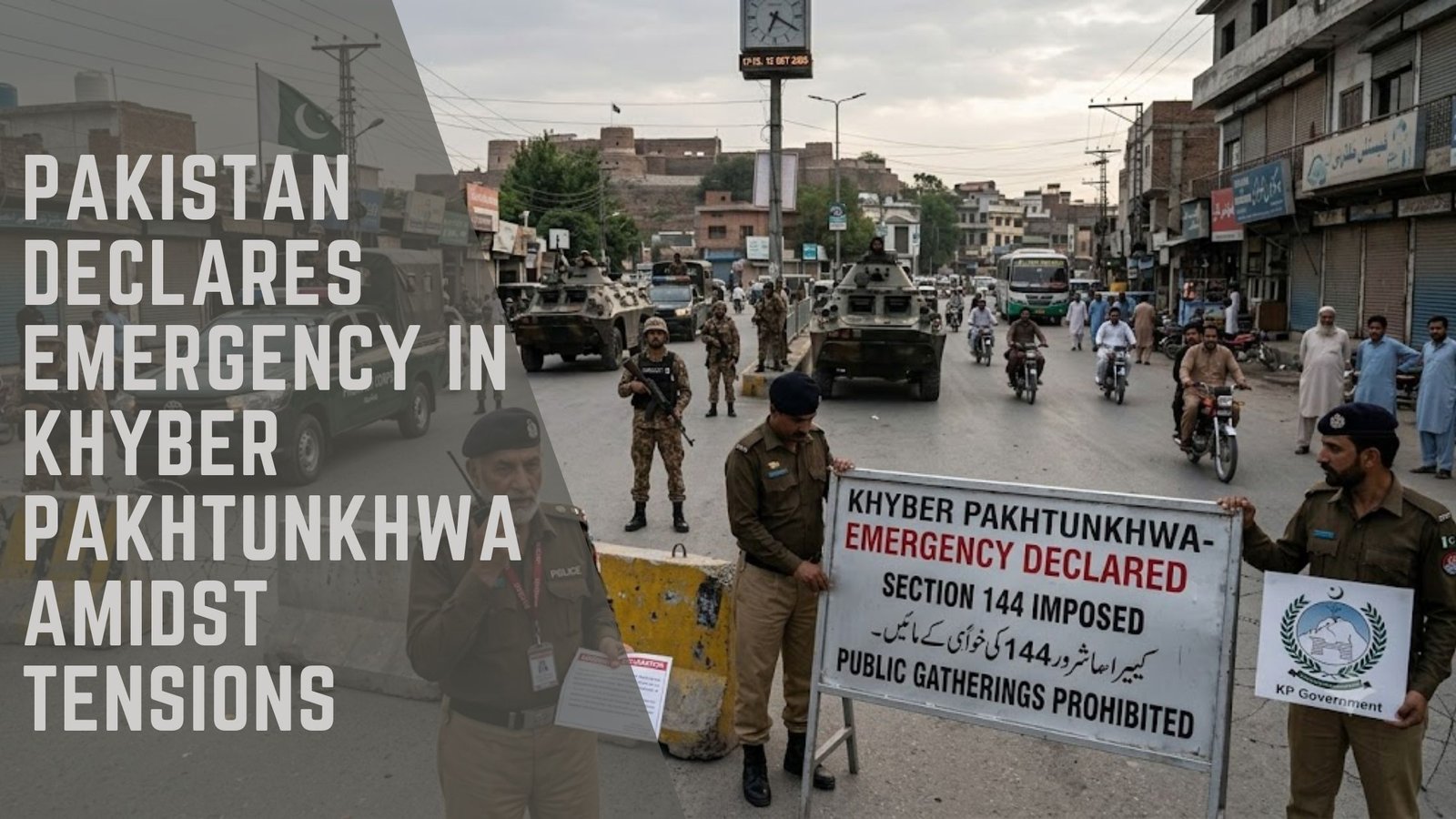

Emergency Measures: Federal Control Over Khyber Pakhtunkhwa
In a decisive move, Pakistan’s President Asif Ali Zardari has declared a state of emergency in Khyber Pakhtunkhwa province, suspending the province’s government, which is led by the Pakistan Tehreek-e-Insaf (PTI) party of the imprisoned former Prime Minister Imran Khan. This development furthers the confrontation between the central government under Prime Minister Shehbaz Sharif and Khan’s political faction.
Background: Political Tensions and Protests
The declaration follows a series of protests organized by PTI supporters, aiming to exert pressure on the federal government to secure Khan’s release. Khan’s detention has been a flashpoint, aggravating the already volatile political landscape, with PTI threatening to escalate their actions, including a potential march on Islamabad.
Government Justification: Security Concerns
According to a statement from Prime Minister Sharif’s office, the decision to impose emergency rule was driven by the provincial government’s alleged inability to effectively counter rising Islamist militancy. The federal cabinet’s resolution underscores the urgency of restoring order and security, suggesting that the situation in Khyber Pakhtunkhwa had reached a critical juncture.
Legal Framework: Emergency Powers Explained
Under Pakistan’s constitution, the federal government is empowered to assume control over provincial functions during a state of emergency. However, the specifics of how Khyber Pakhtunkhwa will be administered under this federal oversight remain unspecified by the president’s office, leaving room for speculation and uncertainty about the future governance of the region.
Opposition Response: PTI’s Condemnation
PTI’s leadership, including Zulfikar Bukhari, a prominent aide to Imran Khan, has vocally criticized the emergency declaration, labeling it a “ridiculous decision.” Bukhari argues that the move undermines the legitimacy of what he describes as the country’s “only legitimately elected government,” predicting that it will exacerbate instability and violence rather than resolve the crisis.
Potential Implications: Stability and Governance
The imposition of emergency rule raises significant questions about the future of democratic governance in Khyber Pakhtunkhwa and Pakistan at large. Analysts suggest that the move could have far-reaching repercussions, potentially increasing political polarization and civil unrest. The decision also highlights the ongoing challenges faced by the Sharif administration in balancing security concerns with democratic norms.
Looking Ahead: The Path to Resolution
As the situation unfolds, the eyes of the nation and international observers remain fixed on how both the federal government and PTI will navigate this impasse. The potential for dialogue and negotiation appears slim, given the current atmosphere of mutual distrust. However, some experts advocate for renewed efforts towards peaceful resolution, emphasizing the importance of political stability for Pakistan’s future.