
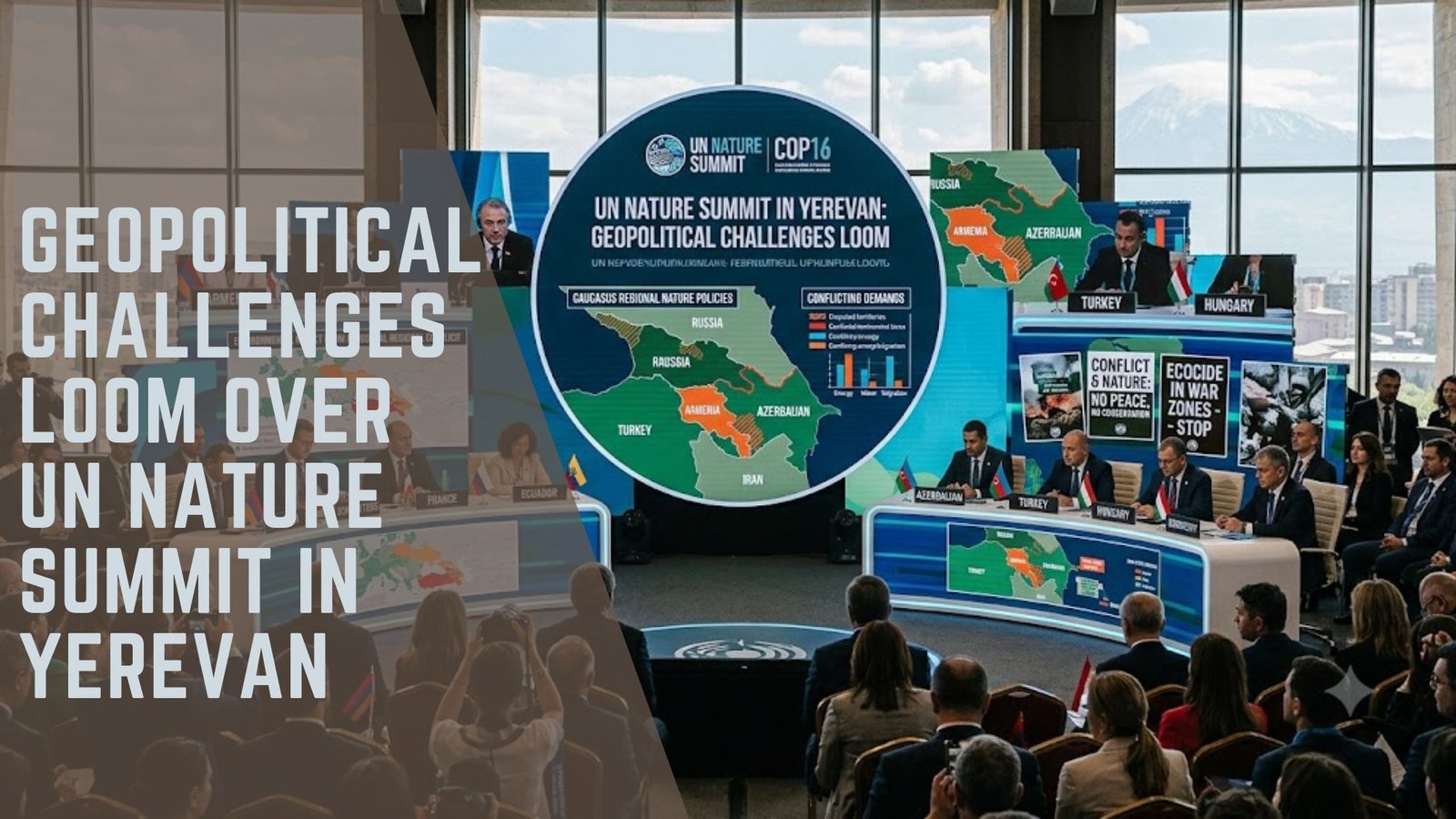

Global Biodiversity at a Crossroads: UN Summit Faces Geopolitical Realities
As international leaders prepare to convene for the United Nations nature summit, COP17, in Yerevan, Armenia, the global biodiversity chief, Astrid Schomaker, acknowledges the formidable geopolitical challenges that lie ahead. The summit, scheduled to begin on October 19, aims to address the pressing issue of biodiversity protection amidst a complex political landscape.
Multilateralism in the Face of Adversity
Schomaker, the executive secretary of the Convention on Biological Diversity (CBD), emphasized the importance of multilateral cooperation in overcoming geopolitical hurdles. Speaking from Montreal, she recognized the impact of global politics on biodiversity discussions but expressed cautious optimism about achieving progress. “Multilateralism needs to prove its value when things are difficult,” she noted, highlighting the enduring potential for international collaboration.
Lagging Targets and the Path Forward
Despite a global agreement reached in 2022, nearly 200 nations are struggling to meet biodiversity targets set for 2030. These targets include reducing invasive species, conserving a significant portion of land and oceans, minimizing pollution, and safeguarding endangered species. Schomaker remains hopeful that these goals are attainable, but only with substantial changes and heightened commitments from participating countries.
United States: An Absent Yet Influential Player
The United States, although not a party to the UN biodiversity convention, continues to wield influence over international environmental negotiations. Its absence from the conference underscores the complexity of geopolitical dynamics, especially as US midterm elections, conflicts in the Middle East and Ukraine, and economic concerns cast a shadow over the proceedings.
Interconnected Challenges: Beyond Borders
As Schomaker pointed out, issues such as food and water security transcend political boundaries, necessitating a united approach to biodiversity protection. Ahead of the Yerevan summit, a global progress report on the 2030 biodiversity goals reveals mixed results, with progress being both slow and uneven across different regions.
Addressing Financial Gaps and Engaging the Private Sector
One of the critical challenges identified for COP17 is addressing the $700-billion annual funding shortfall for nature protection goals. Schomaker emphasized the need to engage the private sector more effectively, citing the slow start of the Cali Fund, a UN initiative launched in February 2025 to attract corporate contributions. Despite its ambitious target of $1 billion annually, the fund has garnered a mere $6,000 so far.
Revisiting Economic Incentives to Protect Nature
Schomaker also highlighted the misalignment of current economic incentives with biodiversity goals. The UN reports that governments allocate approximately $2.6 trillion annually to environmentally harmful subsidies. For every dollar invested in nature conservation, thirty dollars are spent on activities that degrade natural ecosystems. Schomaker argued for a paradigm shift towards incentives that support rather than harm biodiversity.
The Imperative of Urgent Action
The consequences of nature degradation are becoming increasingly evident worldwide, emphasizing the urgent need for concerted efforts. “You destroy nature at your peril,” Schomaker warned, underscoring the critical importance of the upcoming discussions in Yerevan. The summit serves as a vital platform for nations to reaffirm their commitments and collaboratively address the challenges that threaten the planet’s biodiversity.