
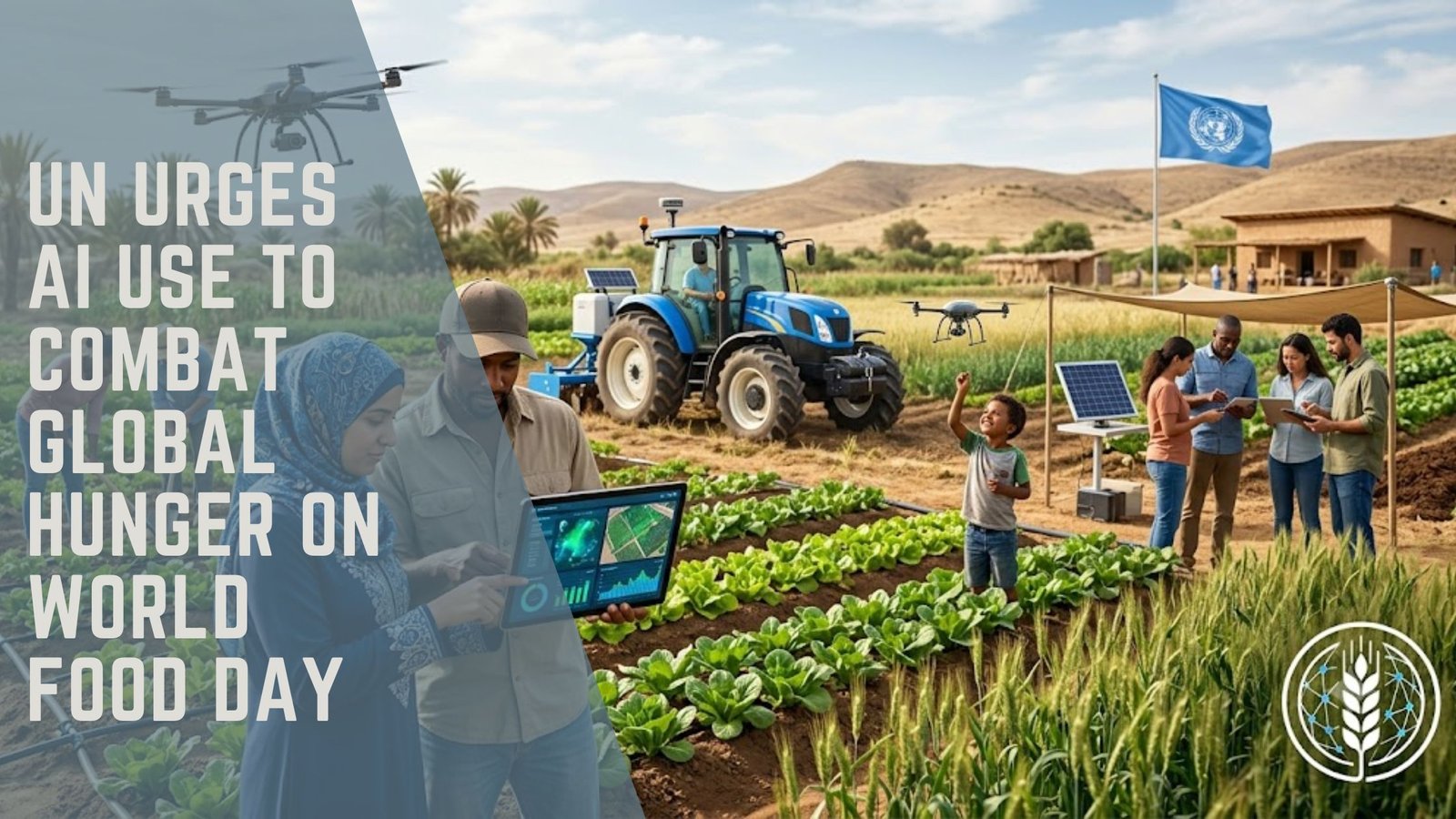

UN Advocates for AI in Global Food Security Efforts
The United Nations has issued a call to action for the global community to leverage technology, particularly artificial intelligence, to address the critical challenge of ensuring safe and affordable food for all. This announcement comes amidst the recognition of food as a fundamental human right, as highlighted during the World Food Day observance.
Pressing Global Food Insecurity Concerns
UN Secretary-General António Guterres emphasized the dire state of global food security, citing that approximately 645 million individuals experienced hunger last year. Furthermore, nearly 2.7 billion people are unable to afford a healthy diet. Guterres pointed out that a series of overlapping crises, including economic disruptions and supply chain issues, have exacerbated this situation, elevating the costs of food and fertilizers and making nutritious diets inaccessible to millions.
“We have the knowledge, technology, and capacity to feed the world. It’s time to use it,” Guterres stated, calling for a concerted effort to harness data, innovation, and technology to ensure comprehensive access to nutritious food.
Integrating Technology for Agricultural Advancement
The UN’s message on World Food Day, celebrated on October 16 under the theme “Innovate Today. Nourish Tomorrow.”, stresses the potential of artificial intelligence in transforming food systems. By utilizing AI, countries can enhance efficiency in food production, optimize supply chains, and improve resource management, thereby making food systems more resilient and sustainable.
AI can play a critical role in various areas such as precision agriculture, which involves using data analytics and machine learning to improve crop yields and reduce waste. Moreover, AI-driven predictive analysis can help farmers adapt to climate changes by providing real-time information and forecasts, enabling better decision-making.
Collaborative Efforts to Tackle Food Insecurity
The UN underscores the importance of collaborative efforts involving scientists, researchers, innovators, farmers, Indigenous communities, and youth. By bringing diverse groups together, the aim is to foster innovative solutions that can be scaled to make nutritious food more accessible and affordable, especially in developing nations.
Mobilizing financial resources is also crucial in this endeavor. Investment in agricultural technology and infrastructure is needed to support smallholder farmers and enhance food distribution networks, ultimately aiming to reduce hunger and malnutrition.
The Role of Policy and Finance
In addition to technological advancements, the UN stresses the need for supportive policies and financial backing to drive change. Governments are encouraged to create an enabling environment that supports innovation and investment in the agricultural sector. This includes policy frameworks that promote sustainable practices and fair trade.
Financial institutions and private sector partners are also urged to contribute to funding initiatives that aim to improve food security. By investing in sustainable agricultural practices and technologies, these stakeholders can play a pivotal role in transforming global food systems.
Looking Ahead
As the world grapples with the challenges of feeding a growing population, the UN’s call to action on World Food Day highlights the urgency of utilizing modern technology and collaborative efforts to ensure food security for all. By harnessing the potential of AI and other innovations, there is an opportunity to create a future where every person has access to safe, nutritious, and affordable food.