

Devastating Earthquake Strikes Colombia
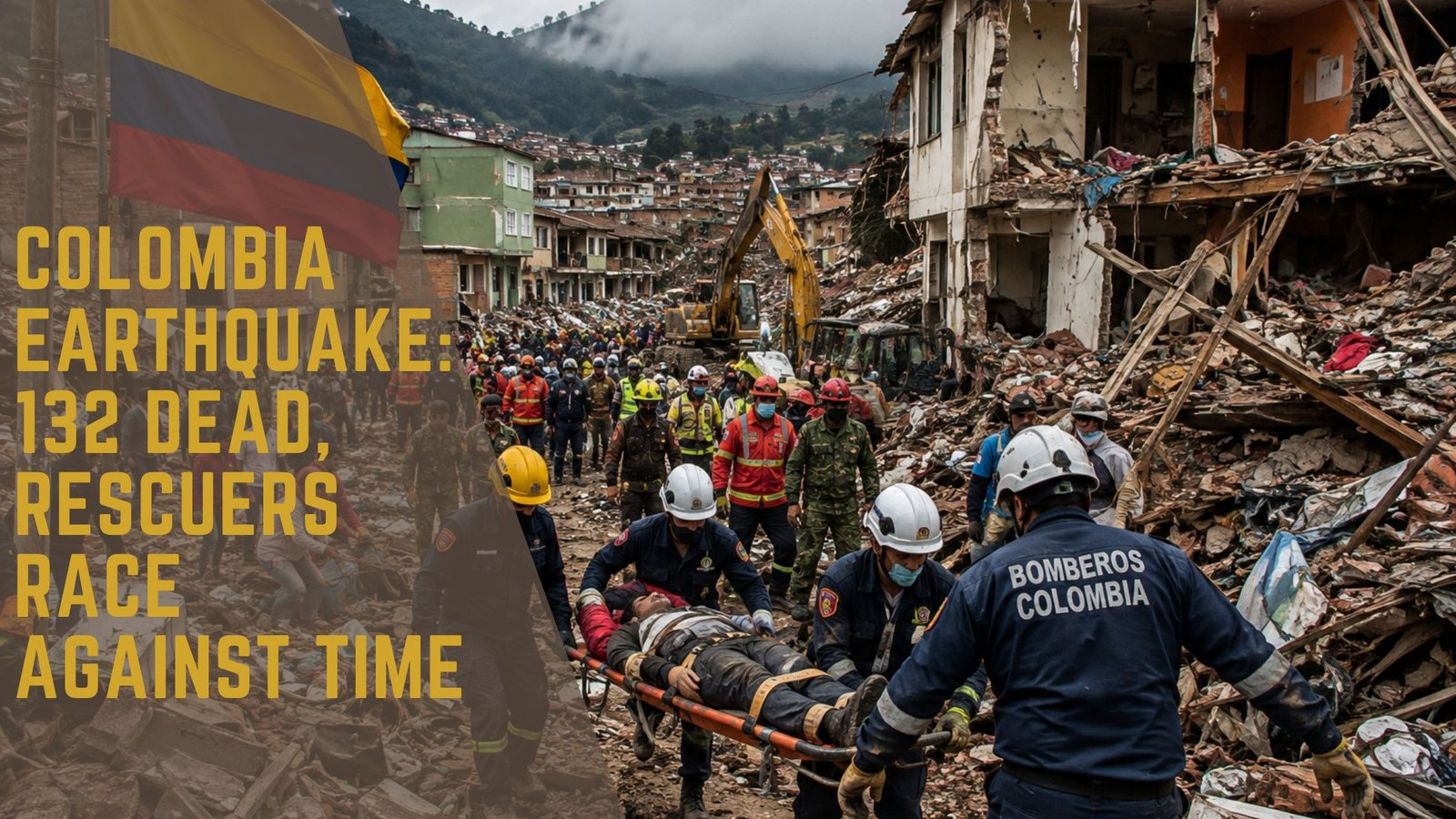
In an unprecedented disaster, Colombia is grappling with the aftermath of a 7.4-magnitude earthquake that has claimed the lives of at least 132 people and injured over 570 others. The quake, the most powerful to hit the nation in a decade, occurred on Tuesday morning, shaking cities across Colombia’s western region and causing widespread destruction.
Immediate Response and Rescue Efforts
Responders and volunteers swiftly mobilized, using their hands and basic tools to clear debris as they searched for survivors trapped under collapsed structures. In cities like Pereira, one of the hardest-hit areas, power outages left many in darkness, compounding the challenges faced by rescue teams.
President Abelardo de la Espriella, who recently assumed office, declared a state of emergency. He promised an extensive rescue operation and support for affected regions. The president, a political newcomer, has prioritized emergency coordination, temporarily halting his other planned activities.
Scenes of Chaos and Destruction
Destruction was starkly evident in multiple cities. In Manizales, a tower of the neo-Gothic cathedral crumpled, while in Quibdo, communications and public services were severely disrupted. Eyewitness accounts describe residents fleeing in panic, with some jumping from buildings to escape the tremors.
Julian Pena, a local dentist, recounted the chaos: “People were praying in the streets, overwhelmed by fear. Many buildings have sustained severe damage, with some entirely collapsed.”
Geological Impact and Historical Context
The earthquake, occurring at a depth of 110 kilometers, was attributed to movements along the Nazca tectonic plate. This seismic event was felt as far as Ecuador and Panama, highlighting its extensive reach.
Colombia is no stranger to seismic activities, being crisscrossed by the Andean mountain ranges. However, landslides have historically caused greater fatalities, as seen in the 1985 Armero tragedy. The recent quake is reminiscent of the 1999 Armenia and Pereira earthquake, which resulted in over 1,000 fatalities.
Flight Suspensions and Infrastructure Damage
In the wake of the quake, Colombia’s civil aviation authority suspended flights at several airports, including those in Manizales, Quibdo, and Pereira, to assess potential structural damages. Visuals from Pereira showed travelers in distress as parts of the airport ceiling collapsed.
Pereira’s mayor, Mauricio Salazar, highlighted the severity of the situation, noting significant casualties and numerous individuals trapped under the debris. Rescue efforts continue as authorities brace for possible aftershocks.
Regional Effects and International Reactions
The quake’s impact was felt beyond Colombia’s borders, with tremors reported in Venezuela’s Tachira state and Barquisimeto city. The U.S. tsunami warning system confirmed no tsunami threat, providing some relief amid the chaos.
Authorities and residents remain on high alert, with rescue operations ongoing. The nation, still reeling from the disaster, is united in its efforts to save lives and rebuild shattered communities.