
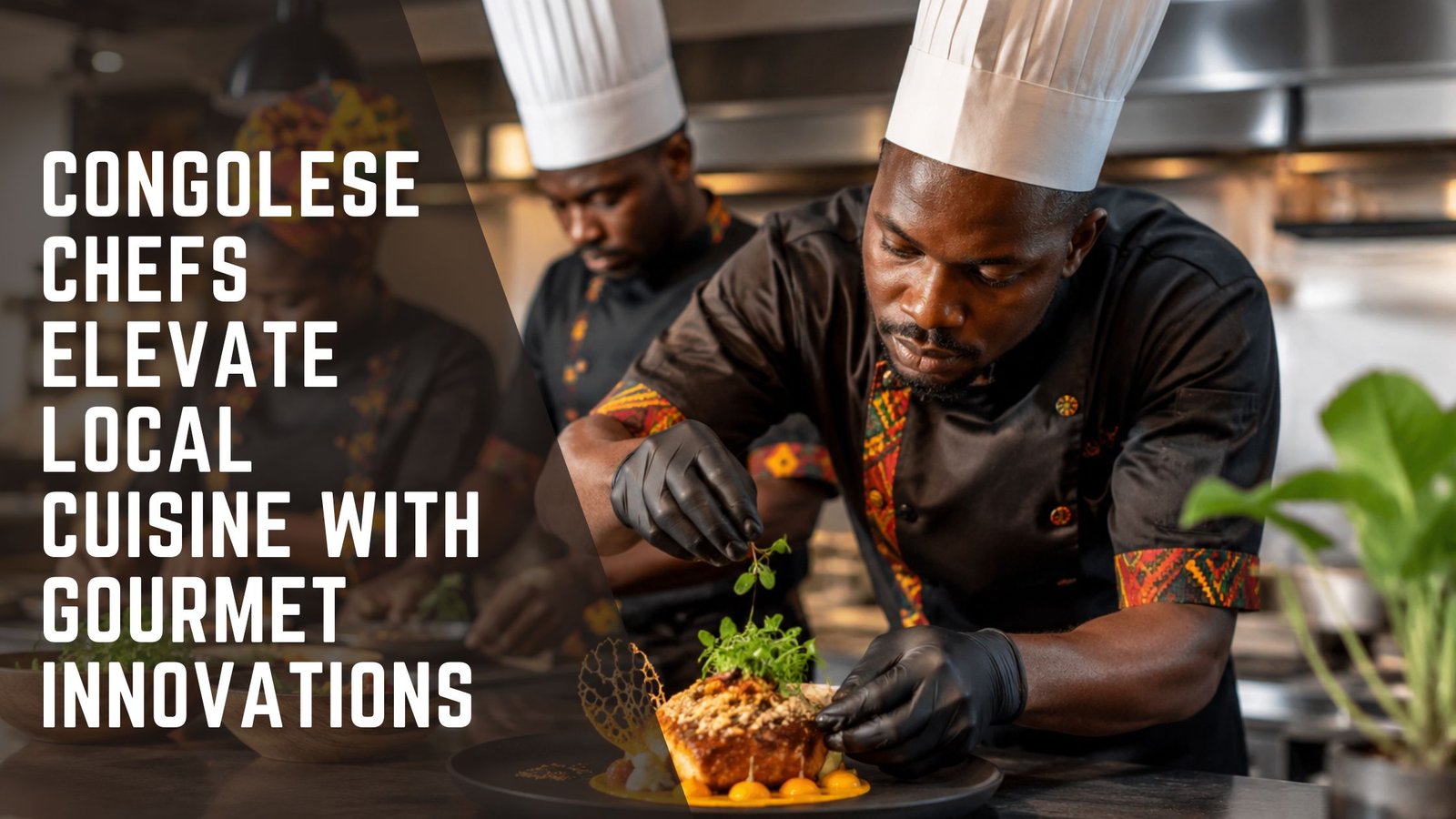

Revolutionizing Traditional Congolese Cuisine
In the heart of the Democratic Republic of Congo (DRC), a culinary renaissance is taking shape as innovative chefs reimagine traditional dishes with a gourmet twist. This movement is centered in Kinshasa, where the upscale restaurant Zaire, named after the country’s former moniker, offers a unique ‘Afro-fusion’ dining experience. Here, local ingredients are transformed into high-end dishes, attracting both Congolese and international elites.
A Fusion of Flavors and Heritage
Amidst the bustling streets of Kinshasa, patrons of Zaire restaurant enjoy breathtaking views of the sprawling city while savoring dishes like kilebu ravioli and sole ballotine enhanced with safou-fruit butter. This culinary fusion is the brainchild of Noushka Teixeira, who returned to the DRC after years in Belgium to highlight the rich culinary heritage of her homeland. ‘When people think of the DRC, it’s often in a negative light,’ Teixeira remarks, ‘but our cuisine offers a different narrative.’
Culinary Passion Meets Challenges
Teixeira, alongside her husband, opened Zaire to celebrate Congolese flavors and challenge the notion that foreign products are superior. In the kitchen, chef Samuel Bobo crafts dishes inspired by childhood memories, such as mboto fish simmered with tomatoes and onions. Despite studying economics, Bobo’s passion led him to master culinary arts under Belgian chefs in Kinshasa, a city with limited formal culinary education opportunities.
Overcoming Supply and Training Hurdles
Running a high-end restaurant in the DRC comes with unique challenges, particularly in sourcing ingredients. With much of the country’s agricultural potential untapped and infrastructure in need of development, Teixeira often relies on imported meat to ensure quality. However, fresh fruits and vegetables are sourced locally whenever possible. Chef Archi Dimosi, operating on the city’s outskirts, has created a network of suppliers to navigate these shortages, sourcing fish from nearby Lake Tanganyika and meat from various provinces.
Adapting to Economic Realities
Dimosi, a self-taught chef who gleaned skills from online French cooking videos, faced economic pressures that led him to transition from running a restaurant to a catering business. Despite the challenges, he remains committed to promoting Congolese cuisine, mentoring young chefs, and developing a cookbook that will serve as a repository of traditional recipes. ‘Young chefs in the DRC face numerous obstacles, but they deserve opportunities to shine,’ Dimosi asserts.
Looking to the Future of Congolese Cuisine
As these chefs continue to refine and elevate Congolese culinary traditions, they also aim to inspire future generations. The existing culinary schools primarily focus on Western dishes, leaving a gap in the education of traditional Congolese culinary arts. By advocating for greater recognition of their native cuisine, these chefs hope to foster a new appreciation for the DRC’s rich gastronomic potential.
Through their dedication and creativity, Congolese chefs are not only redefining local cuisine but also challenging global perceptions of their country. This gastronomic evolution represents a significant cultural shift, highlighting the DRC’s vibrant culinary landscape.