

Hamas Accepts Disarmament Plan to Ease Gaza Tensions
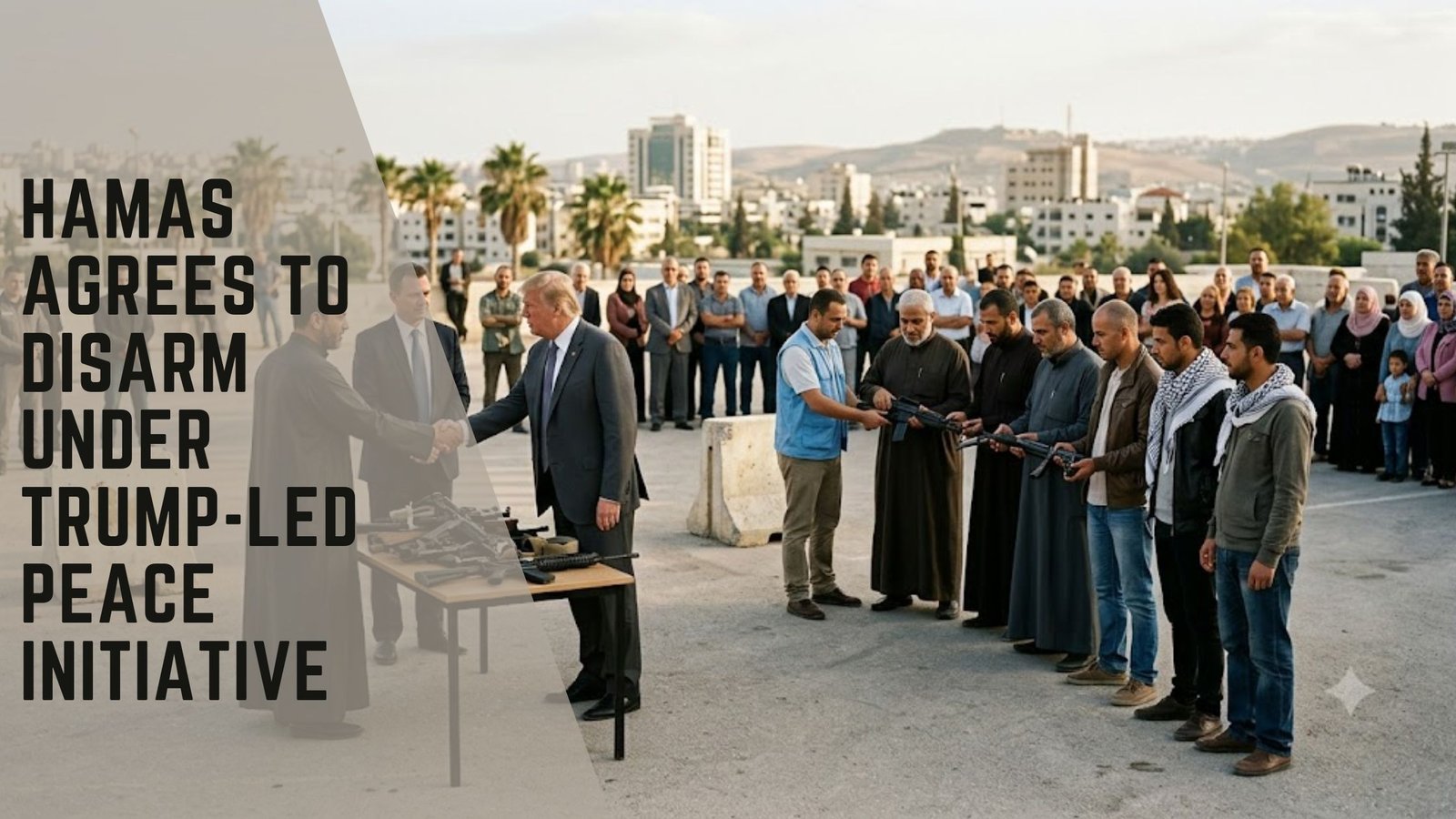
In a significant development aimed at resolving longstanding conflict in the region, Hamas has agreed to a disarmament plan proposed by former US President Donald Trump. The plan, which marks a potential turning point in Israeli-Palestinian relations, involves Hamas surrendering its arsenal to a Palestinian governing body, while Israel would gradually withdraw its forces from the Gaza Strip.
Details of the Disarmament Agreement
Hamas’s decision to disarm is central to the broader peace strategy championed by Trump. The plan outlines the establishment of a committee to manage the disarmament and storage of weapons previously held by Hamas. This committee is expected to operate under the auspices of the National Committee for Administration of Gaza (NCAG), which will facilitate the transition of authority in the region.
The disarmament is seen as a necessary step towards forming a new Palestinian government in Gaza, aimed at bringing stability to the area. Trump’s proposal emphasizes the complete disarmament of Hamas as a condition for Israeli military withdrawal, a contentious point that has been a barrier in previous negotiations.
Reactions from Israel and Concerns
While Hamas has shown readiness to comply with the conditions laid out in the agreement, the Israeli response remains cautious. An anonymous Israeli political source indicated that the terms of the agreement do not fully satisfy Israel’s requirements for the total demilitarization of the Gaza Strip. Furthermore, the issue of Gaza was reportedly not addressed in a recent meeting between Israeli Prime Minister Benjamin Netanyahu and Trump, adding complexity to the situation.
Despite these reservations, the Board of Peace confirmed on social media that Hamas had agreed to a comprehensive roadmap for implementing the ceasefire. This includes a phased transition of authority to a technocratic Palestinian government, overseen by international mediators.
International Mediators and Implementation Challenges
As part of the agreement, Egypt will host a meeting of the truce mediators, including representatives from the United States, Qatar, and Turkey. These discussions will focus on the second phase of the ceasefire plan, ensuring that all parties adhere to the roadmap.
The roadmap outlines the elimination of all tunnels, weapon depots, and production facilities in Gaza. A verification mechanism will be crucial in ensuring that both sides comply with the agreement’s terms, with no exceptions allowed for particular weapons or individuals.
Looking Ahead: The Path to Peace
Negotiators emphasize that the success of the plan hinges on effective implementation and verification. Nickolay Mladenov, a high representative for Gaza from the Board of Peace, stated that real progress depends on the meticulous execution of these plans, with withdrawal and disarmament needing to proceed in tandem.
The road to peace in Gaza remains fraught with challenges. Hamas has already submitted amendments to the roadmap, awaiting an official response from Israel. These amendments focus on certain points regarding the handling of weapons, aiming to address concerns raised by the group.
Ultimately, the success of this initiative could redefine the future of Gaza, offering hope for a peaceful resolution to a conflict that has persisted for decades. However, the path forward requires unwavering commitment from all stakeholders involved, ensuring that the agreement’s lofty goals translate into tangible peace on the ground.