
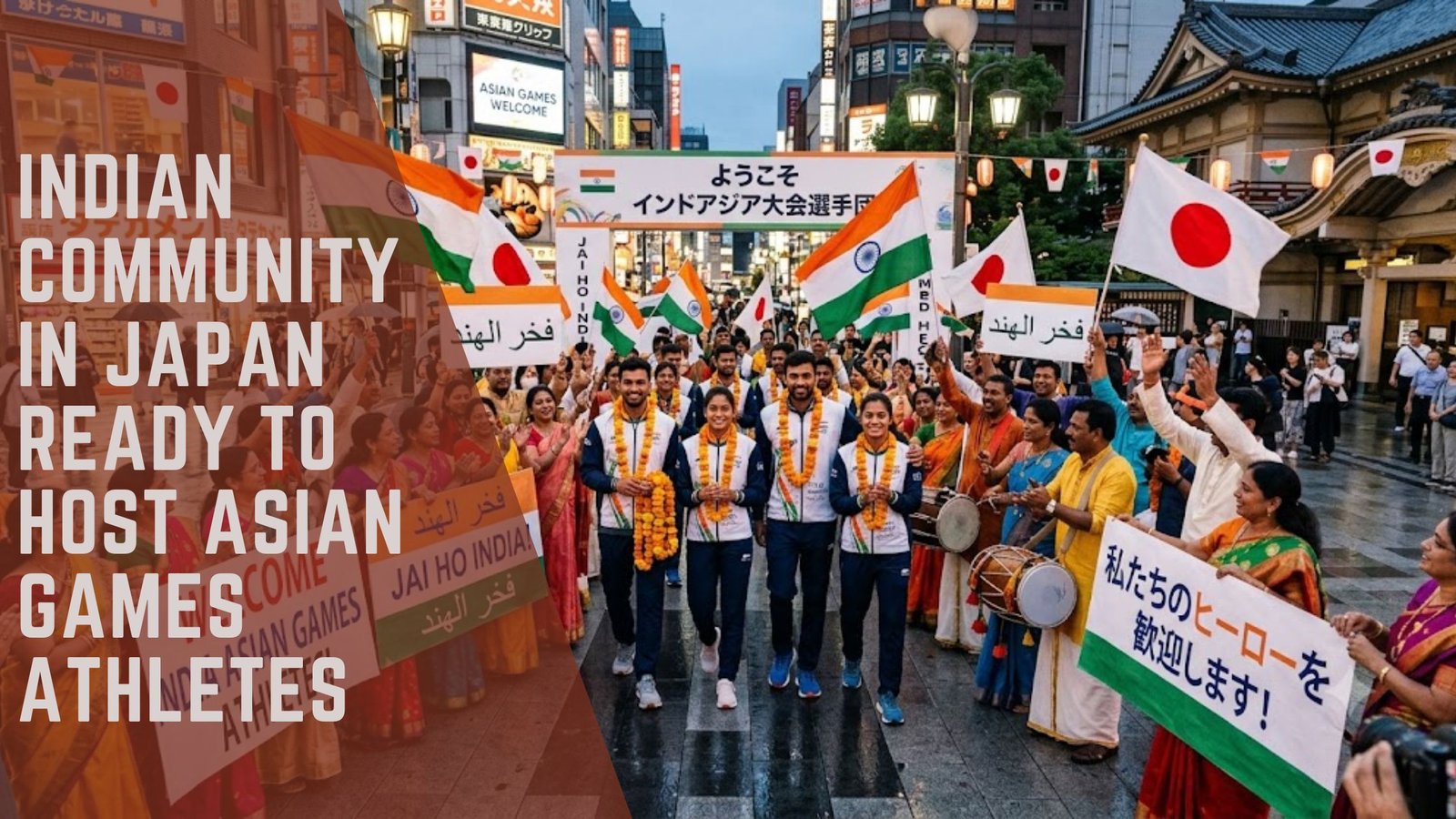

Indian Community in Japan Prepares to Support Asian Games Athletes
As Japan gears up to host the Asian Games, Indian residents in the country are prepared to provide alternative accommodations for athletes if the current arrangements prove insufficient. This potential measure comes amidst concerns over the adequacy of the temporary housing solutions provided by the event organizers.
Accommodation Challenges Ahead of the Games
The Asian Games, set to officially commence in Nagoya and Aichi prefecture, have been overshadowed by logistical issues concerning athlete accommodations. Japan opted not to construct a dedicated athletes’ village, instead opting for a mix of hotel rooms, temporary wooden huts, and a cruise ship to house the approximately 17,000 athletes and officials participating in the event.
However, this decision has faced criticism, as many athletes have expressed dissatisfaction with the lack of storage space and the small size of the beds in their allocated temporary lodgings. This has prompted several participating countries, including India, to explore alternative accommodation options.
India’s Contingency Plans for Athletes
India, which is sending nearly 500 athletes to the Asian Games, has already moved some athletes from the less favorable huts to more comfortable hotel accommodations. To address potential shortages in hotel rooms, contingency measures have been put in place.
“We have secured hotel rooms for our athletes,” stated Sahdev Yadav, India’s chef de mission at the Asian Games and the Indian Olympic Association’s treasurer. “In case these accommodations fall short, we have Indian households on standby to welcome the athletes. They are more than willing to host our sports stars.”
Community Support and Embassy Involvement
The Indian embassy in Japan has played a crucial role in coordinating this community-driven initiative. By reaching out to approximately 2,000 Indian families residing in Nagoya, the embassy has ensured that there is a network of willing hosts ready to offer their homes to athletes in need.
Such community support underscores the strong ties and solidarity within the Indian diaspora in Japan, offering a unique solution to the logistical challenges faced by the Games organizers.
Organizers’ Perspective on Accommodation Strategy
Despite the criticism, the Games’ organizers have defended their accommodation strategy, emphasizing that the arrangements are safe, cost-effective, and comfortable. They have praised Japan’s innovative approach to managing the influx of athletes and officials, suggesting that the move away from a traditional athletes’ village reflects a broader effort to manage costs effectively while ensuring participant safety and comfort.
As the Games proceed, the adaptability and resilience of both the organizers and participating countries will be tested. The willingness of local communities to step in highlights the collaborative spirit necessary to overcome such challenges.
Looking Forward
As the spotlight turns to Nagoya and Aichi for Asia’s largest sporting event, the focus will remain on how well Japan manages the logistical demands of hosting such a large-scale competition. The innovative solutions, community involvement, and international cooperation witnessed so far suggest a promising path forward for the Games’ success.
Ultimately, the Asian Games not only serve as a platform for sporting excellence but also as a testament to international collaboration and community spirit, with the Indian community in Japan playing a pivotal role in this narrative.