
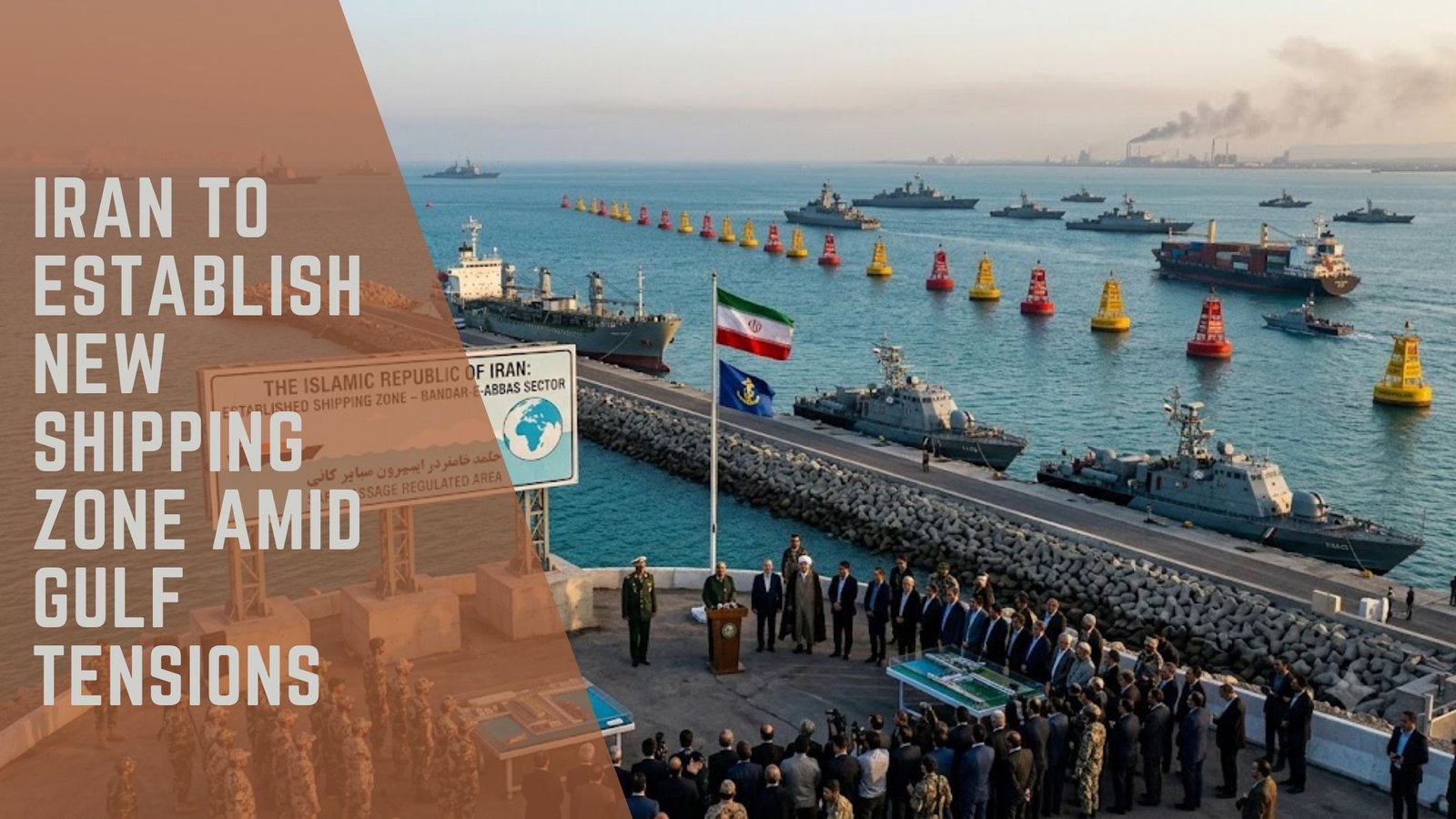

Iran is set to declare a new restricted zone in the Gulf this week, along with detailed mapping of a shipping corridor through the precarious Strait of Hormuz. This announcement follows a weekend characterized by intensified strikes on maritime vessels, which consequently drove oil prices upward on Monday.
Strategic Maritime Directive
The upcoming restricted zone, according to Mohsen Rezaei, Secretary of Iran’s Supreme National Security Council, will commence from the point where the United States’ blockade of Iran begins and extend into Gulf waters. Although Rezaei did not elaborate extensively on these plans during his state TV interview on Sunday, he emphasized that any ship entering the newly designated area would face inclusion on a sanctions list.
Redefining the Strait of Hormuz
Rezaei further revealed that maps highlighting passage routes for the Strait of Hormuz—an essential artery for global energy transport—will soon receive formal approval. “The maps of a new international corridor, which lies in Iranian and Omani waters and will be managed by Iran, have been agreed upon and are expected to be signed shortly,” Rezaei stated.
He underscored that Iran’s commitment to keeping the Strait open hinges on the cessation of “sabotage, threats, and attacks” by the United States.
Escalating Military Exchanges
The backdrop to this announcement is the protracted conflict sparked by US-Israeli military strikes on Iran six months ago. Despite a preliminary ceasefire deal reached in June, peace efforts have stalled, and diplomatic negotiations have yet to yield a viable solution.
Following a temporary lull in hostilities in August, military exchanges resumed with US forces targeting three Iranian oil tankers on Saturday, as confirmed by the US Central Command. The strikes included an attack near Kharg Island, a critical hub for Iranian oil exports. This was in retaliation for assaults by Iran’s Islamic Revolutionary Guard Corps on US naval vessels operating in the region.
Impact on Global Oil Supply
With Iran’s demonstrated capacity to threaten US interests in neighboring territories and potentially disrupt oil shipments through the Strait of Hormuz, global energy markets remain on edge. Prior to the conflict, the Strait was a conduit for nearly 20% of the world’s oil supply.
Recent data shows that, on average, only 10 commodity ships have successfully navigated the Strait daily over the past ten days, marking the lowest rate since May. This decline has contributed to a surge in oil prices, with Brent crude reaching over $97 per barrel, reflecting an increase of 0.8%.
Uncertain Future
The current political and military stalemate underscores the volatile nature of the region, where strategic maneuvers and retaliatory strikes can rapidly alter the landscape. As Iran prepares to implement its new maritime policies, global stakeholders are closely monitoring the situation, anticipating potential shifts in the geopolitical and economic dynamics of the Gulf.