
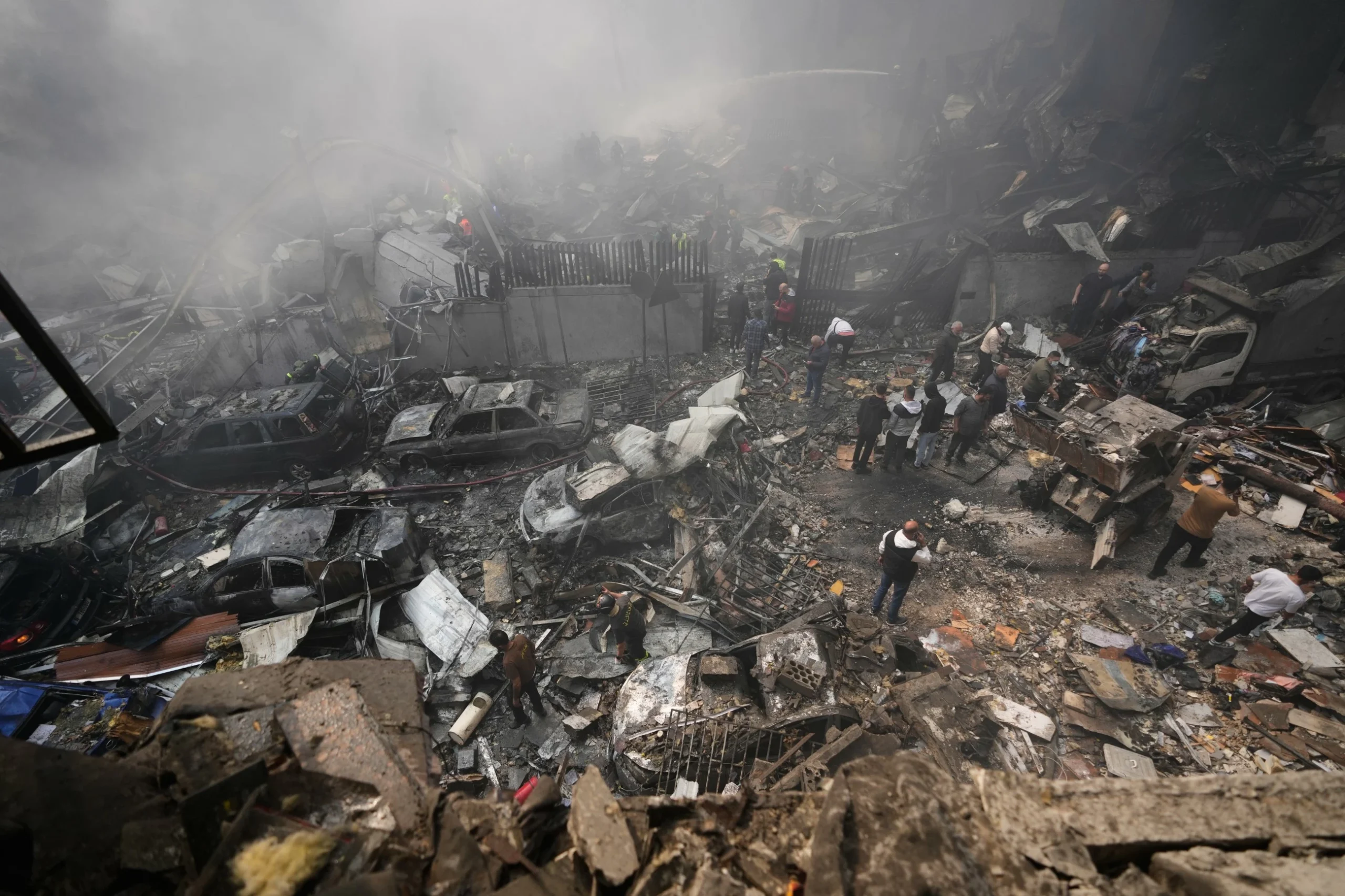

Israel Conducts Massive Airstrike in Lebanon
In a dramatic escalation, Israel executed its most significant air assault on Lebanon in recent weeks, targeting the country with a barrage of 160 bombs within a mere 10-minute timeframe. This development unfolds amid a two-week ceasefire between Iran and the United States, during which Hizbollah, the Iran-backed militant organization, had momentarily halted its offensives against northern Israel and Israeli forces stationed in Lebanon.
Heavy Bombardment Shakes Beirut
On Wednesday, the Lebanese capital of Beirut was engulfed in a series of consecutive explosions, sending plumes of smoke across the cityscape. The Lebanese health ministry confirmed that the strikes resulted in the tragic loss of 112 lives and inflicted injuries on 837 individuals nationwide. The extensive damage and casualties underscore the severe impact of the airstrikes on the civilian population.
Military Operations and Civilian Impact
Lt. Col. Nadav Shoshani, a spokesperson for the Israeli military, stated that the latest offensive was the most extensive since March 1. According to Shoshani, the operation was necessitated by Hizbollah’s tactical shift to disperse and embed its operations within civilian areas, a strategy perceived as an attempt to shield itself from direct military engagement.
“We are observing Hizbollah’s increased efforts to disperse its operations and use civilian areas as cover,” Shoshani explained, highlighting the challenges faced by Israeli forces in targeting the militant group while minimizing harm to non-combatants.
Details of the Military Operation
The Israeli military disclosed that the operation was executed by 50 fighter jets, which unleashed 160 munitions on 100 predetermined targets. The strikes were synchronized to occur within a 10-minute window, amplifying their intensity and impact. This sudden and concentrated assault triggered widespread panic among Beirut’s residents, as it coincided with the typically congested rush hour.
Incidents Involving UN Peacekeepers
In a related incident, Israeli forces fired warning shots at a convoy of Italian UN peacekeepers operating under the United Nations Interim Force in Lebanon (UNIFIL). The convoy, traveling from Shama to Beirut, was forced to halt and return to its base following the warning shots. Italy’s Defence Minister, Guido Crosetto, expressed concern over the incident, which fortunately did not result in any injuries.
Following this event, Italian Prime Minister Giorgia Meloni urged Israel to cease its aggressive military actions in Lebanon, emphasizing the need for stability and peace in the region.
International Reactions and Diplomatic Concerns
The escalation of hostilities and the targeting of UN peacekeepers have triggered diplomatic responses, with Italy summoning the Israeli ambassador to convey its protest. The situation underscores the fragile nature of the ceasefire and the broader geopolitical tensions involving Israel, Lebanon, and Iran.
As the international community watches closely, there is a growing call for restraint and dialogue to prevent further deterioration of the security landscape in the Middle East. The incident serves as a stark reminder of the complexities involved in the region’s conflicts and the urgent need for comprehensive peace efforts.