
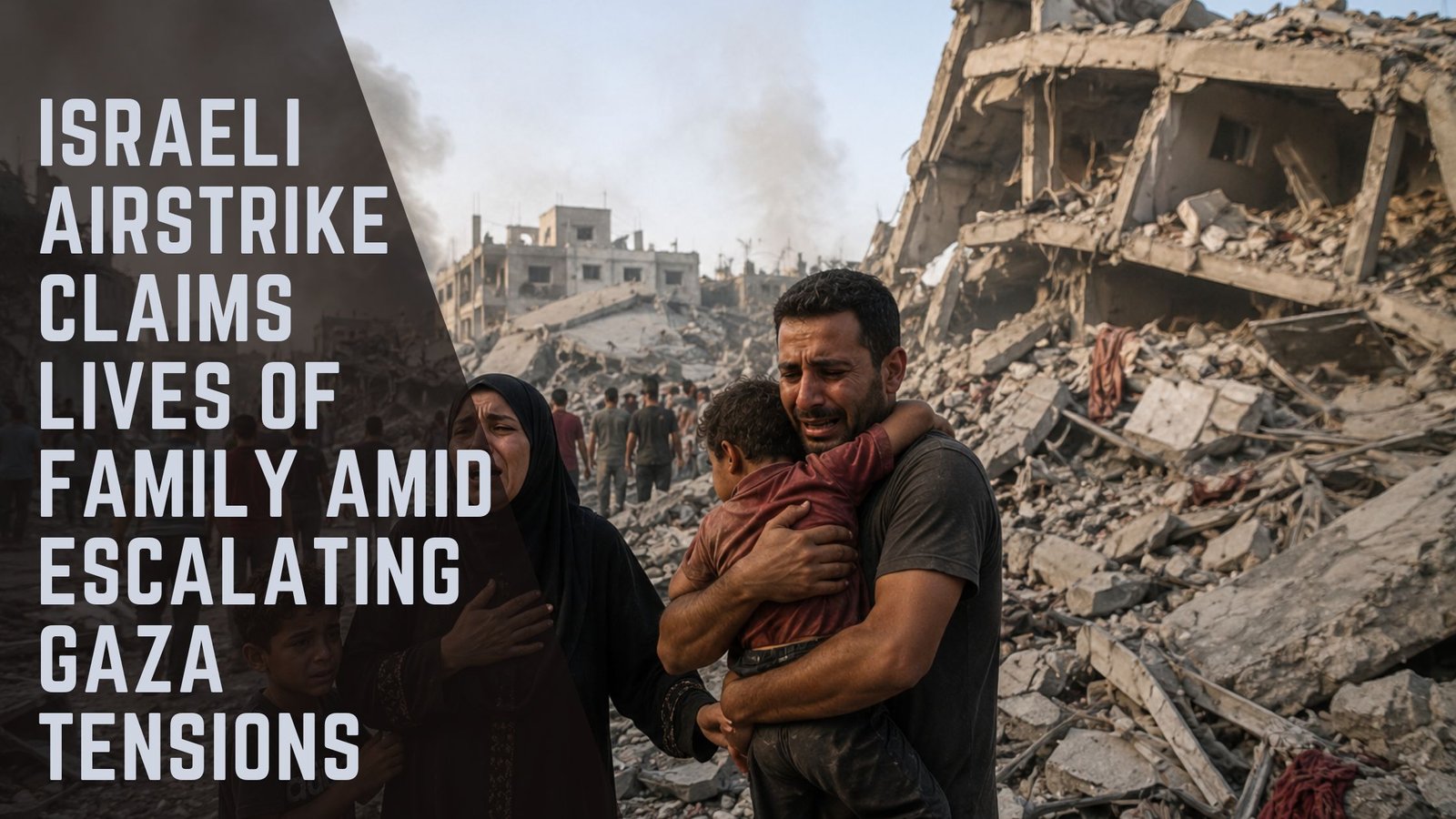

Tragic Airstrike in Gaza City Leaves Family Dead
An Israeli military airstrike in Gaza City on Tuesday resulted in the tragic deaths of a family of six, according to local health officials. The strike targeted a residence in the Sabra neighborhood, killing Firas Al-Masri, his wife Salsabeel, and their four children. The attack also set the family’s home ablaze, contributing to the growing humanitarian crisis in the region.
Military Response and Justification
The Israeli military has confirmed its involvement in the strike, stating that the intended target was a Hamas operative. The military is currently reviewing the outcome of the operation to assess its impact. This incident is part of a broader military strategy that Israel says is aimed at dismantling militant networks in Gaza. Israeli officials have noted that recent operations have targeted members of both Hamas and the Islamic Jihad, including those allegedly involved in the October 7 attack on Israel.
Rising Casualties and Humanitarian Concerns
Since the October ceasefire was breached, more than 1,150 Palestinians, primarily civilians, have been killed in Israeli military actions, as reported by Gaza health authorities. The conflict was reignited following a Hamas-led assault on southern Israel, which resulted in the deaths of 1,200 Israelis and the capture of approximately 250 hostages.
In response, Israel has launched an extensive military campaign in Gaza, leading to significant loss of life and widespread destruction. Gaza health officials have reported over 73,000 Palestinian casualties since the offensive began. The ongoing violence has exacerbated the living conditions in Gaza, where nearly 2 million residents are confined to a narrow coastal strip, many residing in makeshift shelters or damaged homes under Hamas control.
Impact on Civilian Life
The humanitarian situation in Gaza continues to deteriorate as the conflict persists. The densely populated area is grappling with shortages of essential services, including food, clean water, and medical supplies. International organizations have expressed concern over the escalating violence and its impact on civilians, calling for urgent measures to protect non-combatants and deliver humanitarian aid.
International Reactions and Diplomatic Efforts
Global reactions to the ongoing violence in Gaza have been varied, with some countries condemning the loss of civilian life and others supporting Israel’s right to defend itself against militant threats. Diplomatic efforts to broker a new ceasefire have so far been unsuccessful, as tensions remain high and both parties continue to engage in military actions.
International bodies, including the United Nations, have urged restraint and called for renewed dialogue to achieve a sustainable peaceful resolution. The complex geopolitical landscape of the region, coupled with deep-seated historical grievances, poses significant challenges to achieving a lasting peace agreement.
Looking Forward
As the conflict in Gaza continues to unfold, the international community watches closely, hoping for a de-escalation of hostilities. The humanitarian toll is mounting, and the need for a political solution grows more pressing with each passing day. Observers emphasize the importance of addressing the root causes of the conflict to prevent further loss of life and to promote long-term stability in the region.