
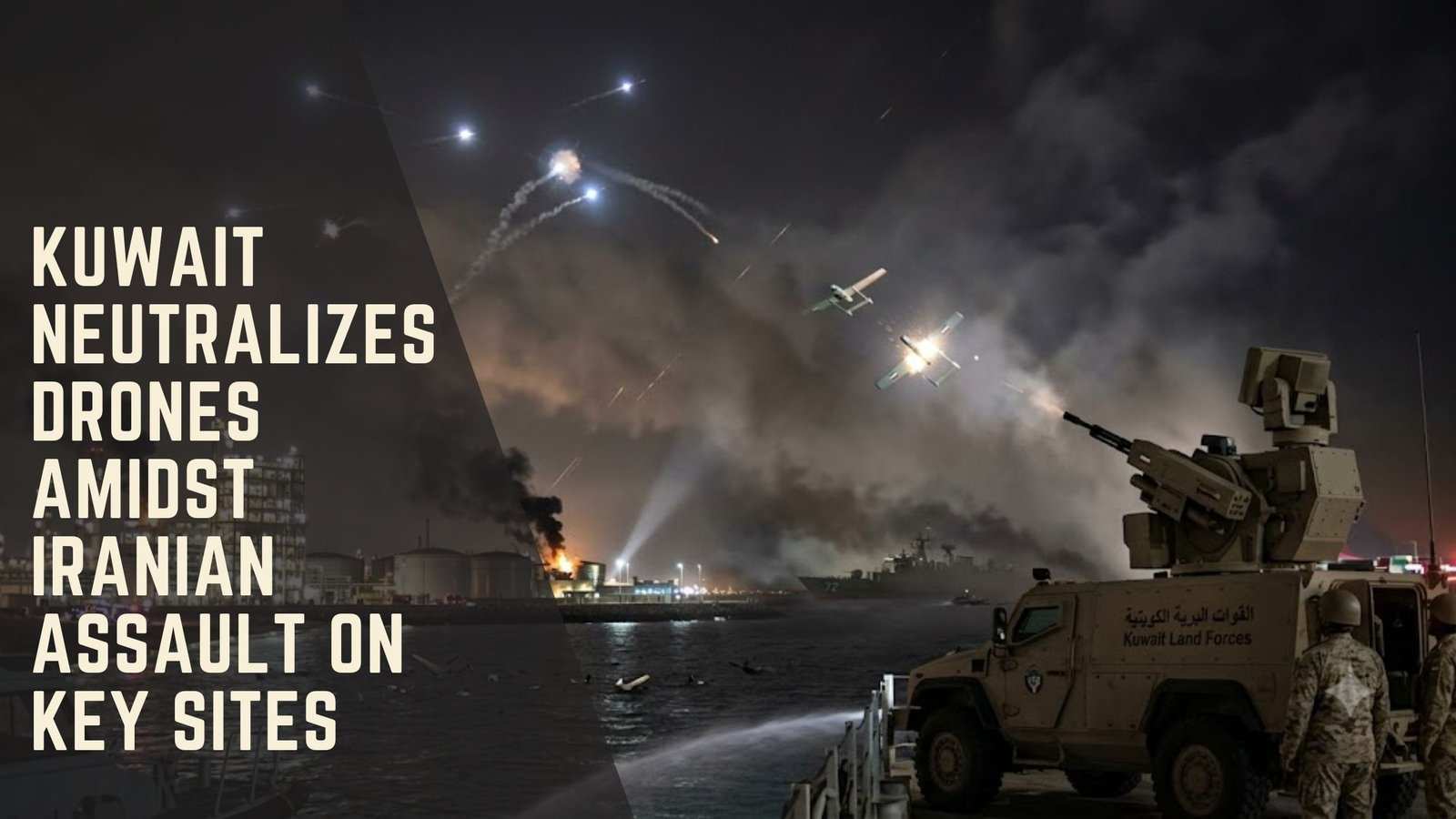

Kuwait Neutralizes Hostile Drones; Iranian Strike Impacts Key Infrastructure
In a significant escalation of regional tensions, Kuwait’s military forces announced on Saturday that they successfully detected and neutralized a series of hostile drones breaching the nation’s airspace from dawn. The incursion, attributed to Iranian military actions, reportedly targeted several critical infrastructure facilities within the country.
Impact on Vital Facilities
The Kuwaiti army reported that the Iranian attack targeted a government facility located in northern Kuwait, as well as civilian assets on Bubiyan Island. The onslaught resulted in material destruction due to falling shrapnel, though fortunately, no casualties were reported.
Details of the Drone Incursion
The incursion began at dawn, with Kuwaiti defense systems promptly detecting the unauthorized drones. Rapid response measures were enacted to ensure the safety of the nation’s airspace and protect critical infrastructure from potential damage.
Military sources emphasized the sophistication of the response mechanisms, highlighting that the drones were intercepted and destroyed before they could inflict significant harm on civilian or governmental structures. The swift action underscores Kuwait’s commitment to safeguarding its sovereignty and maintaining regional stability.
Regional Tensions and Repercussions
This incident marks another episode in the ongoing tensions between Iran and neighboring Gulf countries. The strategic targeting of facilities in Kuwait indicates a possible escalation in Iran’s tactical approach in the region. Analysts suggest that the attack could be part of broader geopolitical maneuvers by Tehran, aiming to assert its influence amidst ongoing international sanctions and diplomatic isolation.
The Kuwaiti government has condemned the attack as a violation of its territorial integrity and is reportedly consulting with international partners to address the security challenges posed by such aggressive actions. The incident has also prompted discussions within the Gulf Cooperation Council (GCC) on collective defense strategies and the need for enhanced security cooperation among member states.
International Response and Future Implications
The international community has reacted with concern to the developments, with calls for restraint and dialogue to prevent further escalation. Regional experts note that such attacks could disrupt not only local but also global economic interests, given the strategic significance of the Gulf region for energy exports.
In the wake of the attack, Kuwait is likely to bolster its defense systems and strengthen alliances to deter future threats. The incident serves as a stark reminder of the volatile security environment in the Middle East and the critical need for diplomatic efforts to de-escalate tensions.
Conclusion
The destruction of hostile drones by Kuwaiti forces highlights the country’s readiness to confront and neutralize threats, safeguarding its national interests against external aggression. As the region grapples with complex geopolitical dynamics, the importance of vigilance and international cooperation remains paramount to ensuring peace and stability.