
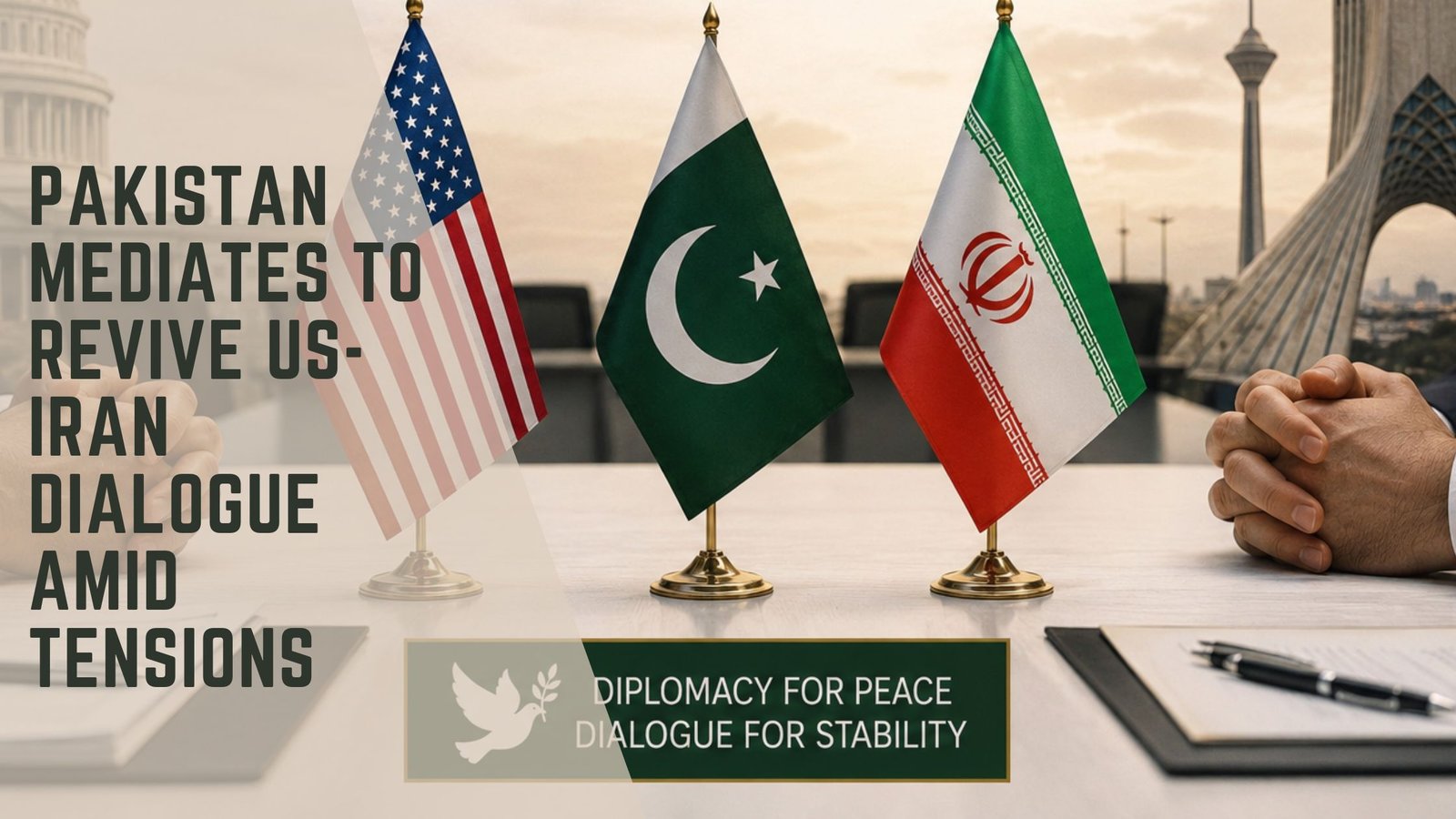

Pakistan’s Role in Reviving Diplomatic Talks
Pakistan has intensified its diplomatic efforts to mediate between the United States and Iran, aiming to restore dialogue under a critical memorandum of understanding (MoU) to which Pakistan is a signatory. The foreign ministry, through its spokesperson Tahir Andrabi, emphasized the nation’s commitment to facilitating constructive discussions between the two countries.
Efforts to Uphold the Islamabad Memorandum of Understanding
The Islamabad MoU, designed to de-escalate tensions between the US and Iran, has been central to Pakistan’s diplomatic initiatives. Andrabi stated, “We are doing our utmost to bring all parties back to the Islamabad MoU,” highlighting Pakistan’s active role in encouraging both nations to adhere to their commitments under this agreement.
Since the signing of the MoU, there have been several challenges in maintaining open channels of communication between Washington and Tehran. However, Pakistan remains optimistic that its mediation efforts will yield positive results.
Challenges in US-Iran Relations
The relationship between the United States and Iran has been fraught with tension, particularly following the US withdrawal from the Joint Comprehensive Plan of Action (JCPOA) in 2018. The subsequent imposition of sanctions on Iran and the latter’s nuclear activities have only added to the strain. In this context, Pakistan’s mediation is seen as a crucial step towards fostering peace and stability in the region.
Despite the challenges, Andrabi noted that both nations have shown a willingness to engage in “technical talks,” which could pave the way for more comprehensive negotiations.
Pakistan’s Diplomatic Strategy
As a nation with historical ties to both the US and Iran, Pakistan is uniquely positioned to act as a mediator. Islamabad’s strategy involves leveraging its diplomatic relationships and regional influence to bring both parties to the negotiating table. Pakistan has consistently advocated for dialogue and peaceful resolution of conflicts, aligning with its broader foreign policy goals.
Andrabi underscored Pakistan’s commitment to regional stability, stating that successful mediation would not only benefit the directly involved parties but also contribute to broader geopolitical stability.
International Reactions and Implications
The international community has been closely monitoring the developments surrounding the US-Iran tensions. Pakistan’s proactive mediation efforts have been acknowledged by various international actors, who view these efforts as a positive step towards reducing the risk of conflict escalation.
Analysts suggest that successful mediation could enhance Pakistan’s standing in international diplomacy, showcasing its capability to navigate complex geopolitical landscapes effectively.
Future Prospects
Looking ahead, much depends on the willingness of the US and Iran to engage in meaningful dialogue facilitated by Pakistan. While challenges remain, there is cautious optimism that Pakistan’s efforts could lay the groundwork for a new era of diplomatic engagement.
The outcome of these mediation efforts could have significant implications for regional and international security dynamics. It remains to be seen how the involved parties will respond to Pakistan’s continued diplomatic overtures.