
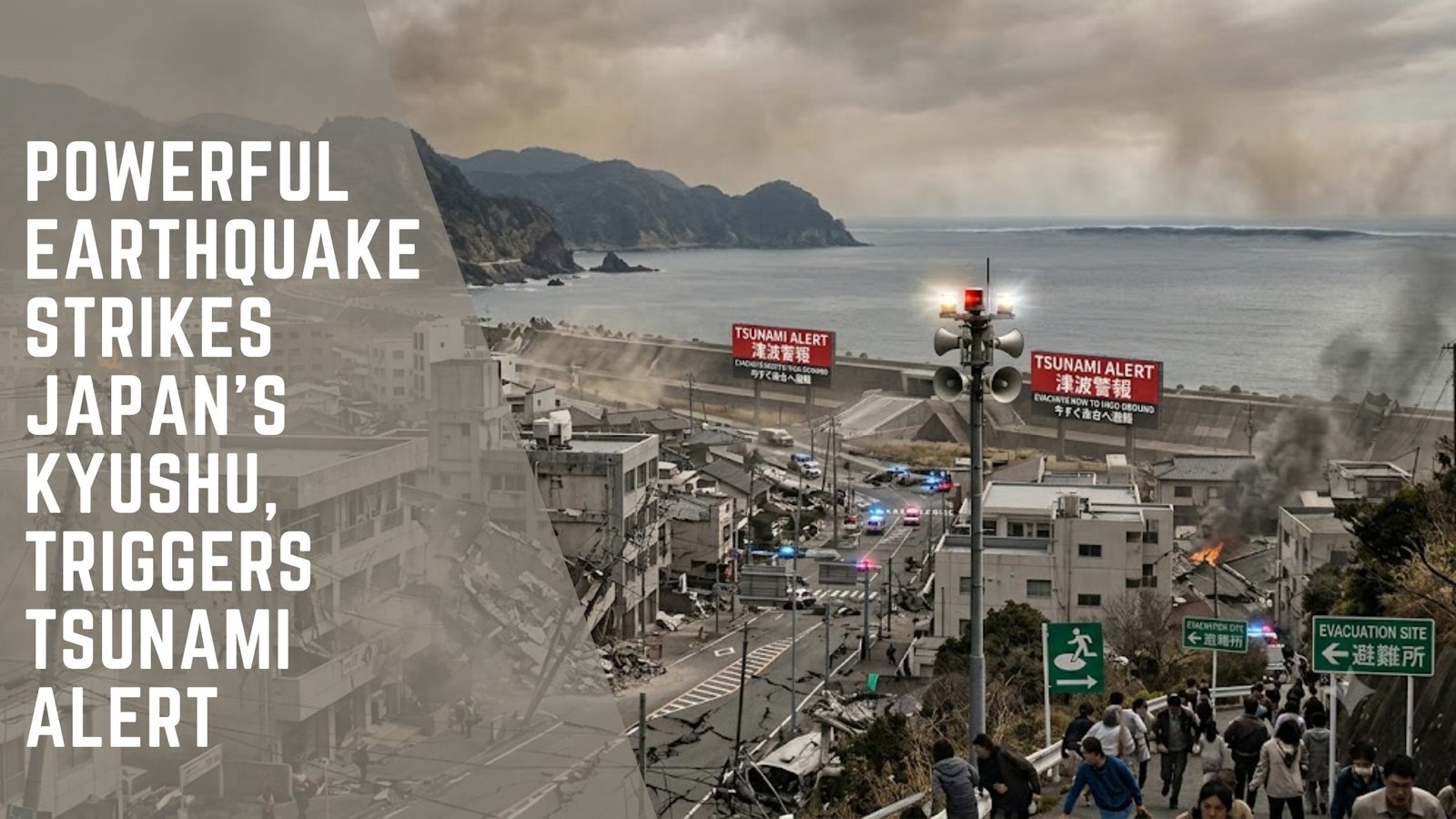

Severe Earthquake Rocks Southern Japan
On Tuesday, a significant earthquake with a preliminary magnitude of 7.1 rattled Japan’s southern region of Kumamoto, according to the Japan Meteorological Agency (JMA). The seismic event led to the issuance of a tsunami warning, advising of potential waves reaching up to 1 meter in height. This prompted immediate safety measures across the affected areas.
Government and Agency Responses
The Japanese government swiftly issued emergency warnings across multiple prefectures in Kyushu, including Kumamoto, Nagasaki, Kagoshima, Fukuoka, Saga, Oita, and Miyazaki. These regions make up the southern part of Japan’s Kyushu island, where seismic activity is not uncommon due to its geographical location.
Located within the Pacific Ring of Fire, Japan is particularly susceptible to earthquakes, accounting for approximately 20% of the world’s tremors with a magnitude of 6.0 or higher. This seismic zone encompasses a series of volcanoes and oceanic trenches that contribute to frequent geological disturbances.
Infrastructure and Public Safety Measures
Following the tremor, Kyushu Electric Power reported no abnormalities at its Sendai and Genkai nuclear power plants, ensuring public safety in the wake of the earthquake. The company confirmed that all systems were functioning normally without any disruptions.
In response to the earthquake, JR Kyushu, a prominent train operator in the region, suspended its services, including the high-speed Shinkansen trains. This precautionary measure was taken to ensure passenger safety and assess any potential damage to the railway infrastructure.
Historical Context and Preparedness
Japan’s preparedness for seismic events is rooted in its history and frequent exposure to earthquakes. The country has invested heavily in infrastructure designed to withstand such natural disasters, including building codes that emphasize earthquake resistance and comprehensive emergency response plans.
The JMA continues to closely monitor aftershocks and any further seismic activity, providing updates and guidance to the public. The agency’s advanced monitoring systems are crucial in offering early warnings and reducing potential risks associated with natural disasters.
Impact on the Local Population
While the earthquake has caused concern among residents, there have been no immediate reports of casualties or significant damage to properties. Local authorities are conducting assessments to ensure the safety and well-being of the population, with emergency services on standby to respond to any incidents.
Community resilience plays a vital role in Japan’s ability to cope with such events. Public education and regular drills are part of the nation’s strategy to prepare citizens for earthquakes, minimizing panic and ensuring a coordinated response when needed.
Global Implications
Japan’s recent earthquake serves as a reminder of the persistent threat posed by natural disasters globally. The country’s advanced preparedness and response strategies offer valuable lessons for other nations located in seismically active regions.
As the situation develops, international observers and experts in disaster management continue to study Japan’s response, aiming to apply these insights to enhance global readiness for future geological events.