
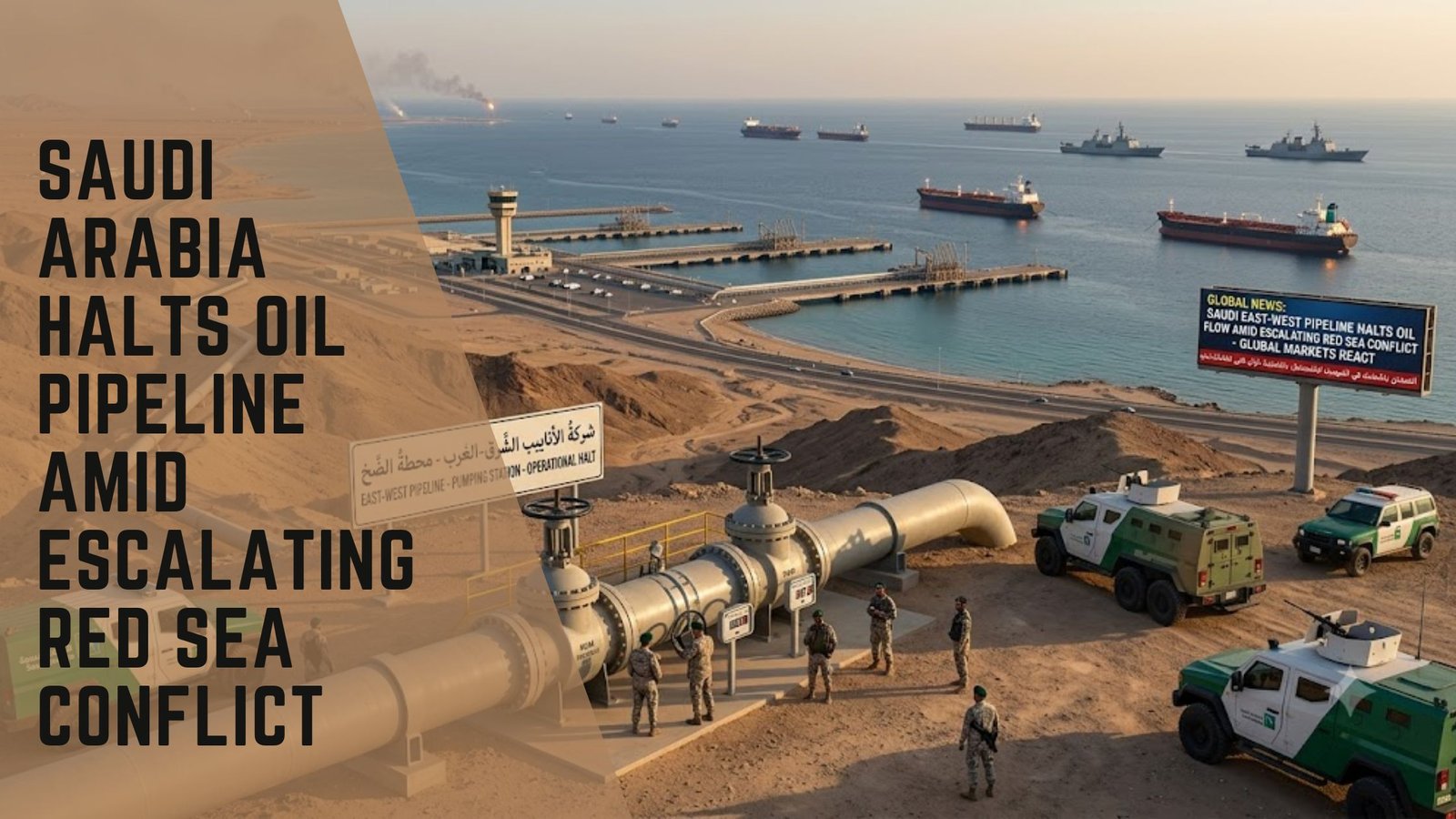

Saudi Arabia Temporarily Shuts Key Oil Pipeline
In a significant development affecting global energy markets, Saudi Arabia has temporarily halted operations on its crucial East-West pipeline following an aerial assault. The attack, which both Saudi and Iraqi authorities attribute to Iranian-backed militias in Iraq, threatens to further escalate tensions in the Middle East and impact energy prices worldwide.
Aerial Attack Spurs Precautionary Measures
The 1,200-kilometer pipeline, a vital artery for transporting oil across the Arabian Peninsula, was targeted in a drone strike, prompting the Saudi Energy Ministry to shut it down as a precaution. This strategic conduit, responsible for transporting between 4 million to 5 million barrels daily, represents approximately 4% to 5% of global oil supply, according to industry analysts. The shutdown is expected to exacerbate the existing bottleneck in the Strait of Hormuz, where tanker traffic has been significantly reduced due to ongoing conflicts.
Unclear Responsibility and Potential Impact
While the precise perpetrators of the attack remain unidentified, satellite images reveal smoke emanating from a section south of Medina, indicating damage to the pipeline. The Saudi Foreign Ministry has confirmed some injuries and ongoing damage assessments, though the full impact on oil exports has yet to be detailed. These developments coincide with increasing control by Iran-aligned Houthi rebels in Yemen over the Red Sea, a situation compounded by disruptions in the Strait of Hormuz, leading to a surge in global oil prices beyond $100 per barrel.
Geopolitical Tensions and Strategic Movements
The Houthis have reportedly seized the strategic Perim Island, situated at the Bab el-Mandeb Strait’s entrance, further intensifying regional instability. This move represents a significant escalation as diplomatic efforts to resolve the conflict remain stalled. The Iranian parliament’s national security committee head has indicated that dialogue with the United States is futile without meeting Iran’s conditions, underscoring the broader geopolitical tensions.
Saudi Arabia Seeks US Support Amid Rising Oil Prices
Amid surging oil prices impacting US domestic politics, Saudi Arabia has sought military assistance from Washington to counter the Houthi threat. The current situation has exerted considerable political pressure on US President Donald Trump and his party, particularly in the run-up to the November congressional elections. The Saudi pipeline attack represents a new challenge in the already volatile US-Iran relations.
Regional Reactions and Military Developments
The Iraqi government, reacting to the attack, dismissed a military commander associated with operations in Maysan province, a known stronghold for Iran-backed militias. Iraq has also closed the Shalamcheh border crossing with Iran as a precautionary measure, further highlighting regional tensions. Meanwhile, a broad investigation is underway to identify those responsible for the attack on the pipeline.
Potential Countermeasures and Strategic Implications
Yemeni government forces, backed by Saudi Arabia, are reportedly planning to reclaim territories seized by the Houthis along the Red Sea. These mountain fighters have historically withstood extensive Saudi airstrikes during Yemen’s civil war. Reports suggest that the Houthi advance was carried out under the guidance of Iran’s Revolutionary Guards, with Iran pledging additional support to the Houthis. Despite publicly denying direct military involvement, Iran’s influence in the conflict is evident.
The Houthi military spokesperson has stated that maritime activities remain secure for all except Saudi vessels, which are subject to an existing prohibition. As tensions continue to rise, the possibility of further regional destabilization and its impact on global energy markets remains a critical concern.