
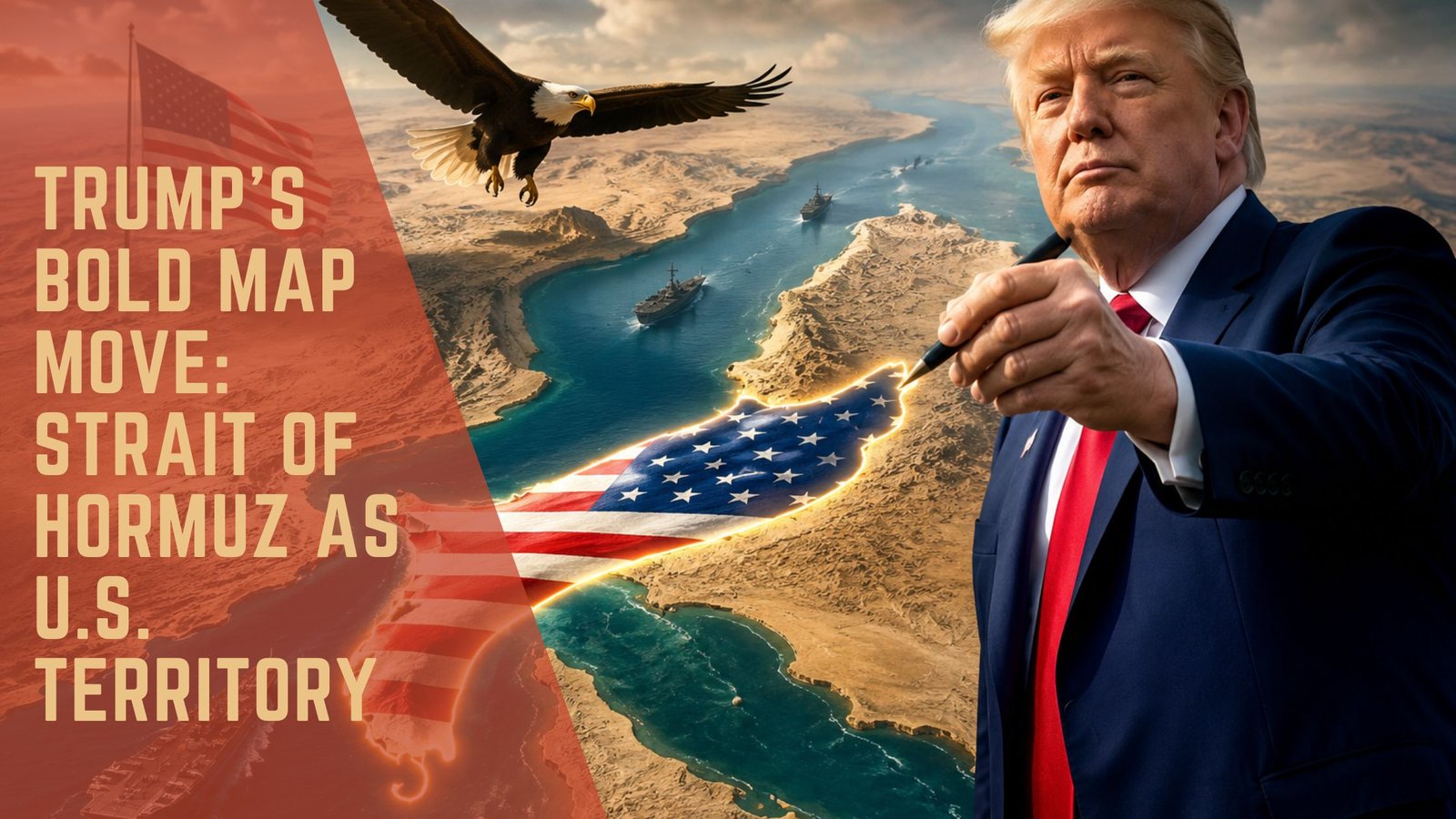

Trump Sparks Controversy with Strait of Hormuz Map Post
In a surprising move, U.S. President Donald Trump has unveiled a map on his Truth Social platform depicting the Strait of Hormuz as “NEW US Territory.” This action comes amid heightened tensions with Iran, which has effectively blocked the vital maritime passage, retaliating against the ongoing conflict involving the United States and Israel.
Background of the Strait of Hormuz Dispute
The Strait of Hormuz is a crucial chokepoint through which approximately 20% of the world’s oil supply transits. Before the outbreak of hostilities on February 28, the waterway was regarded as an international passage open to all nations. However, the recent conflict has led Iran to assert control over the strait, demanding the U.S. meet several conditions to restore normal operations.
Trump’s Unyielding Stance
President Trump’s recent statements regarding the potential annexation of the Strait of Hormuz mark a continuation of his assertive foreign policy approach. He initially floated the idea of declaring the strait as U.S. territory last Friday, sparking a stern response from Iranian officials who vowed to maintain their sovereignty over the region.
On Monday, Trump reiterated his position in a conversation with reporters at the Oval Office, suggesting that the annexation could be a beneficial move for the United States. His comments underscore a pattern of provocative proposals, including the annexation of Canada and Greenland and the control of the Gaza Strip, none of which have materialized.
Iran’s Conditions and Demands
Iran has laid out a comprehensive list of demands in exchange for reopening the strait. These conditions include the end of the U.S. blockade on Iranian ports, the lifting of oil sanctions, the release of frozen Iranian assets, and compensation for war-related damages. The Iranian government remains firm in its stance, highlighting the considerable geopolitical stakes involved.
International Reactions and Implications
The global community is closely monitoring the situation, aware of the potential ramifications of a prolonged closure of the Strait of Hormuz. The possibility of an escalation in tensions has raised concerns about global oil supply disruptions and the broader economic impact.
Experts point out that any attempt by the U.S. to assert control over the strait could lead to significant geopolitical instability. The legality of such a move under international law is also under scrutiny, as the United Nations Convention on the Law of the Sea governs the rights and responsibilities of nations concerning maritime navigation.
Historical Context of Trump’s Territorial Claims
Trump’s current posture echoes previous instances where he has suggested territorial expansions to address foreign policy challenges. His administration’s rhetoric has often included bold claims about potential territorial annexations, though none have come to fruition.
Since his return to office in 2025, Trump has frequently leveraged such statements as a means of exerting diplomatic pressure. However, his approach has drawn criticism from international leaders and analysts who question the efficacy and legality of such strategies.
Future Prospects and Diplomatic Efforts
As tensions persist, diplomatic efforts to resolve the standoff at the Strait of Hormuz remain crucial. The international community continues to advocate for dialogue and negotiation, aiming to prevent further escalation and ensure the continued flow of global oil supplies.
The unfolding situation at the Strait of Hormuz represents a critical test of international diplomacy and the balance of power in the Middle East. The coming weeks will likely prove decisive in determining the outcome of this geopolitical flashpoint.