
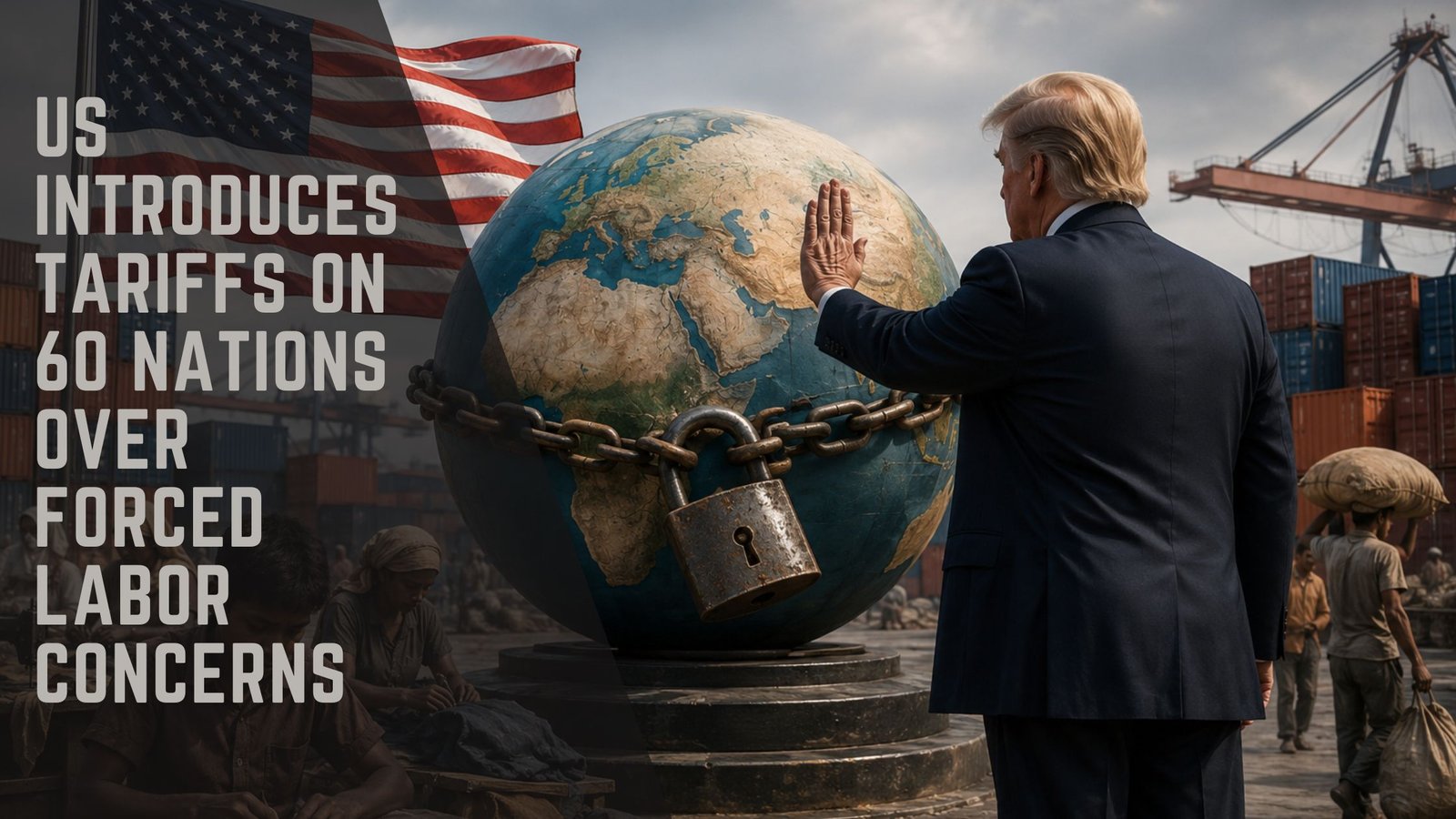

US Implements New Import Tariffs Amid Global Trade Tensions
The United States has introduced a range of new tariffs on imports from 60 countries, including major economies such as the European Union and China. This move comes as the US administration seeks to address concerns over inadequate enforcement of bans on forced labor. The tariffs, set at 10 percent and 12.5 percent, were implemented following the expiration of a temporary global tariff. The decision was publicized in a Federal Register notice on Thursday.
Scope of the Tariffs and Exemptions
The newly announced tariffs will affect a vast majority of US imports, covering approximately 99.4 percent of goods brought into the country. Despite this broad application, several critical product categories have been exempted, notably oil and gas, fertilizers, and certain food items. This strategic exemption reflects an effort to mitigate potential negative impacts on essential sectors and consumer prices.
US Trade Representative’s Statement
US Trade Representative Jamieson Greer emphasized the long-standing American commitment to combating forced labor, highlighting that the US has had a ban on such practices for nearly a century. In his statement, Greer stressed the need for US trading partners to adopt similar enforcement measures, reinforcing the administration’s stance on maintaining ethical labor standards worldwide.
Countries Affected by the Tariffs
The tariffs have been notably imposed on a diverse range of countries. A 10 percent duty is now in place for goods originating from Argentina, Bangladesh, Britain, Cambodia, Canada, Ecuador, El Salvador, Guatemala, Honduras, India, Indonesia, Jordan, Malaysia, Mexico, Pakistan, Sri Lanka, and Trinidad and Tobago. Meanwhile, the European Union, Taiwan, Japan, the Republic of Korea, and Switzerland face tariff rates that, when combined with existing most-favored-nation tariff rates, amount to either 10 percent or 12.5 percent. An additional 38 nations face a standard rate of 12.5 percent.
Global Economic Implications
The introduction of these tariffs is expected to have significant implications for international trade dynamics. By targeting a wide array of countries, the US is signaling its intent to uphold stringent labor standards, potentially prompting affected nations to reevaluate their enforcement policies. However, this move also risks escalating trade tensions, particularly with major economies like the European Union and China, where relations are already strained over other trade issues.
Potential Impact on US Markets
Domestically, the tariffs could influence market prices and consumer behavior. While exemptions for crucial commodities like oil and gas aim to cushion any direct financial impact on American consumers, the broader application of tariffs may lead to increased costs for other imported goods. This could result in a shift in sourcing strategies for US businesses or potentially higher prices for consumers.
Conclusion and Future Outlook
As the US enforces these new tariffs, the global community will closely monitor the reaction from affected countries and the potential ripple effects on international trade relations. The decision underscores the US administration’s commitment to ethical labor practices, though it also raises questions about the future of global trade alliances and partnerships.