

Pakistan’s Strong Rebuke to Alleged Aggression
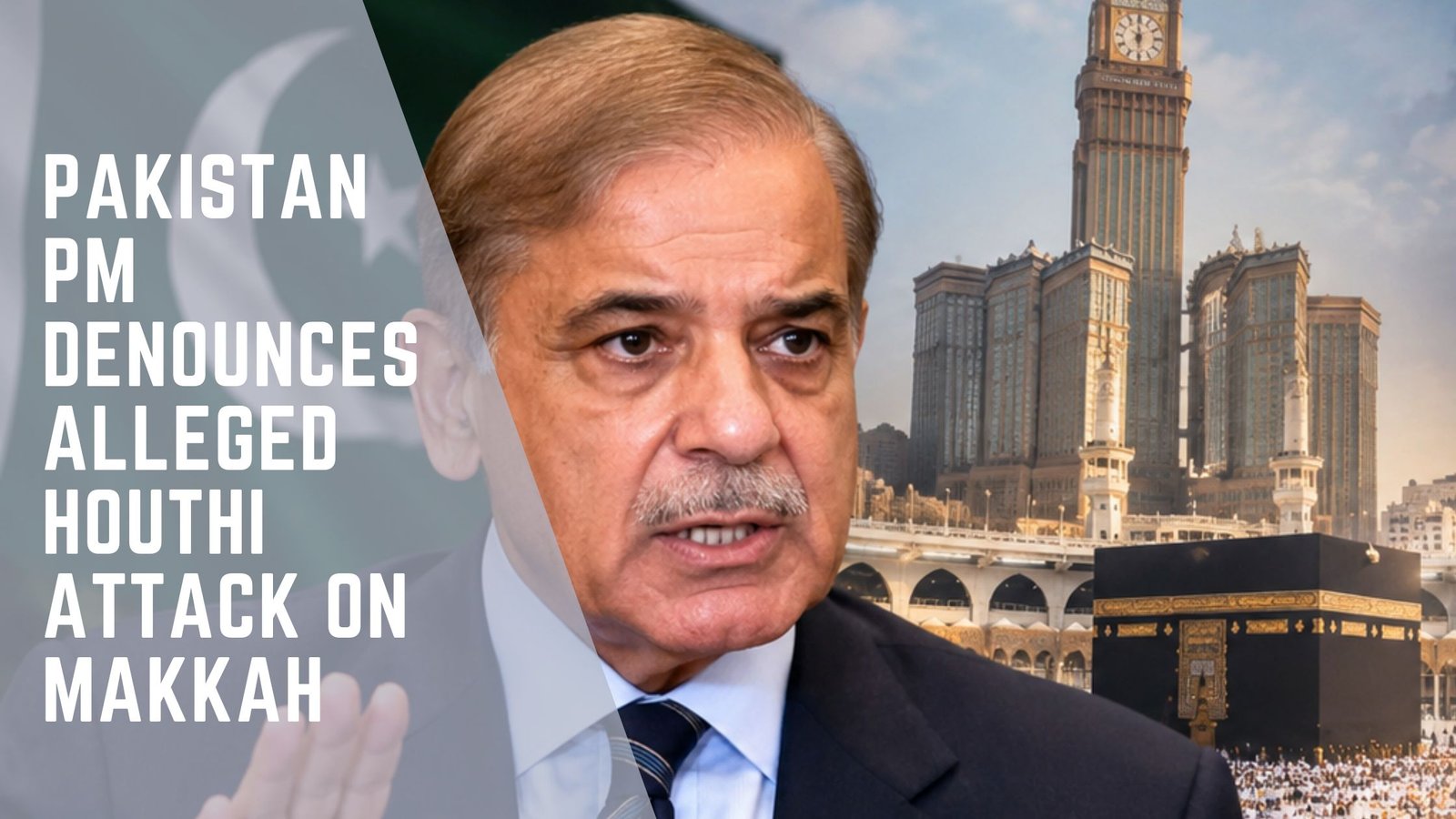
In an unequivocal statement, Pakistan’s Prime Minister, Shahbaz Sharif, has denounced what he termed a ‘dastardly and heinous’ attack on the holy city of Makkah. The condemnation came amid accusations from a Saudi-led coalition that pointed fingers at Yemen’s Houthi rebels. The incident has sparked significant diplomatic ripples across the Islamic world.
International Outcry and Denials
The alleged attack has drawn widespread condemnation from various countries, particularly those in close alliance with Saudi Arabia. Prime Minister Sharif, addressing the issue on the social media platform X, expressed deep sorrow and agitation over the incident, reflecting the sentiments of millions of Pakistanis.
However, the Houthis have denied any involvement in the attack, adding a layer of complexity to the situation. Their denial has not deterred the Saudi-led coalition from maintaining its stance, although conclusive evidence has yet to be presented to the international community.
Regional Implications
The accusations against the Houthis have further strained the already tense relations in the region. The conflict in Yemen, which has persisted for years, has drawn in various international players, each backing different sides. The alleged attack on Makkah, Islam’s holiest site, has elevated the stakes, potentially complicating diplomatic efforts aimed at resolving the ongoing conflict.
Pakistan, a close ally of Saudi Arabia, has historically supported the kingdom in its regional endeavors. This incident could strengthen the ties between the two nations, as Pakistan has often reiterated its commitment to safeguarding the sanctity of Islamic holy sites.
Global Reactions and Diplomatic Efforts
The global community’s response to the alleged attack has been predominantly one of concern and condemnation. Several countries have echoed Sharif’s sentiments, underscoring the importance of protecting religious sites from political conflicts.
Diplomatic efforts are underway to de-escalate tensions. The United Nations has called for restraint and a thorough investigation into the incident. Many see this as an opportunity for dialogue and a potential ceasefire in the protracted Yemen conflict.
Broader Context: The Yemen Conflict
The conflict in Yemen, which began in 2014, has seen the Houthis, a group with alleged ties to Iran, fighting against a Saudi-backed government. The war has resulted in a humanitarian crisis, with millions displaced and in need of aid.
The alleged attack on Makkah adds another dimension to the conflict, with religious sensitivities adding to the already complex political landscape. The international community is keenly observing the developments, aware that such incidents could have far-reaching consequences.
Pakistan’s Role and Future Prospects
Pakistan’s strong condemnation highlights its role as a key player in the Muslim world, often mediating or supporting resolutions in Islamic conflicts. Sharif’s statement not only aligns with Pakistan’s foreign policy objectives but also serves as a reminder of the nation’s commitment to the protection of Islamic heritage.
As the situation unfolds, Pakistan may find itself in a position to facilitate dialogue between the parties involved, drawing on its diplomatic relationships and regional influence.