
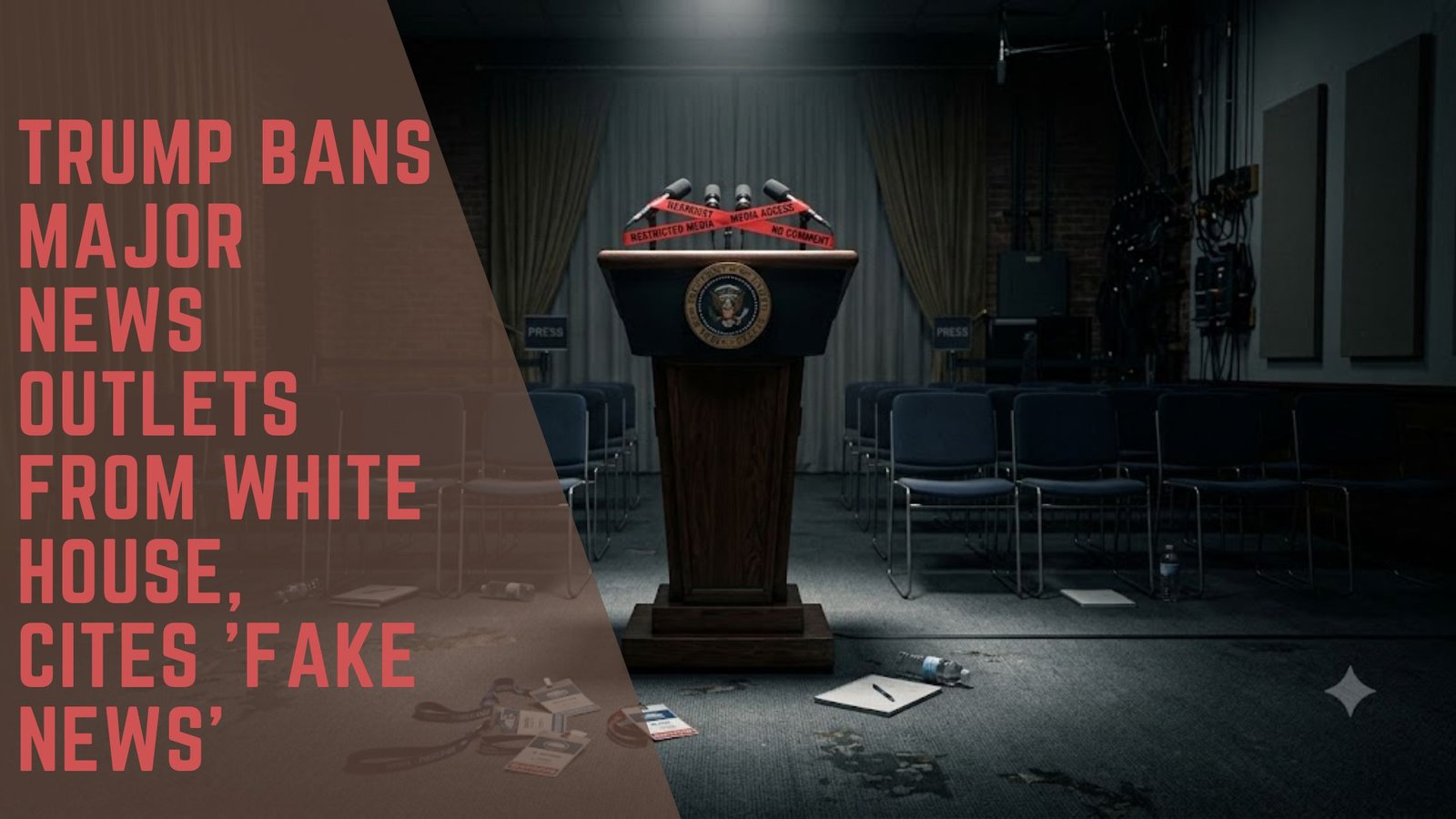

Trump’s Ban on CNN, MS NOW, and Politico Sparks Controversy
In a bold move that has reignited debates on press freedom, U.S. President Donald Trump announced his decision to ban CNN, MS NOW, and Politico from White House press activities. Citing ongoing grievances about alleged ‘fake news’ reports, Trump declared this action on his Truth Social platform, raising concerns among media and legal experts about the implications for constitutional freedoms.
Trump’s Justification for the Ban
Trump expressed his dissatisfaction with what he perceives as biased and incorrect reporting by these outlets. Without pinpointing specific articles or reports, he attributed the ban to a cumulative effect of negative journalism over the past two years. Trump emphasized his stance in the Oval Office, remarking that such actions were necessary to counteract what he views as a deliberate attempt to undermine the administration’s efforts.
Reaction from the Affected Media Outlets
The response from the banned organizations was swift and strong. CNN denounced the ban as an ‘illegal assault’ on press freedoms, asserting that their journalism adheres to rigorous standards of fairness and accuracy, protected by the U.S. Constitution. Politico echoed these sentiments, vowing to challenge any attempts to infringe upon First Amendment rights.
Support and Criticism
While the decision received backing from figures like U.S. Secretary of Defense Pete Hegseth, who accused these outlets of compromising national security, it faced widespread criticism. The White House Correspondents Association stood in solidarity with the affected journalists, emphasizing the essential role of a free press in a democratic society.
Historical Context and Legal Considerations
Trump’s contentious relationship with the media is not new. His presidency has been marked by frequent clashes with journalists and media organizations that he perceives as adversarial. However, outright bans on press entities are rare. Historical precedents, such as the temporary banning of CNN reporter Jim Acosta, highlight the legal challenges associated with such actions. Legal experts like Bruce Brown, president of the Reporters Committee for Freedom of the Press, have labeled the ban as ‘flatly unconstitutional,’ predicting swift judicial intervention if contested.
Broader Implications and Political Context
Trump’s announcement comes at a politically sensitive time, with his approval ratings experiencing significant declines. The political stakes are high as the Republican Party faces potential losses in the upcoming midterm elections. Economic challenges, including inflation and international conflicts, are contributing to political volatility, adding layers of complexity to the current media landscape.
As this situation unfolds, the intersection of media freedom, legal boundaries, and political strategy will continue to be closely observed by both national and international stakeholders. The developments are set against a backdrop of broader discussions on the role of media in shaping public opinion and influencing political outcomes.