

Rubio’s Unprecedented Order Shakes Diplomatic Norms
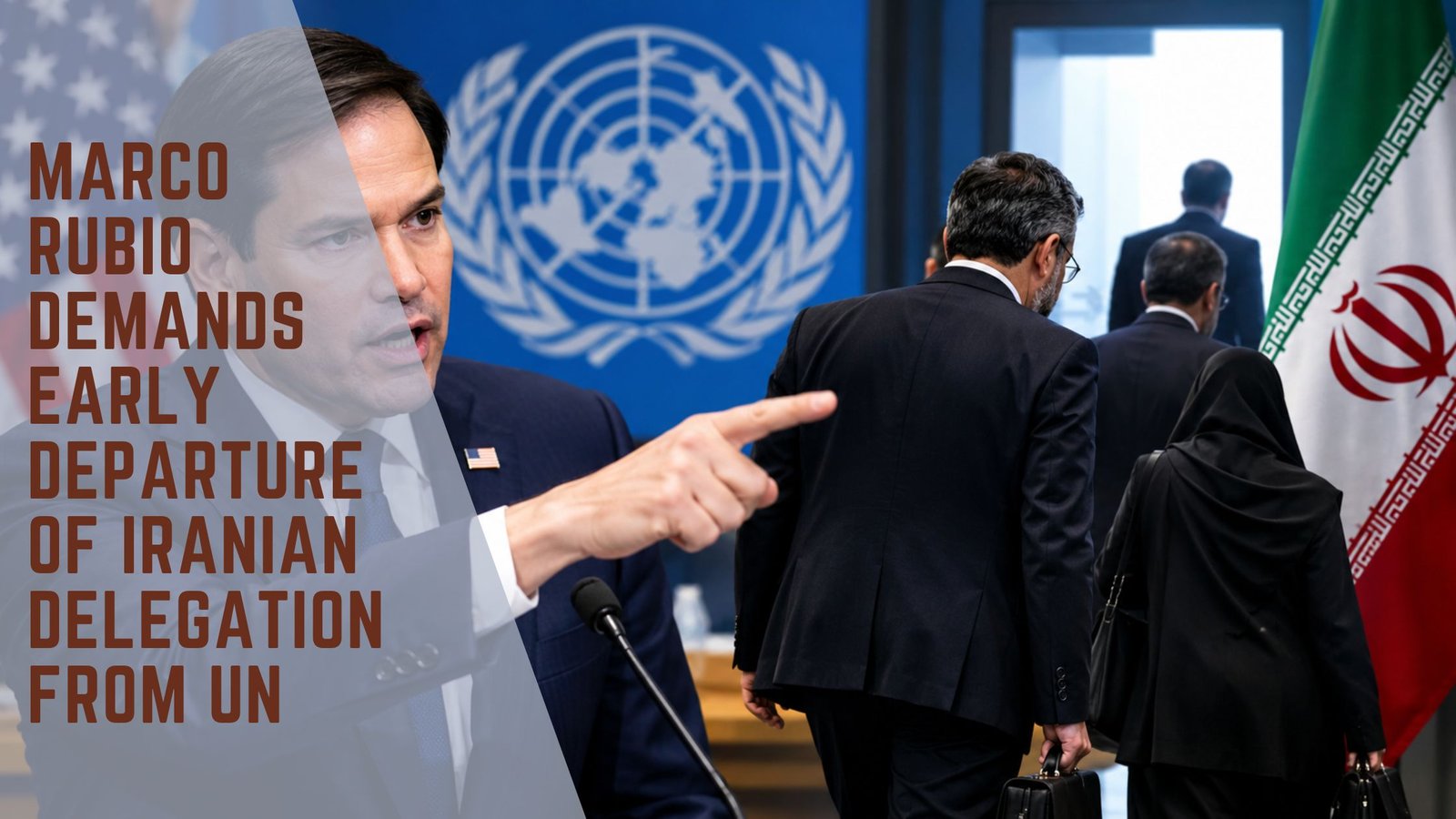
In a surprising move, Secretary of State Marco Rubio instructed Iran’s foreign minister and his delegation at the United Nations General Assembly to leave New York ahead of their planned schedule. This directive, confirmed by two U.S. officials, marked a significant diplomatic maneuver amid ongoing tensions between the United States and Iran.
Visas Granted with Restrictions
Despite the strained relations, the Trump administration had extended visas to Iran’s President Masoud Pezeshkian and Foreign Minister Abbas Araghchi, along with their delegations, allowing them to participate in the annual gathering of global leaders. However, these visas came with stringent limitations, underscoring the contentious nature of U.S.-Iran relations during this period.
Diplomatic Efforts and Stalled Negotiations
President Pezeshkian departed New York soon after addressing the United Nations, while Foreign Minister Araghchi remained, aiming to engage in indirect discussions with U.S. representatives. The primary focus of these talks was the reopening of the Strait of Hormuz, resolving ongoing conflicts, and potentially rekindling negotiations regarding Iran’s nuclear ambitions.
Araghchi reportedly intended to stay in New York through Wednesday, yet the meetings over the weekend with Qatari mediators did not yield substantial progress. Frustrated by the lack of advancement, Rubio decided to act decisively.
Rubio’s Decisive Action
On Monday, Rubio informed the Iranian delegation of his decision, insisting that Araghchi and his team vacate New York immediately. According to the officials familiar with the situation, Rubio was resolved in his belief that the Iranian representatives had “overstayed their welcome.” With the critical UN meetings concluded, he saw no further reason for their continued presence.
Iranian Delegation’s Response
The Iranian delegation, however, disputed the narrative that they were expelled prematurely. In a statement posted on their official social media account, they asserted that their departure on Monday evening adhered to a pre-arranged schedule, which had been communicated to the U.S. Department of State well in advance, on September 17. They criticized the State Department’s account as unfounded and sensationalized.
Reactions and Broader Implications
Rubio’s decision, first reported by Axios, has sparked a range of reactions in diplomatic circles. Critics argue that such an abrupt order could further exacerbate tensions between the two nations, potentially undermining any future diplomatic efforts. Supporters, however, view the move as a demonstration of the U.S.’s firm stance on matters of national security and diplomatic protocol.
This development occurs against the backdrop of a complex geopolitical landscape, where strategic interactions and diplomatic negotiations are often fraught with challenges. The incident underscores the delicate nature of international diplomacy, especially between nations with a history of discord.
Future Prospects for U.S.-Iran Relations
As the international community continues to navigate these turbulent waters, the future of U.S.-Iran relations remains uncertain. While some hope for a resumption of constructive dialogue and potential resolution of key issues, the recent turn of events highlights the difficulties inherent in bridging deep-seated divides.
Going forward, it remains to be seen how both nations will approach their diplomatic engagements. The outcome could significantly impact not only bilateral relations but also broader regional stability and international diplomatic efforts.