
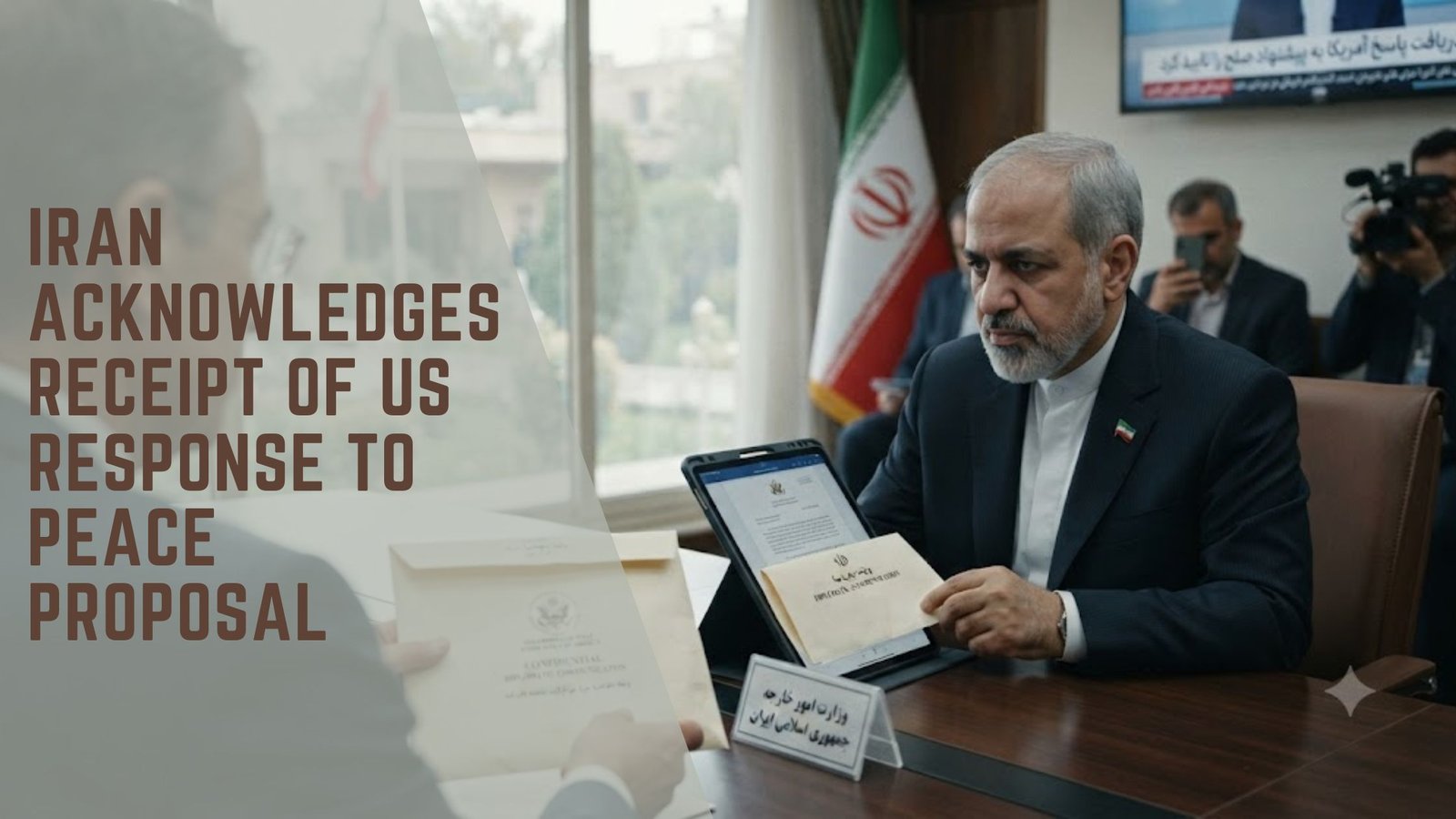

Iran Confirms Receipt of US Reply to Peace Initiative
On Wednesday, Iranian officials announced they had formally received a response from the United States regarding Tehran’s proposal to conclude the ongoing conflict in the Middle East. This development comes in the wake of US President Donald Trump’s initial refusal of the plan, as reported by Iranian state media.
Details of the US Response
During a cabinet meeting held earlier in the day, the proposal from the US was formally presented to Iran’s President Masoud Pezeshkian by the nation’s Foreign Minister, Abbas Araghchi. The exchange was confirmed by government spokeswoman Fatemeh Mohajerani through the official IRNA news agency.
While specifics of the US response remain undisclosed, the acknowledgment of receipt marks a significant point in the diplomatic efforts to address rising tensions in the region. The Iranian government’s decision to publicize this exchange indicates a potential shift in diplomatic strategies, aiming to engage international stakeholders with transparency.
Background on the Proposal
The Iranian proposal, which seeks to establish a framework for peace in the volatile Middle East, was initially met with skepticism by the Trump administration. The proposal’s details were not publicly disclosed, but analysts suggest it possibly included measures for de-escalation and dialogue between conflicting parties.
In recent years, the Middle East has been a focal point of geopolitical tensions, with conflicts in Syria, Yemen, and ongoing disputes involving regional powers like Saudi Arabia. Iran’s initiative represents a broader effort to stabilize the region and reduce the humanitarian impact of prolonged conflicts.
US-Iran Relations at a Crossroads
Relations between Iran and the United States have been strained, particularly following the US’s withdrawal from the Joint Comprehensive Plan of Action (JCPOA) in 2018. The nuclear agreement, which was aimed at curbing Iran’s nuclear capabilities in exchange for lifting economic sanctions, has been a contentious issue in US-Iran relations.
In light of this history, the current exchange of proposals and responses could signal a willingness from both parties to explore diplomatic avenues, though significant obstacles remain. Analysts emphasize that any progress will require substantial compromise and trust-building from both sides.
Regional and Global Reactions
The international community closely watches the developments between the US and Iran, given the potential implications for global security and economic stability. European nations, who were co-signatories of the JCPOA, have expressed interest in seeing both parties return to the negotiation table.
Furthermore, Middle Eastern countries, who are directly impacted by the outcomes of such diplomatic exchanges, are particularly attentive to the proceedings. The resolution of conflicts in the region holds the promise of diminished hostilities and improved economic prospects.
Future Prospects and Challenges
As the situation unfolds, much remains uncertain about the future trajectory of US-Iran relations. The exchange of proposals is merely the first step in what could be a complex negotiation process. Observers note that while the receipt of the US response is a positive sign, the path to peace will demand perseverance and a concerted effort from all involved parties.
As diplomatic communications continue, stakeholders around the world will be looking for signs of progress, hoping that this exchange leads to meaningful dialogue and, ultimately, a resolution to one of the most entrenched conflicts in contemporary history.