
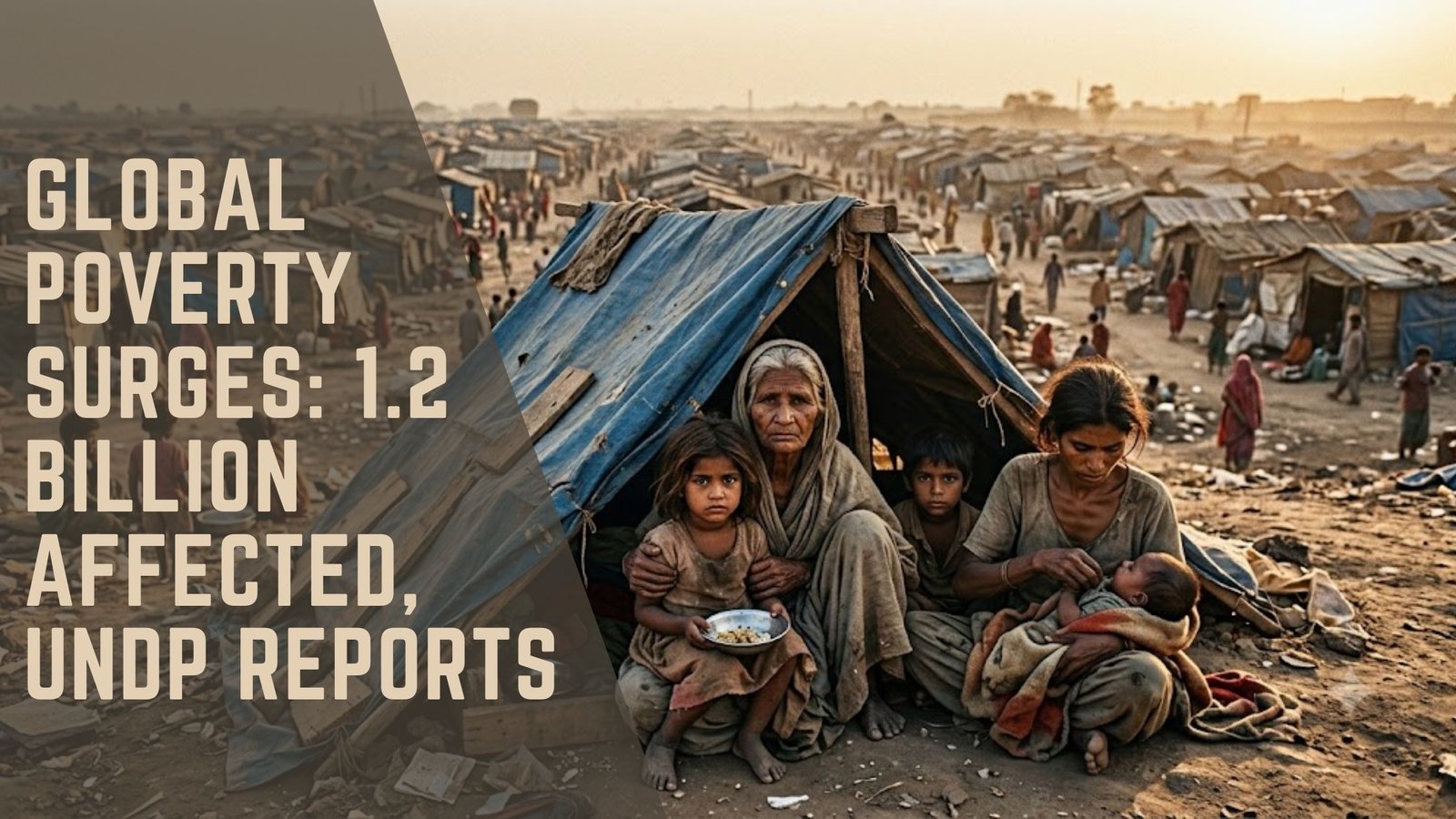

UN Report Reveals Surge in Global Multidimensional Poverty
The United Nations Development Programme (UNDP) has disclosed a concerning rise in global multidimensional poverty levels, marking the first increase since the Multidimensional Poverty Index (MPI) was introduced in 2010. According to the 2026 update of the index, 1.2 billion individuals are now living under conditions of multidimensional poverty, an increase of 51.5 million people compared to the previous report.
Alarming Indicators of Deprivation
UNDP Administrator Alexander De Croo emphasized the urgency of the situation, stating, “This increase in poverty should serve as a dire warning to the global community.” The report highlights that millions are suffering from inadequate access to essential resources such as food, education, clean water, and electricity. Notably, children represent more than half of those affected by these deprivations, underscoring the far-reaching impact on future generations.
Population Growth as a Contributing Factor
The UNDP report identifies population growth as a significant factor contributing to the rise in multidimensional poverty. In its analysis of 89 countries with available MPI trend data, it was noted that while some nations have made remarkable progress, others have seen setbacks. Encouragingly, 33 countries have managed to halve their MPI value in less than 15 years, with six of these nations located in Sub-Saharan Africa. This indicates that targeted efforts and policies can lead to substantial improvements in poverty reduction.
Multidimensional Poverty: A Complex Challenge
Unlike traditional measures, the Multidimensional Poverty Index assesses poverty by examining various indicators of deprivation, including health, education, and living standards. This multi-faceted approach provides a more comprehensive understanding of poverty, revealing the intricate challenges faced by the impoverished. The recent increase in the MPI suggests that global efforts to address poverty must become more nuanced and multifaceted to effectively tackle the root causes of deprivation.
Call for Global Action and Cooperation
In light of these findings, the UNDP is urging nations to reassess their strategies and collaborate on a global scale to combat the rise in poverty. The organization stresses the importance of sustainable development and inclusive growth to ensure that progress benefits all segments of society. Innovative policy frameworks and international cooperation are seen as crucial elements in reversing the current trend and achieving long-term poverty reduction.
Focus on Sustainable Development Goals
The findings come as the international community continues its efforts to meet the Sustainable Development Goals (SDGs) set for 2030, with the eradication of all forms of poverty as a primary objective. The recent increase in multidimensional poverty presents a significant challenge to achieving these targets, prompting calls for renewed commitment and action from global leaders, institutions, and stakeholders.
Looking Forward: Strategies for Improvement
Moving forward, experts suggest that a multi-pronged approach is essential to address the complex nature of poverty. This includes investing in education and healthcare, improving infrastructure, and ensuring equitable access to resources. Additionally, empowering marginalized communities and fostering economic resilience can play pivotal roles in reducing poverty levels. By focusing on these strategies, the global community can work towards a future where poverty is significantly reduced, if not eradicated altogether.