

Significant Growth in Non-Oil Trade
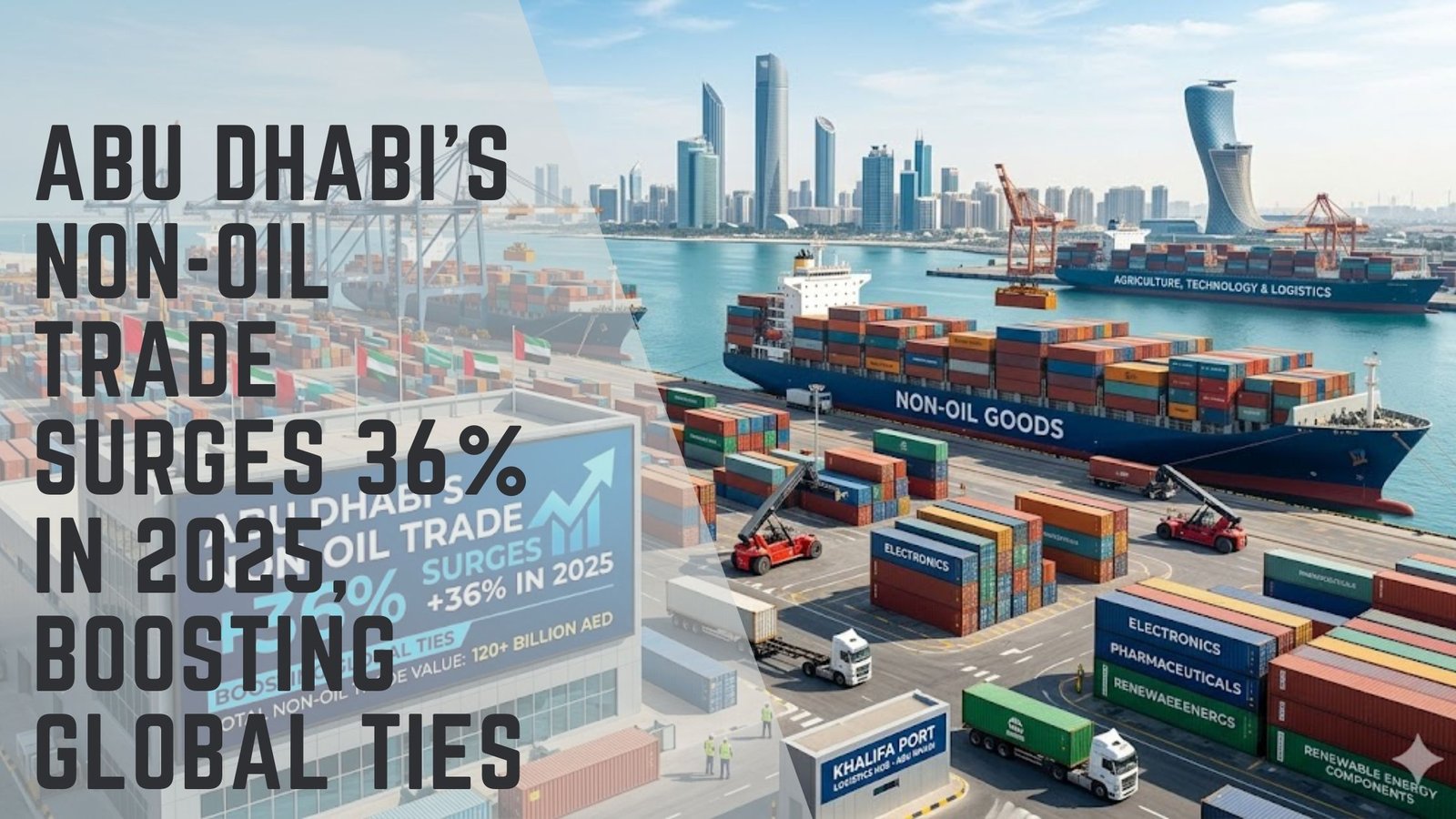
Abu Dhabi’s non-oil foreign trade experienced a remarkable 36% increase in 2025, reaching over AED415.4 billion, according to recent data from Abu Dhabi Customs. This substantial growth highlights Abu Dhabi’s emergence as a key player in global commerce, driven by expanding trade activities and enhanced economic partnerships with international markets.
Non-Oil Exports and Imports See Notable Increase
Non-oil exports from Abu Dhabi surged by an impressive 63% in 2025, amounting to Dhs175.4 billion, compared to Dhs107.8 billion in 2024. Imports also demonstrated robust growth, rising by 22% to Dhs170.4 billion from the previous year’s Dhs140.2 billion. This steady increase in both exports and imports signifies Abu Dhabi’s deepening integration into global trade networks.
Re-Exports Contribute to Economic Diversification
Re-exports played a vital role in the emirate’s trade performance, climbing by 20% to reach Dhs70 billion in 2025, up from Dhs58 billion in 2024. These figures underscore Abu Dhabi’s economic resilience and the successful implementation of its diversification strategies, reinforcing its position as a hub for international trade and logistics.
Strategic Infrastructure and Policy Alignment
Ahmed Jasim Al Zaabi, Chairman of the Abu Dhabi Department of Economic Development (ADDED), emphasized that the emirate’s trade achievements are a testament to a well-coordinated system designed for efficiency and sustainability. Al Zaabi highlighted that strategic alignment in policy, infrastructure, and market access has been crucial in ensuring the smooth flow of trade and enhancing Abu Dhabi’s competitive stance in global markets.
Advancements in Logistics and Customs Operations
Rashed Lahej Al Mansoori, Director-General of Abu Dhabi Customs, pointed out that the growth in non-oil trade reflects the success of the emirate’s policies focused on economic diversification and sustainability. The adoption of advanced digital solutions and smart systems has strengthened customs operations, facilitating more efficient trade flows and solidifying Abu Dhabi’s role as a global trading hub.
Air, Land, and Sea Trade Dynamics
The distribution of Abu Dhabi’s non-oil trade across different modes of transportation further illustrates its strategic trade capabilities. Air transport accounted for 33.5% of the total trade, while land and sea contributed 35% and 31.5%, respectively. These figures highlight the emirate’s comprehensive approach to facilitating trade via multiple channels, ensuring robust connectivity in the global trading system.
The continued development of Abu Dhabi’s trade infrastructure and its proactive policy measures are expected to sustain this upward trajectory, further embedding the emirate within the international economic landscape and fostering long-term growth.