
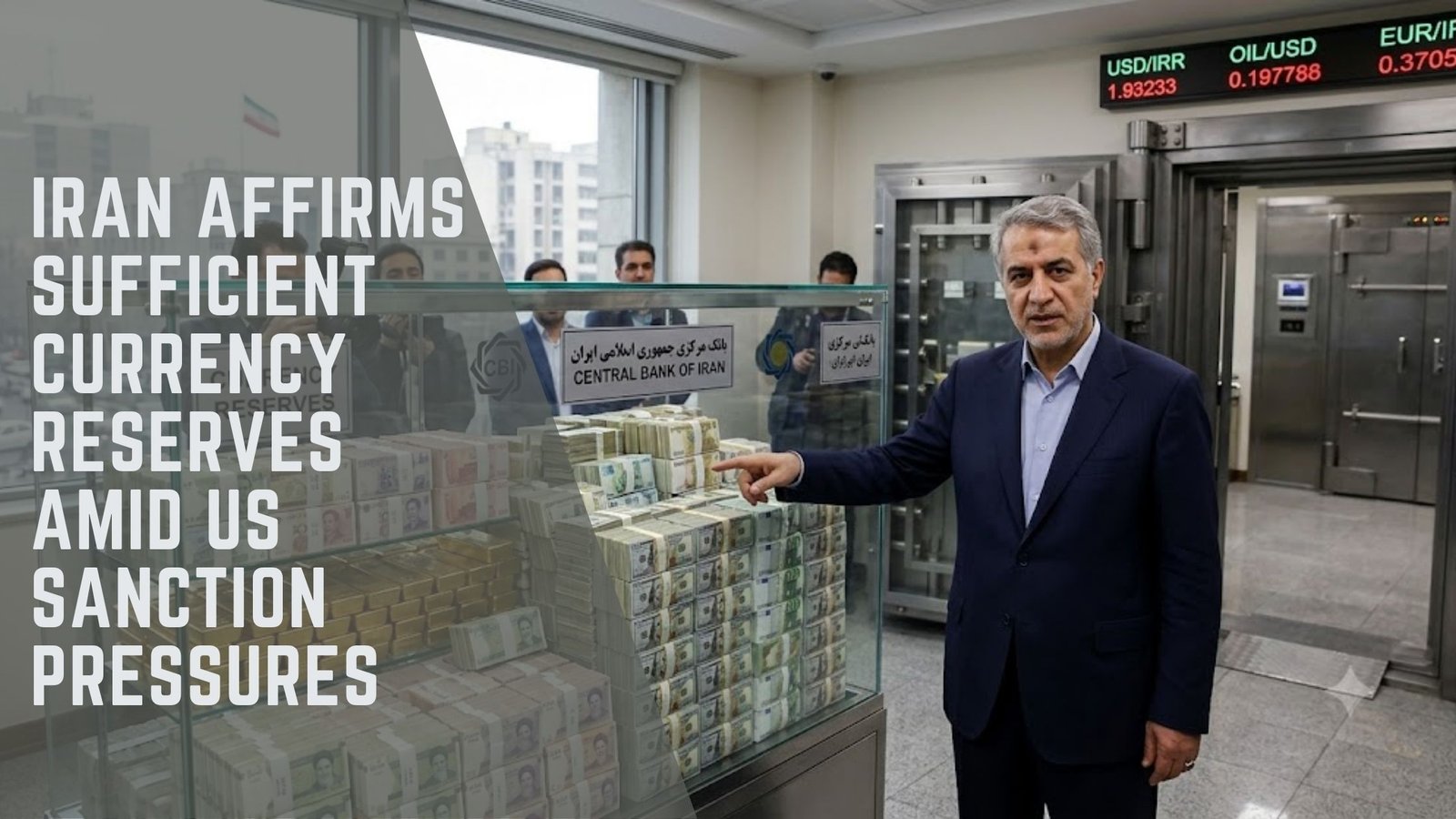

Iran Asserts Economic Stability Despite Sanctions
Amidst a backdrop of escalating economic sanctions from the United States, Iran has declared its capability to maintain sufficient foreign currency reserves. Abdolnaser Hemmati, the governor of the Central Bank of Iran, assured on Tuesday that the nation holds adequate economic resources to counteract the financial pressures from Washington. His statements were reported by the semi-official Tasnim news agency.
Central Bank’s Preparedness to Stabilize the Market
Hemmati emphasized that the Central Bank of Iran is prepared to inject as much as $2 billion into the foreign exchange market. This move aims to stabilize the current market volatility and reassure investors and the public. The governor’s declaration comes in response to comments made by US Treasury Secretary Scott Bessent, who suggested that Iran’s recent actions were a sign of distress in losing the ‘economic war’.
Addressing Concerns Over Economic Challenges
Despite the challenges posed by US sanctions and a naval blockade, Hemmati sought to calm fears regarding Iran’s economic future. He stated, “I tell the people with complete honesty that economic conditions and livelihood management have become difficult, but collapse has never happened and will never happen. These claims are just psychological warfare and the dust will settle soon.” His remarks aim to mitigate concerns about Iran’s financial stability as the nation grapples with significant inflation and currency devaluation.
Impact of Sanctions on Iran’s Economy
Iran’s economy has been under considerable pressure, with the national currency plunging to historic lows. In August, the Iranian rial crossed the psychological barrier of 2 million rials to the US dollar, marking a significant depreciation. Furthermore, the country’s annual inflation rate reached 66% in July, exacerbating economic difficulties for ordinary citizens.
US Economic Pressure and International Business Implications
Secretary Bessent’s comments highlighted the US’s reliance on economic sanctions as a tool to compel Iran to comply with its demands. He warned that businesses engaging with Iran could face punitive measures under US sanctions. This warning serves as a deterrent to international companies considering economic ties with Tehran, further isolating Iran economically.
The Central Bank’s Strategy and Future Prospects
Hemmati noted that the Central Bank is actively collecting foreign currency receivables and maintaining domestic reserves, although he refrained from disclosing specific details of these resources. His confidence in Iran’s economic resilience is a strategic move to bolster domestic morale and international confidence in Iran’s financial system.
Despite the ongoing economic challenges, Hemmati’s statements highlight a concerted effort by Iranian authorities to project stability and counteract the psychological effects of sanctions. As Iran navigates these turbulent economic waters, the international community remains watchful of its next steps and its ability to withstand external pressures.