
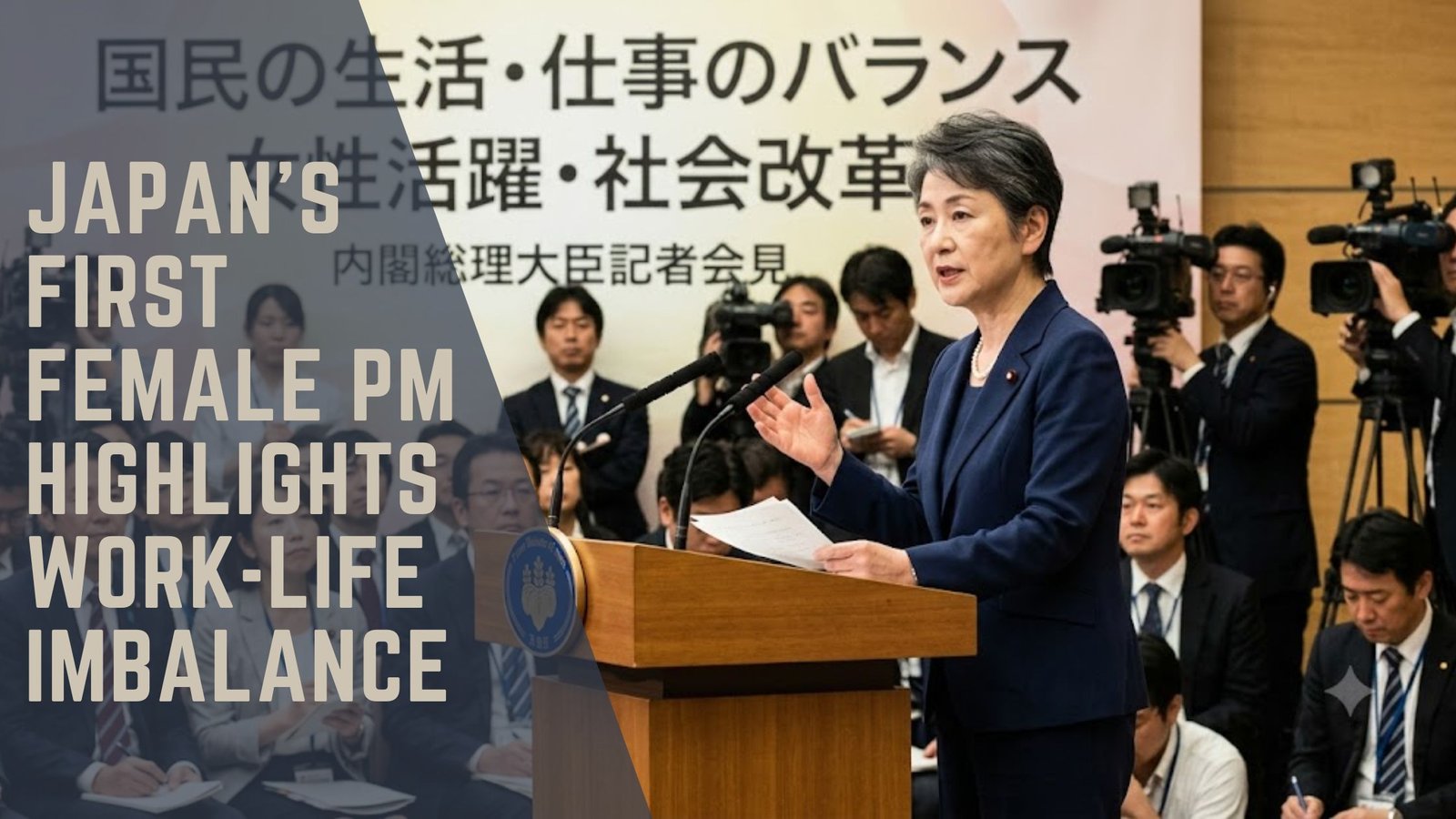

Japan’s Premier Faces Dual Demands of Leadership and Household Duties
Japan’s first female prime minister, Sanae Takaichi, has shed light on the additional burdens she faces compared to her male counterparts, citing household responsibilities as a significant factor. During a parliamentary session on Wednesday, Takaichi revealed that her daily routine includes not only the rigorous demands of leading a nation but also several hours of domestic tasks.
Balancing Household Chores and State Responsibilities
“In the morning, my routine begins with bathing, preparing breakfast, and washing the dishes, along with my usual grooming,” Takaichi shared with parliament members. “These duties add an estimated three to four hours to my daily schedule compared to previous male prime ministers.” Her remarks underscore the persistent gender roles in Japan, where domestic responsibilities traditionally fall to women, even those in powerful positions.
A Rigorous Schedule and Gender Disparities
A self-proclaimed workaholic, Takaichi has previously mentioned her minimal sleep schedule, often limited to two to four hours a night. Despite these constraints, she occasionally hosts 3 am meetings with her staff. The discussion around her daily management arose when a coalition member inquired about the extensive hours Japanese prime ministers dedicate to parliamentary sessions.
Japan’s political landscape continues to reflect gender disparity, with only 68 women among the 465 lawmakers elected in the February lower house election. Takaichi’s experiences highlight the broader societal issue of women’s underrepresentation and the additional challenges they face in leadership roles.
Intense Parliamentary Commitments
Fumitake Fujita, a lawmaker from the Japan Innovation Party, pointed out the demanding nature of parliamentary duties, noting that Japan’s prime minister attended parliamentary sessions for 72 days in 2022. This figure contrasts with the 50 days in the United Kingdom and a mere 13 in Germany. Fujita emphasized that such prolonged engagement isn’t aligned with international standards, suggesting a need for reform.
Takaichi acknowledged the importance of legislative discussions but lamented their extensive nature. She expressed her commitment to these duties while also voicing the challenge of finding time for strategic planning for Japan’s future. “I enjoy delving into the documents I bring home,” she stated, “but finding time to reflect on the nation’s future direction is a struggle.”
Balancing Act: A Personal and Political Challenge
In a previous social media post, Takaichi shared that she often spends late nights reviewing documents related to parliamentary questioning. This dual responsibility—managing both state affairs and household tasks—has become a focal point in discussions about her leadership style and the evolving role of women in Japanese politics.
Her candid discussion about her daily life not only highlights the personal sacrifices made by women in leadership but also sparks a broader conversation about the need for gender equality in both political and domestic spheres. As Japan navigates these challenges, Takaichi’s experiences may serve as a catalyst for change, promoting more equitable distribution of responsibilities and increased representation of women in politics.