
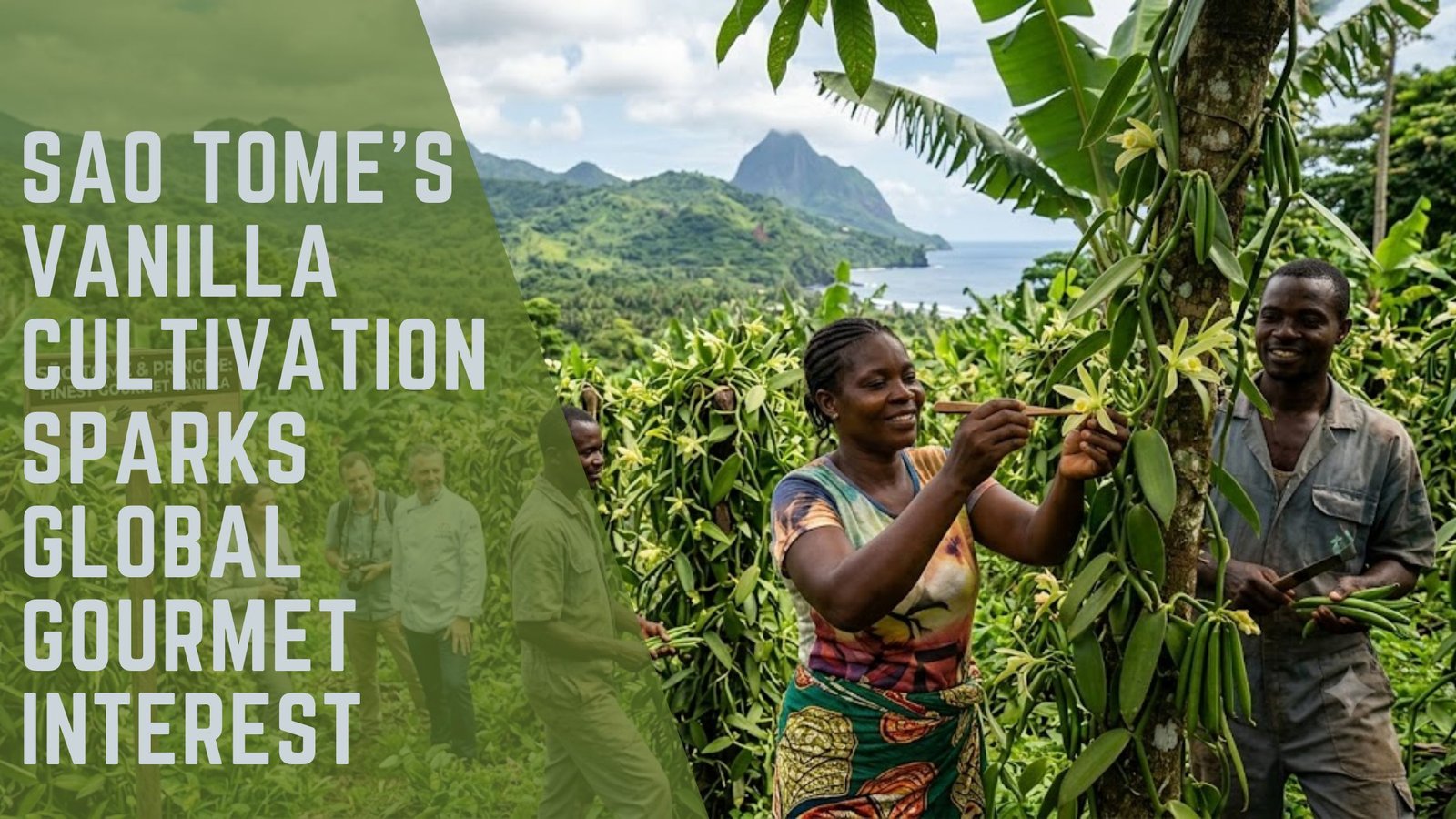

Sao Tome’s Vanilla: A New Chapter in Spice Cultivation
In the lush, verdant landscapes of Sao Tome, a small island nation in the Gulf of Guinea, a quiet revolution is underway. Known historically for its cocoa, the island is now drawing international attention for its burgeoning vanilla cultivation. Once overshadowed by other crops, vanilla is emerging as a high-value crop that could potentially transform the local economy.
Reviving a Forgotten Crop
The history of vanilla in Sao Tome dates back to 1880 when the Vanilla planifolia orchid was introduced from Gabon. Despite its initial introduction, the spice remained in the shadows of more dominant crops like sugarcane and cocoa. However, with global cocoa prices experiencing volatility and the aging of cocoa plantations, local farmers are turning to vanilla as a viable alternative.
Ifrasio de Barros Rompao, a local farmer, has shifted focus from cocoa to vanilla, recognizing its financial potential. “Vanilla, in terms of money, for me, is essential,” Rompao stated. With a large family to support, the revenue from vanilla cultivation has become a crucial part of sustaining his household.
Economic Potential and Market Demand
Vanilla is the second most expensive spice in the world, trailing only behind saffron. This price superiority presents a lucrative opportunity for Sao Tome’s farmers. Juliette Dohar, co-founder of L’Atelier Vanilha, an organization dedicated to promoting high-quality vanilla production, highlights the economic benefits. “Vanilla adds an extra income for farmers,” Dohar explained, emphasizing the significant returns that can be achieved from a single harvest.
L’Atelier Vanilha collaborates with approximately 50 local farmers, purchasing vanilla pods to process and export to European markets. This initiative not only supports the local agricultural community but also aims to position Sao Tome as a premium vanilla producer in global markets.
The Art of Vanilla Processing
The journey of vanilla from vine to market is intricate and labor-intensive. After harvesting, the green pods undergo a meticulous process involving sun drying, indoor drying, massaging, scalding, fermentation, and curing. Francesco Mai, another founder of L’Atelier Vanilha, describes this process as essential to developing the spice’s characteristic aroma and flavor.
Despite the small scale of production—around 300 kilograms at full capacity—the focus remains on quality over quantity. The goal is to cater to high-end markets, including fine grocery shops and Michelin-starred restaurants in France, Switzerland, and Belgium.
A Unique Aromatic Profile
Sao Tome’s vanilla is celebrated for its distinctive aromatic qualities. Mathilde Roellinger, managing director of Epices Roellinger, describes the spice’s complex profile as containing notes of cocoa nibs, floral elegance, and hints of red berries. This unique flavor profile captures the essence of Sao Tome’s rich biodiversity and adds an exotic touch to gourmet dishes worldwide.
“For me, every spice carries the landscape it comes from,” Roellinger reflects, emphasizing the connection between the spice and its origin. The vanilla from Sao Tome not only brings a taste of the island to faraway lands but also represents the island’s potential and resilience.
The Future of Vanilla in Sao Tome
As Sao Tome continues to expand its vanilla production, the island’s farmers and entrepreneurs remain optimistic about the future. With a favorable climate and the growing global demand for high-quality vanilla, the island is well-positioned to become a significant player in the spice market.
While Madagascar and Indonesia currently dominate the global vanilla industry, Sao Tome’s niche market approach, focusing on premium quality and unique flavors, could carve out a specialized segment in the international market. This development not only diversifies the island’s agricultural output but also offers a sustainable economic path forward.