
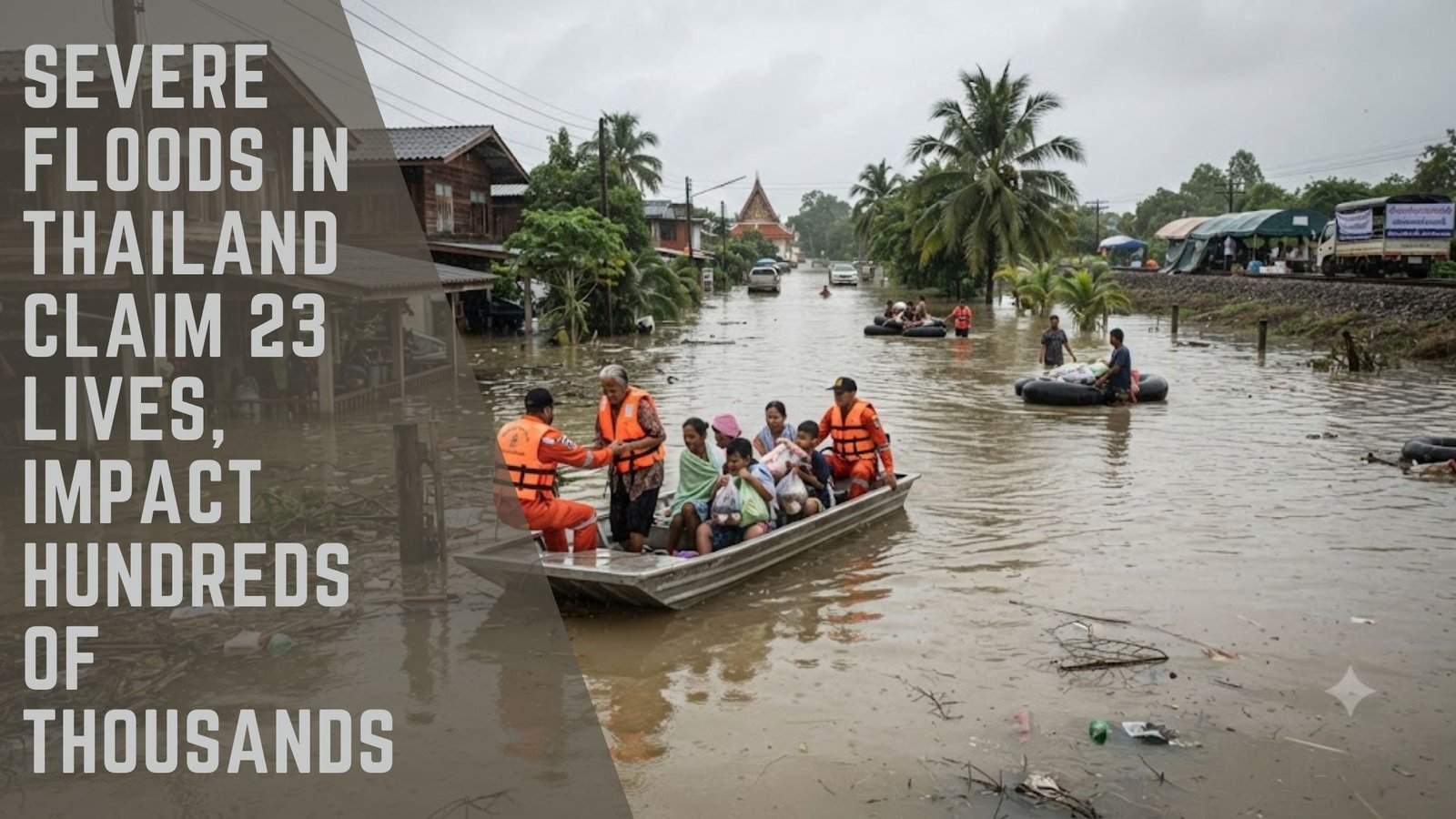

Thailand Flood Crisis: Rising Death Toll and Displacement
Thailand is grappling with devastating floods that have claimed at least 23 lives, as continuous heavy rainfall since mid-September wreaks havoc across the country. The Department of Disaster Prevention and Mitigation (DDPM) reported that approximately 700,000 individuals in the capital city of Bangkok have been affected, highlighting the severity of the situation.
Bangkok: A City Struggling to Stay Afloat
In Bangkok, the nation’s bustling capital, four fatalities have been confirmed, with substantial areas submerged in water. Despite efforts by city officials, parts of the metropolis remained inundated on Tuesday. This comes three days after authorities declared a state of emergency due to nearly 48 hours of relentless rainfall.
Schools in the city have been closed for the second consecutive day as a precautionary measure. Meanwhile, emergency shelters have been activated, providing refuge to nearly 7,000 residents across over 230 designated facilities.
Impact Beyond the Capital
The flooding extends beyond Bangkok, affecting 29 out of Thailand’s 77 provinces. Samut Prakan, a region situated between Bangkok and the Gulf of Thailand, has reported eight deaths. Sa Kaeo, located in the eastern part of the country, witnessed six fatalities. Additional casualties have occurred in the provinces of Chanthaburi, Ayutthaya, and Saraburi, which are situated southeast and north of the capital, respectively.
Infrastructure and Environmental Challenges
Bangkok’s susceptibility to flooding is exacerbated by its geographical characteristics. The city is built on what were once marshlands and is crisscrossed by a network of canals, many of which have overflowed due to the intense rainfall. Despite the continuous operation of pumping stations at full capacity, Governor Chadchart Sittipunt indicated that it might take up to a week for floodwaters to completely recede.
Climate Change and Increasing Weather Extremes
Experts caution that climate change is likely to amplify the frequency and intensity of extreme weather events, including heavy rainfalls and flooding. The warming of the planet, primarily driven by fossil fuel emissions, is expected to lead to more severe natural disasters worldwide.
The current flooding in Thailand underscores the urgent need for enhanced infrastructure and disaster preparedness to mitigate the impacts of such environmental catastrophes. The government and local authorities are urged to prioritize long-term solutions that address both immediate needs and future risks.
Community Resilience and Recovery Efforts
As Thailand confronts this natural disaster, the resilience of its communities is being put to the test. Humanitarian efforts are underway to provide food, water, and medical supplies to those affected. Volunteers and emergency responders are working around the clock to assist with relief operations and ensure the safety of residents.
In the wake of this crisis, there are calls for increased investment in flood management infrastructure and climate adaptation strategies to better protect vulnerable regions from similar events in the future.
The Path Forward
As Thailand continues to battle the aftermath of these floods, the focus remains on recovery and rebuilding. The government is coordinating with international organizations and neighboring countries to secure aid and support for the affected regions.
With the rainy season still underway, authorities remain vigilant, monitoring weather patterns closely to prevent further loss of life and property. The ongoing situation serves as a stark reminder of the ever-present threat posed by climate change and the need for proactive measures to safeguard communities.