
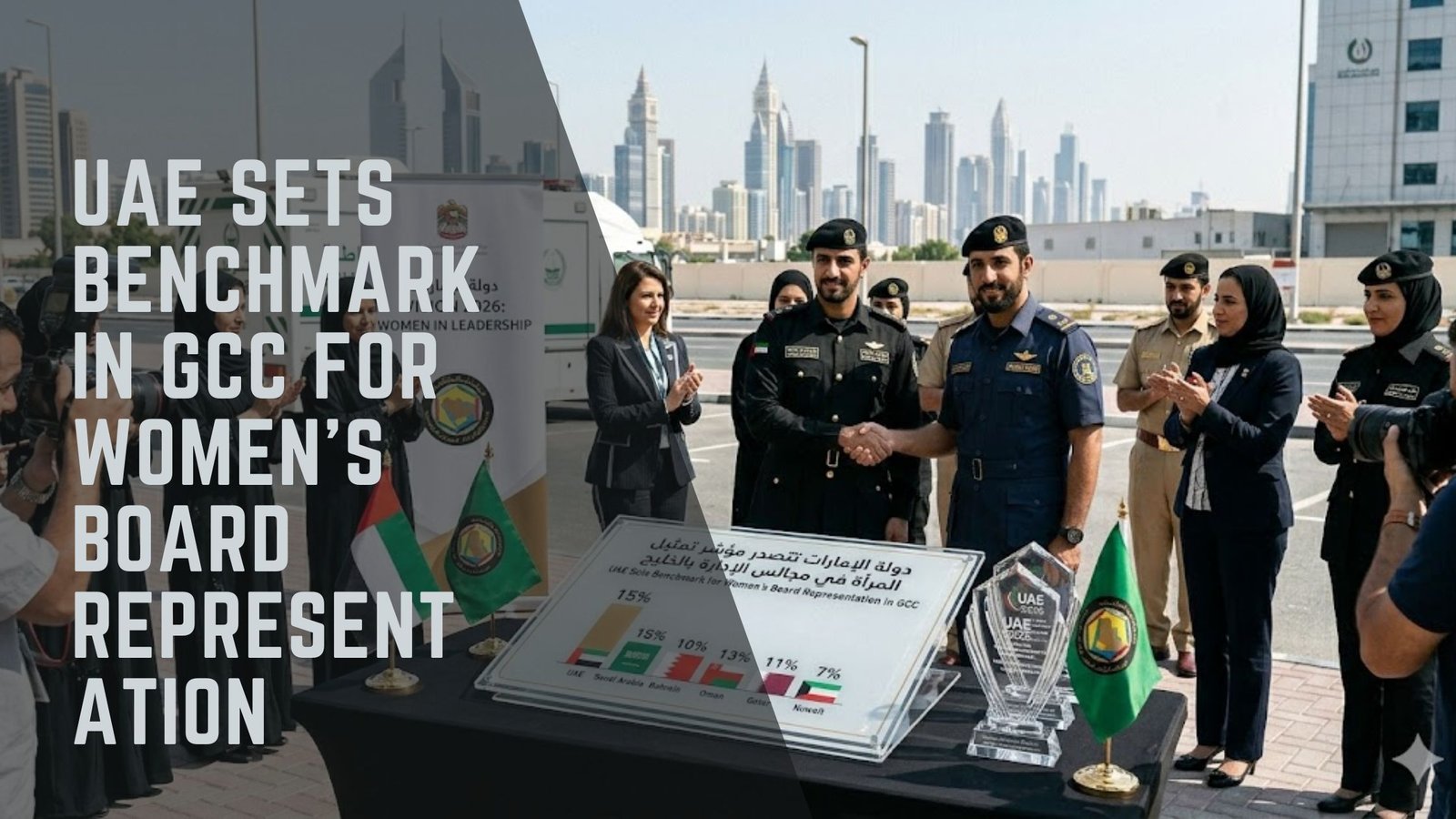

UAE Leads GCC in Advancing Women’s Board Representation
The United Arab Emirates (UAE) has once again emerged as the leader in advancing women’s representation on corporate boards within the Gulf Cooperation Council (GCC), according to the latest ‘GCC Board Gender Index Report 2026.’ This report, a joint effort by Heriot-Watt University and Aurora50, highlights the UAE’s sustained commitment to gender diversity in corporate governance.
Incremental Progress in Gender Diversity
The 2026 report reveals an incremental increase in women’s board representation across the GCC, reaching 7 percent, up from 6.9 percent in the previous year. This growth is mirrored by the UAE’s impressive 15 percent representation, positioning it at the forefront of gender inclusivity in the region.
Covering 759 publicly listed companies, the study indicates a rise in the total number of board seats from 5,668 to 5,755, a 1.5 percent increase. Notably, the number of women holding directorships grew by 2.1 percent, with 341 women occupying 403 board positions, compared to 334 women and 390 seats in 2025. This growth highlights a broader participation of women at the board level, with some holding multiple directorships.
Country Comparisons within the GCC
While the UAE leads at 15 percent, other GCC nations also show varying levels of women’s board representation. Bahrain follows with 10.5 percent, Oman at 7 percent, Kuwait at 5.6 percent, Qatar at 3.2 percent, and Saudi Arabia at 2.9 percent. These figures reflect a regional trend towards enhancing gender diversity in corporate leadership.
Strategic Partnerships and Support
Sheikha Shamma bint Sultan bin Khalifa Al Nahyan, Chairperson of Diversity and Inclusion Agency Aurora50, expressed pride in the continued partnership with Heriot-Watt University Dubai. She emphasized the UAE’s progress from 3.5 percent to 15 percent since 2020 as a testament to the nation’s leadership in fostering gender equity. The involvement of women in board positions is credited with bringing diverse perspectives, bolstering governance, and driving organizational growth.
Insights from Academic and Industry Experts
Professor Dame Heather McGregor, Provost and Vice Principal of Heriot-Watt University Dubai, underscored the significance of the GCC Board Gender Index as a benchmark for boardroom evolution. She highlighted the consistent progress in gender representation, supported by comprehensive data and insights, as a crucial factor in understanding regional boardroom dynamics.
Sector-Specific Representation
In the UAE, the financial services sector leads with the highest number of board seats held by women, accounting for 86 out of 564 positions. Following are the industrial sector with 35 out of 214, and consumer staples with 15 out of 94. These sectors exemplify where women are making substantial inroads in board representation.
Comprehensive Data Collection
The GCC Board Gender Index, supported by Board Intelligence, AlixPartners, and Grant Thornton, ensures accurate data collection by uniquely identifying each company and director. This methodology prevents duplication, particularly in cases where companies are listed on multiple exchanges or directors serve on multiple boards.
The progress documented in the report underscores a shifting landscape in the GCC towards more inclusive corporate governance, with the UAE setting the pace for its regional counterparts.