
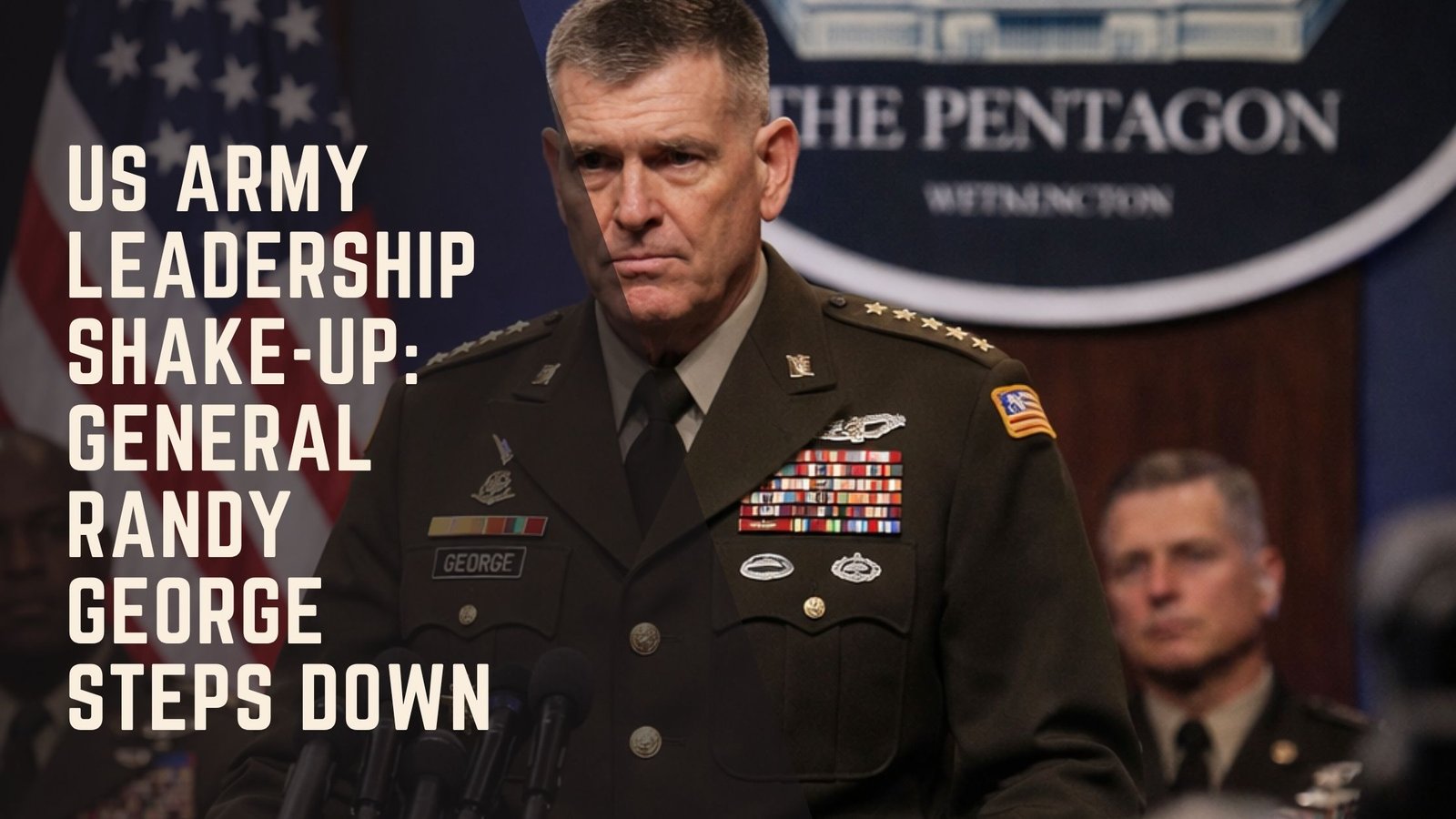

US Army Leadership Undergoes Significant Change
In a surprising move, Secretary of Defense Pete Hegseth has requested that General Randy George step down from his position as the chief of staff of the United States Army. This decision, confirmed by an anonymous official, reflects the ongoing shifts within the upper echelons of military leadership under President Donald Trump’s administration.
Immediate Retirement for General George
The request for immediate retirement, as first reported by CBS, leaves many questions unanswered, particularly regarding the underlying motivations. Official statements have yet to clarify the specific reasons behind this leadership change. However, sources suggest that the decision aligns with Hegseth’s desire to appoint individuals who resonate with the strategic vision shared by him and President Trump for the future of the Army.
Trump Administration’s Military Restructuring
This development is part of a broader pattern of military restructuring during President Trump’s second term. Notably, General Randy George’s departure occurs amidst escalating military tensions, as the United States remains embroiled in a conflict with Iran. President Trump has indicated that this military engagement may extend over several weeks, increasing the need for aligned military leadership.
Throughout his distinguished 40-year military career, General George has rendered service in critical arenas such as Iraq and Afghanistan. His tenure included key roles, such as the vice chief of staff of the Army and serving as the senior military assistant to former Pentagon chief Lloyd Austin during President Joe Biden’s administration.
Pattern of High-Level Military Dismissals
General George’s stepping down is not an isolated incident but rather part of a larger trend of high-level dismissals under President Trump’s leadership. Earlier this year, General Charles “CQ” Brown, the chairman of the Joint Chiefs of Staff, was relieved of his duties without explanation. The shake-up has extended to other branches, with the heads of the Navy, Coast Guard, and other senior military positions being similarly dismissed.
Noteworthy is the abrupt retirement of the chief of staff of the Air Force, who vacated his role halfway through his term, and the head of US Southern Command, who retired after only a year. These changes have raised eyebrows among observers and sparked debates regarding potential politicization within the traditionally apolitical military establishment.
Concerns Over Politicization of the Military
While Secretary Hegseth maintains that these changes are part of a strategic decision-making process to align military leadership with the administration’s goals, Democratic lawmakers express apprehension about the implications of such moves. The concern centers on whether these actions compromise the neutrality and effectiveness of the US military structure.
Adding to the restructuring efforts, the Pentagon chief has implemented a directive to reduce the number of active-duty four-star generals and admirals by at least 20 percent, alongside a 10 percent reduction in the total number of general and flag officers. These measures are perceived as attempts to streamline military operations and leadership.
Future Implications for US Military Strategy
The departure of General Randy George and the continued reshuffling of military leadership provoke questions about the future trajectory of US military strategy under the current administration. As the military grapples with ongoing global conflicts and evolving strategic priorities, the leadership choices made today may significantly impact the direction and efficacy of US military operations in the years to come.