
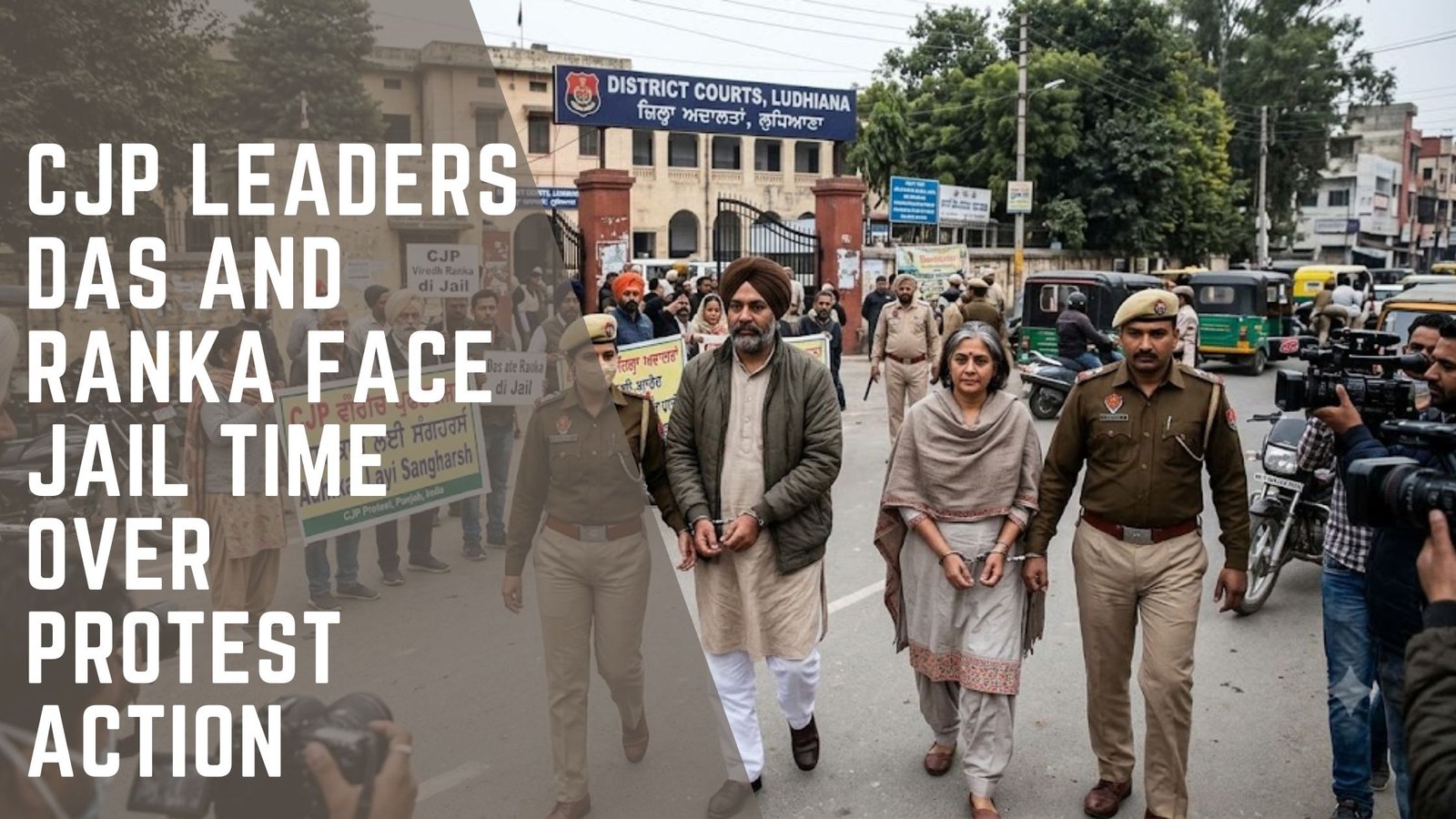

CJP Leaders Jailed Following Jantar Mantar Protest
In a significant development within India’s political landscape, Saurav Das and Ashutosh Ranka, prominent figures of the Cockroach Janta Party (CJP), have been placed in separate cells at Tihar Jail. This follows their arrest related to trespassing charges at Jantar Mantar, which is no longer a designated protest site. The duo is set to remain in judicial custody for five days, according to sources familiar with the situation.
Judicial Custody and Legal Proceedings
The judicial custody was ordered on Wednesday, coinciding with the release of Ajinkya Shinde, another CJP member, on a personal bond. The trio was initially detained for trespassing and violating bond conditions. Their actions were interpreted as an obstruction of duty by public officials, leading to their appearance before a magistrate at Mandir Marg in New Delhi.
Advocate Abhisht Hela, representing the CJP leaders, expressed concerns over the judicial process, highlighting that senior police officers, not judicial magistrates, issued the order. Hela criticized the decision, claiming it lacked the application of judicial principles as outlined by the Supreme Court of India.
Background of the Protest
The incident traces back to the leaders’ attempt to protest against alleged irregularities in the Special Intensive Review (SIR) of electoral rolls conducted by the Election Commission of India (ECI). Their protest involved crossing police barricades and raising slogans against Chief Election Commissioner Gyanesh Kumar.
Despite previous legal interventions, Das and Ranka’s recent actions have led to their classification as repeat offenders. This is primarily due to their involvement in similar activities during an October 10 protest, which concluded with their release upon furnishing a Rs 50,000 bond.
Changes in Protest Regulations
The backdrop of this judicial action is the recent de-notification of Jantar Mantar as a designated protest site. As per the Delhi Police, this decision follows recommendations from a Home Ministry committee, resulting in new protest guidelines under Standing Order No. L&O/48/2026.
Three new locations—Ramlila Ground, Burari Ground, and East Delhi’s CBD Ground—have been designated for protests. This change aims to streamline protest activities within the capital, yet it has also sparked debate over the regulation of public demonstrations.
Reactions and Implications
The arrest and subsequent judicial custody of the CJP leaders have provoked mixed reactions. Advocate Hela argued that the leaders were detained for merely expressing their patriotism by raising nationalistic slogans and waving the national flag. He described the incident as a ‘black day’ for the nation, emphasizing the broader implications for freedom of expression.
Critics argue that the authorities’ actions reflect a growing trend of clamping down on dissent in India. The CJP, a relatively new political entity, has positioned itself as a vocal critic of the current electoral processes, often challenging established norms.
As the leaders serve their sentence, the incident remains a critical point of discussion regarding civil liberties and the evolving nature of protest regulations in India.
Future Outlook
With the upcoming elections, the actions taken against CJP leaders could influence political discourse. As the nation watches, the balance between maintaining public order and safeguarding democratic freedoms continues to be a delicate issue.
The broader implications of this case will likely impact future protest activities and the operational dynamics of political parties navigating India’s complex political terrain.